
Sunday, June 29, 2014

It was the best of times, it was the worst of times


You may know by now that the final revision of U.S. first quarter GDP revealed a shocking 2.9% decline while its mirror image, gross domestic income (GDI), was off by 2.6%.

As Scott Sumner has pointed out twice now, the huge decline in GDI is almost entirely due to a fall in corporate profits. Whereas employee compensation, the largest contributor to GDI, rose from $8.97 to $9.04 trillion between the fourth quarter of 2013 and the first quarter of 2014, corporate profits fell from $2.17 to $1.96 trillion (see blue line in the above chart) This incredible $198 billion loss represents a 36% annualized rate of decline!

A number of commentators have pointed out the difficulty in squaring this data bloodbath with reality. After all, Wall Street has not been announcing 36% quarter on quarter profit declines. Rather, earnings per share growth has been pretty decent so far this year. If earnings were off by so much, then why are equity markets at record highs? Why have there been no layoffs? It's hard to believe that a bomb has gone off when there's no smoke and debris. Investors are patting themselves down to make sure they had no wounds or broken body parts and, coming up clean, are shrugging and buying more stocks.

I'm going to argue that the odd disjunction between the numbers and reality may have arisen due to something called money illusion. We live in a historical-cost accounting world in which stale prices are used as the basis for much of our profit and loss calculations. But the gunshot rang out in a different universe, one in which accountants rapidly mark costs to market. At some point we in the historical-cost world will feel the repercussions of the gunshot since everything is eventually marked to market. For now, however, no one seems to have noticed because we're all caught up in an the illusion created by accountants focused on the ghost of prices past.

More specifically, the folks at the Bureau of Economic Analysis who compile GDI report a different corporate profit number than the profit numbers being bandied around on Wall Street during earnings season. Wall Street profits are by and large paid out after depreciation expenses, and these have been accounted for on a historical-cost basis. This is the red line in the above chart. The BEA's number, represented by the blue line in the chart above, represents the profits that remain after depreciation expenses have been marked to market. The choice between mark-to-market depreciation accounting and historical-cost accounting can result in large differences in bottom-line profit, as the last data point in the chart illustrates.

For instance, consider a manufacturing company that earns revenues of $100 per year from a machine that it bought for $600. It depreciates the machine by $60 each year over 10 years, earning a steady $40 in profits ($100 - $60). Now imagine that all over the world machines of this type are suddenly sabotaged so that, due to their rarity, the cost of repurchasing a replica doubles to $1200. If the manufacturing company uses historical cost deprecation, it will continue to bring in revenues of $100 a year, deducting the same $60 in depreciation to show $40 in earnings. All is fine in the world. But if the firm uses mark-to-market depreciation, the cost of using up the machine will now reflect the true cost of replacing it: $120 a year ($1200/10 years). Subtracting $120 from the annual $100 in revenues means the company is losing $20 a year, hardly a sign of health.

It's easy to work out an example that shows the opposite, how a glut in machinery supply (which would drive the replacement cost of the machine down) is quickly reflected in a dramatic improvement in earnings after mark-to-market depreciation expenses, but earnings after historical-cost depreciation show nothing out of the ordinary.

Thus we can have one profit number that tells us that all is fine and dandy, and another that indicates the patient is on death's door. An individual's perception of the situation depends on which universe they live in, the historical cost universe or the mark-to-market one. The GDI explosion has gone off in the latter (the BEA uses a mark-to-market methodology), but since we experience only the former (the Wall Street earnings parade is entirely a celebration of historical-cost earnings per share data) we haven't really felt it... yet.

Yet? Even a company that lives in a historical cost accounting universe will eventually have to face the market price music. Imagine our sabotage example again. If our company uses mark-to-market accounting, it will immediately know it is facing a problem since its $100 revenue stream is failing to offset the $120 cost of machinery depreciation. However, if it uses historical cost accounting then our company continues to enjoy what it perceives to be a revenue stream that more than offsets its historically-fixed $40 cost of machinery. However, once that machine inevitably breaks down and needs to be replaced with a $1200 machine, a new historical cost base will be established and depreciation will suddenly rise to $120. Several quarters too late the company will realize that it is now operating in the red. Had it marked deprecation to market, that realization would have come much sooner.

If I had to speculate, here's a more detailed story about the last quarter. US corporate revenues were particularly underwhelming between Q4 2013 and Q1 2014 due to the cold weather. At the same time, we know that a number of government stimulus acts that had introduced higher than normal historical cost depreciation allowances (this allows firms to protect their income from taxes) were rolling off. Flattish revenues were therefore offset by smaller deprecation costs, resulting in a decent bump to headline earnings numbers, as the red line in the chart shows. Everything looked great to majority of us who inhabit the historical cost accounting universe.

However, mark-to-market depreciation accounting used by the BEA strips out the effect of the expiring depreciation allowances, thereby removing the bump. The combination of flattish revenues and higher market-based depreciation expenses (perhaps due to some inflation in the cost of capital goods) would have conspired to create a fall in the blue earnings series, and therefore a groaningly bad quarter in our mark-to-market universe.

In any case, the crux of the issue is that Wall Street's headline numbers indicate that corporate America did a better job in the first quarter of 2014 generating the cash necessary to replace worn out capital than it did in Q4 of 2013. The BEA numbers are telling us the opposite, that corporate America did a poorer job of covering the costs of wear & tear. Neither of the two numbers is wrong per se, but as I've already point out in my example, mark-to-market methodology is the first to reveal problems while historical cost accounting will follow after a lag.

As I've already hinted, the fact that Wall Street hasn't yet noticed that it just lived through a miserable quarter can be attributed to money illusion: a phenomenon whereby people focus on nominal rather than real values. In this specific instance, investors are so obsessed with headline changes in earnings that they fail to adjust that number for the true cost of using up machinery. Irving Fisher himself described a version of this mistake in his book The Money Illusion:
...during inflation the cost of raw materials and other costs seem to be lower than they really are. When the costs were incurred the dollar was worth more than it is later when the product is sold, so that the dollars in the original cost and the dollars in the later sale are not the same dollars. The manufacturer is deceived just as was the German shopkeeper or the Austrian paper manufacturers who thought they were making profits.
How likely is it that Wall Street, full of so many bright individuals, is being fooled by money illusion? It's not inconceivable. Even Scott Sumner volunteers that he doesn't believe the BEA's numbers due to soaring stock prices and strong earnings, thus falling prey to that very same affliction that serves as his blog's namesake. Money illusion can happen to the best of us.

Sunday, June 22, 2014

The monetary economics of the roll-up


The so-called corporate "roll up" lies at the conjunction of finance and monetary economics. For those monetary economists who aren't familiar with the term, a roll-up is a company that tries to consolidate an entire industry by serially acquiring competitors, usually using its own stock as currency. Valeant Pharmaceuticals, currently in the midst of a battle to take over botox-maker Allergan for $53 billion, is one of the more well-known roll-ups in the world of finance these days, having acquired around 75 companies in the specialty pharmaceutical niche over the last six years. But there have been many others over the years who have pursued the roll-up strategy.

Plenty of analysts dislike the corporate roll-up. They criticize it for not creating value organically but merely accumulating other people's castaway businesses. Roll-up equity is generally viewed as ridiculously overvalued and destined to implode. Valeant, for instance, has been variously described as a house of cards, Kool Aid, and something from the Wizard of Oz.

I'm going to argue in this post that a roll-up is less nefarious than some people think. A roll-up does the same thing that a bank does—it is a liquidity provider. In the same way that a bank expects to be compensated for turning the illiquid into the liquid, a roll up deserves to be paid a fee for doing the same. Like banks, roll-ups are monetary phenomena.

Let's build a roll-up from scratch. Our roll-up begins its life as a regular business, say a fishing store. Like all other fishing stores in the area, the store yields its owner, Bob, about $10 a year. Fishing stores generally distribute all their earnings to their owners so that nothing is retained in the business. A store can generally be bought and sold for around 5 times earnings, or $50 ($10/year x 5), although due to their illiquidity it may take a lot of time and effort to match buyers of fishing stores with sellers.

Bob's first task is to make the ownership position in his store more liquid. He decides to divide his $50 stake into 100 shares, each worth 50 cents, thus rendering it easier for people to purchase bite-sized positions in his business rather than being required to gulp the thing whole. He hires a store manager to take care of day-to-day business, buys himself an Armani suit, and begins to canvas the land marketing his shares. He may even take the time and effort to list on a public stock exchange.

Eventually, shares in Bob's store will have attracted a large crowd of buyers and sellers. Whereas all the other fishing stores in the area remain relative illiquid, an ownership stake in Bob's store has become more moneylike. A liquidity premium attaches to the value of the shares. Each of the 100 shares is now priced at 75 cents which puts a $75 valuation on Bob's business ($0.75 x 100 shares), twenty-five bucks higher than the $50 price tag that was originally placed on Bob's store and is currently being placed on competing fishing stores. Since Bob's store continues to earn the same $10 a year that other stores make, the twenty-five buck premium is entirely related to the superior ease that owners of Bob's business enjoy in transacting with their shares. Both Bob's Armani and his hard work have paid off.

Here's another way of looking at the scenario. Whereas all fishing stores trade at around 5 times earnings, Bob's shares trade at 7.5 times earnings due to their superior liquidity.

Bob now embarks on the next stage of executing his roll-up strategy—issuing new stock to buy up his competition. He begins by printing up 66.6667 new shares and offers to buy Joe's fishing store down the street for a total value of $50 (66.6667 shares x $0.75/share) . This is where the magic of the roll up strategy begins. If Joe accepts, Bob will now have two stores earning a combined $20, each share earning $0.12 ($20 / 166.667 shares). Notice that this is an improvement over the $0.10 per share being earned prior to the deal with Joe ($10/100 shares). Since the market continues to value Bob's shares at 7.5x earnings due to their excellent liquidity, each share will now trade for 90 cents (7.5 x $0.12 earnings per share), higher than their pre-purchase price of 75 cents (7.5 x $0.10). Thus Bob's shareholders enjoy an immediate 15 cent pop in the share price once Joe's store is bought! Not bad for a day's work. This is what is called an accretive acquisition.

Intuitively what is happening here is that Joe's illiquid ownership rights are being brought under Bob's umbrella. They are immediately rendered just as liquid as Bob's ownership position, and since liquidity is a service that the market is willing to pay a premium for, Joe's ownership rights will now be worth more than before.

It makes sense for Bob and his shareholders to push for the deal with Joe since they enjoy an immediate gain. But what about Joe? Why would he agree to the deal? Consider that before the agreement was struck, Joe was comfortably earning $10 a year selling rods and hooks. After the transaction is over, he'll own 66.6667 shares of Bob's business, each share yielding $0.12 in earnings, for a total of just $8 a year vs $10 before. So if he signs on the dotted line, he'll be earning $2 less each year. A terrible deal for Joe, right?

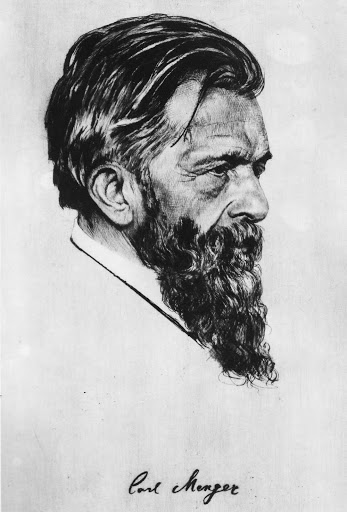
Not necessarily. The reason Joe may very well take the deal despite earning less finds an answer in Carl Menger. For finance types, Menger was a 19th century economist who pretty much nailed down the idea of liquidity, or what he preferred to call marketability, the fact that "different goods cannot be exchanged for each other with equal facility." Menger gives the example of a black smith who, when going to market with his newly made armour, has difficulties locating someone willing to trade food and fuel. Rather than seeking to directly trade, it is in the smith's interest to take an indirect route by accumulating some good that though useless to him, has greater marketability than the armour he has produced. In this way, the smith gives up his less saleable commodity for others of greater marketability since "possession of these more saleable goods clearly multiplies his chances of finding persons on the market who will offer to sell him the goods that he needs."

Returning to our story, let's say that Joe is tired of working and wants to retire so that he can travel around the world. Travel will require cash, but Joe's business isn't very easy to sell. In a strategy that Menger would approve of, Joe may choose to give up his shares in exchange for other, more saleable, shares, even if he doesn't not need them, because it brings him closer to the final position he desires. So while Joe doesn't get cash when he signs the bottom line, he does get the next best thing, Bob's liquid shares, which are far easier to turn into cash than his own. The amount that Bob asks as a fee for superior liquidity is the forfeiture of $2 a year in potential earnings, hardly a large price for Joe to stump up if he is desperate for a getaway from the fishing industry.

After gobbling up Joe's store, Bob continues rolling up the fishing store industry by constantly printing up new shares to buy out folks like Joe who want an exit. Bob and his merry band of shareholders are content to fabricate this desired liquidity as long as they get a portion of each exiting store owners' earnings and the ensuing boost to the share price. The Joe's of the world are happy to give up a bit of earnings to Bob for a bit of his liquidity.

This is exactly what a bank does. Just like Bob buys up illiquid ownership positions in fishing stores, banks buy up illiquid IOUs that have been issued by individuals and businesses. Where Bob issued new shares in exchange, a bank offers a different sort of financial asset; the bank's own highly-liquid IOUs, or deposits. Bankers don't engage in liquidity creation for free. In the same way that Bob requires that Joe give up some earnings in return for the liquidity benefit of Bob's shares, bankers require that the person who initially receives the bank's deposits pays an ongoing fee to enjoy the benefits of their superior liquidity, a fee that is otherwise known as interest. The only difference between a banker and Bob is that one is using debt, or bank deposits, as their liquidity carrot, while the other is using equity.

Banks spend large amounts of capital to ensure the superior liquidity of their deposits. Branch networks, ATMs, card payment infrastructure, and secure internet systems must all be built and maintained. Should a bank's deposits lose their liquidity advantage, the benefit of owning those deposits will diminish to the point that no one will willingly pay a fee to purchase them. Individuals will costlessly convert their illiquid deposits into liquid deposits of competitors (banks typically offer free 1:1 conversion among each others deposit brands). If this continues indefinitely, the bank will eventually go bankrupt.

Bob too faces these same sorts of limitations. His roll-up strategy can only continue as long as his shares are more liquid than those of his universe of targets. Once they are no longer special, folks like Joe won't see it worthwhile to forfeit a bit of their earnings to Bob for his shares. Put differently, Bob can continue rolling-up fishing stores only as long as the multiple that the market is willing to pay for his earnings remain significantly elevated relative to those stores that he wants to buy.

Like banking, rolling-up an industry requires continued investment in the mechanisms that promote share liquidity. Bob must buy ever fancier suits, travel ever further afield to advertise the quality of his shares, and list on more stock markets. One of the threats he must constantly face is that of competing roll-ups who also spend to promote the liquidity of their own shares. If the cost of suits is driven too high by the roll-up competition, it may no longer be profitable for Bob to maintain his shares' liquidity.

Roll-ups will also compete for acquisition opportunities. When folks like Joe who want to exit the fishing business receive multiple bids from roll-ups like Bob interested in buying him out, Joe can play Bob off against his competition so that Bob must sell Joe liquidity for less than he would otherwise prefer, perhaps below his cost of creating that liquidity.

When competition among roll-ups creates too much liquidity then investors will start to cut the liquidity premium that they attach to Bob's shares. Bob's acquisition targets will no longer be willing to forfeit as large a piece of their earnings to Bob as they once did in order to enjoy the liquidity of which he was once the only provider. As a result, acquisitions provide ever small returns, the immediate increase in per share earnings and the good old jump in the share price that Bob once enjoyed is increasingly a thing of this past . At some point, it makes no sense for Bob to continue his roll-up strategy. His business will have lost its banking function and now operates like any other fishing store chain—it grows in line with population growth and the market's desire for fishing products.

If investors had been pricing Bob's shares on the assumption of further growth in its banking function, upon the realization that acquisitions are no longer worthwhile they will all sell in earnest, a large decline in Bob's share price being the result. The roll-up game is officially over, as are Bob's days as a banker.

But let's say that Bob successfully guards the liquidity premium that his shares have always enjoyed against the competition. At some point he'll run up against another limitation; there are only so many fishing stores he can buy. Once he has purchased every shop around him, he runs out of accretive acquisitions and the banking function he once profited from suddenly comes to an end.

If he wants to continue his roll-up strategy, one option is for Bob to expand into another line of business, say gun shops. But here he faces a disadvantage in the fact that he has no natural talent in appraising hunting stores. Where his knowledge of the fishing store industry insured him against buying lemons, the odds of him making mistakes as he rolls-up this new industry increases. This risk isn't unique to Bob. A banker who specializes in construction loans faces this same risk when he or she expands into consumer lending, or auto loans. Just like an accumulation of bad loans may cause a run on a bank, bad gun store purchases may cause a run on Bob's shares. The value of both deposits and shares as media of exchange is jeopardized when the underlying assets are in doubt.

So to wrap this up (roll it up?), there's nothing mysterious or nefarious about roll-ups. They are merely entities that provide banking services to the industries in which they operate, namely swapping illiquid assets for liquid ones. They earn a return for producing liquidity in the form of an accretive earnings bump on each acquisition. Once they reach certain natural limits, a roll-up will cease providing banking services to the industry and return to being a normal company.

The larger point I'm trying to make, however, is that there are monetary phenomena at play in all sorts of  situations that don't involve money proper. Monetary economists, those folks who study monetary phenomena, focus laser-like on a narrow range of goods they consider to be money, usually central bank notes and private deposits, thus excluding all other objects from the study of monetary phenomena. This is too bad. When we allow ourselves to think of money not as an either/or proposition but as an adjective that applies more or less to all valuable goods, then you'll see fascinating monetary phenomena all around you, such as the corporate roll-up.

Monday, June 16, 2014

When the good drives out the bad


There's a fairly regular monetary phenomenon that needs a name. It's similar in nature to Gresham's law, yet the inverse version.

Gresham's law is commonly stated as the phenomena by which "bad money drives out the good". But as any economist will tell you, that's not quite it. Bad money chases out the good, but only if authorities have chosen to enforce a fixed exchange rate between the two moneys. When the market ratio diverges from the fixed ratio, the undervalued money—the "good" one—will disappear from circulation while the overvalued money —the bad one—will become the exchange medium of choice. Bad money drives out good money because they pass by law at the same fixed price.

That's the classic Gresham's law. However, it's possible to show how an authority can set a fixed price between two moneys yet rather than the bad coin chasing out the good, the opposite happens: the good coin chases out the bad.

Before I show how, let's first give an example of Gresham's law. Say that new full-bodied silver coins and debased silver coins with the same face value circulate concurrently. If authorities set a law requiring that all coins must be accepted by the populace at face value, buyers and debtors will only settle their bills in debased silver coin (the "bad" money). Full-bodied coins (the "good" money) will be held back as hoarders clip off a bit of each coin's silver content, converting the entire full-bodied coinage into debased coinage. After all, why spend x ounces of silver on goods when a smaller amount will suffice? Thus the bad chases out the good.

Now let's vary our example to have good money chase out the bad. Say authorities promise two-way conversion between all silver coins at face value. Everyone will bring debased silver coins, the "bad" money, to the authorities for conversion into full bodied coins, the "good" money. In essence, they are bringing in x ounces of silver and leaving with x + y silver. This will continue until every bad coin has been deposited into the authority's vaults so that only the good money circulates.

So why in the first case does bad silver coin chase out good yet in the second good chases out bad?

When coins circulate at face value while their true market price differs, a mispricing is created. Any mispricing provides an arbitrage opportunity. In our first example, the arbitrage is such that all those holding full-bodied coin can take a full-bodied coin, file off some silver, and purchase the same amount of goods as before with the now debased coin, all the while keeping the silver clippings to themselves. A different sort of arbitrage opportunity arises in our second example. Because the authorities offer a two-way conversion feature, everyone holding debased coins gets to enjoy a risk-free return by bringing those coins in for conversion into full-bodied coins. They get more silver with less.

So the way that the arbitrage opportunity is structured will either incentivize the population to switch to bad money or to good. We get Gresham's law if people switch en masse to bad coins, and we get an inverse-Gresham effect if they take advantage of conversion and switch en masse to good coins. Since I'm not feeling especially creative, I'll call this effect Mahserg's law (Gresham spelt backwards).

My favorite modern example of Gresham's law is the proliferation of credit cards. In the same way that an owner of a full bodied coin could clip a bit of "bonus" silver off the coin while still being guaranteed the same purchasing power, payment with a credit card allows its owner to maintain their purchasing power while getting rewards to boot.

There are a few modern examples of Masherg's law. In 1978 U.S. authorities created a situation in which two different exchange media with the same denomination circulated concurrently, the Susan B. Anthony dollar and the good old $1 US bill. Because it was novel and untrusted, the Susan B. Anthony was considered to be "bad" money. The dollar bill, which enjoyed network externalities that had been established over a century of use, was the "good" money. The Federal Reserve offered two-way conversion between coin and paper. The inevitable result was that whatever Susan B. Anthony dollars were emitted into the economy were quickly brought back to the Fed to be converted into paper dollars. The good money drove out the bad. To this day Susan B. Anthony dollars are nowhere to be seen.

Another example of Masherg's law is a good old bank run. Take the intra-Eurosystem bank run that began after the credit crisis. There exist many different brands of euros, some issued by Germany, some by Greece. As a condition of membership in the Eurosystem, all nations are required to accept each other's euros at par. With the spectre of euro breakup growing in 2010 and 2011, Greek euros came to be viewed as inferior to German euros. Since it was possible to convert the bad into the good at par, everyone leaped at the opportunity. The quantity of bad Greek euros rapidly contracted while the quantity of good German euros grew, a process that would have eventually resulted in the complete extinction of Greek euros if Mario Draghi hadn't stepped in to short-circuit the run.

My favorite modern example of Masherg's law is the zero-lower bound. A central bank issues two media, dollar bills and dollar deposits. It allows free conversion between the two at par. Say that the central bank reduces the interest rate it pays on reserves to a negative rate so that reserves are inferior, or "bad", relative to 0%-yielding bills, which are now good. Anxious to avoid the negative rate penalty, everyone will race to convert their reserves into cash at the central bank until reserves no longer exist. The good has chased out the bad.

The zero-lower bound can be thought of as the lowest rate that a central bank can institute before setting off Masherg's law. Modern central banks are petrified of encountering this particular law—that's one reason that they aim for a positive inflation target

And what about Gresham? Say our central bank reduces rates below zero. If the central bank ceases allowing convertibility between dollar notes and deposits but continues to require merchants to accept the two media at par, then the incentives change such that the good no longer chases out the bad. With no conversion outlet for bad currency, people will hoard notes while only deposits will circulate. After all, why use good cash to pay for groceries when a negative yielding deposit will suffice? We're back at Gresham's law, or the chasing out of the good by the bad.

Sunday, June 8, 2014

Why loonies circulate but Susan B. Anthony dollars don't


What causes a new currency to survive while others fail? Why do some cryptocoins never see the light of day while others enjoy successful launches? This post explores these questions by looking at the story of the Susan B. Anthony dollar, one of the great modern monetary failures.

Canada came out with a $1 coin in 1987 that remains in circulation to this day. We affectionately refer to it as the loonie as it carries a picture of a loon swimming on its reverse side. (The obverse side of a coin is the one that usually carries a portrait, the reverse side is opposite to the obverse side). The U.S. came out with a $1 coin in 1979, popularly known as the Susan B. Anthony dollar due to the appearance of the social reformer's face on the obverse side of the coin. Oddly, to this day the Susan B. Anthony is nowhere in sight. Americans don't hold it in their wallets or purses, nor do retailers keep them in their tills for change. Why did one monetary experiment fail and the other succeed?

The reason for introducing $1 coins is to replace relatively more expensive $1 bills. While notes are cheaper to produce than coins, the upkeep costs of a note issue are far higher than coin, especially as velocity increases. In general, higher value monetary instruments will circulate at slower velocities than lower value instruments. It makes more sense to use coins at the low-value/high velocity end of the circulation spectrum than bills because coins are both easier to sort and more durable—coins must be replaced every few decades whereas bills deteriorate within a year or two if they are used often. As the price level steadily inflates, what would have once been considered to be a high-value note that circulated only slowly enters the low value/high velocity end of the spectrum. Replacing that note with a durable metallic token makes sense... but that which makes sense isn't always that which succeeds.

One of the more popular reasons the has been put forward for the Susan B. Anthony's failure is that it was too similar to the already existing quarter in shape, size, and colour. This prevented consumers from quickly differentiating between the two coins. The loonie, on the other hand, was gold coloured due its bronze plating as well as having been minted with eleven edges to allow for differentiation when groping in one's pocket or purse. Apart from that, the weight and thickness of the loonie and Susan B. Anthony are almost identical.

I don't buy the argument that insufficient differentiation caused one coin to succeed and the other to fail. In 2000 the U.S. took another shot at debuting a dollar coin with the introduction of the so called "golden dollar" (due to yellowish tint provided by manganese brass), otherwise known as the Sacagawea dollar thanks to the appearance of this Native American interpreter and guide on its obverse.  Despite having the same golden sheen as the loonie, the Sacagawea dollar does not circulate in the U.S. Rather, huge amounts of these coins are held along with their predecessor Susan B. Anthony in the vaults of the Federal Reserve as Fed officials wait in vain for demand to pick up. (See Lotz and Rocheteau for a good explanation of this event). That's two failed monetary experiments and counting.

$1 coins languishing in a vault at the Federal Reserve Bank of Richmond's Baltimore branch
Source: NPR

Could it be that the loonie's eleven edges (the Sacagawea was smooth) were a sufficiently unique feature that the loonie stood out from the quarter and thereby successfully circulated? I don't buy it. That something so cosmetic as the shape of a coin's edge could push it into continued circulation seems silly to me. In all likelihood the Sacagawea dollar would have failed even if it replicated the loonie in every way.

The best explanation for the failure of $1 coins in the U.S. comes from Caskey and St. Laurent (pdf). They point to the network effects that must be overcome in introducing a new monetary instrument:
The benefit an individual attains from the use of a particular currency form depends on how many others are also using that currency form. For example, a new high-denomination coin can increase the range of vending machine transactions open to individuals, but only if vending machine owners convert the machines to accept the coin. Vending machine owners can increase sales from converting their machines to accept the coin, but only if the public commonly carries the coin. Similarly, retailers who learn to distinguish quickly the new coin can make small transaction more rapidly, but only if their customers have also learned to distinguish the coin quickly.
In the presence of these network externalities, anyone who doubts that a new coin will be used by others won't bother spending the time and effort to familiarize themselves with the coin and make the necessary adjustments. If everyone behaves this way, the coin will never get off the ground. We get the unfortunate consequence that even though the substitution of notes by coin makes society better off, a set of perverse self-perpetuating beliefs prevents that solution from ever being selected.

So why did the loonie survive? Caskey and St. Laurent point out that the government stepped in to ensure that the network externalities that would surely have prevented the loonie's success were removed. In 1988, the year after the loonie's debut, the Bank of Canada announced that it would be withdrawing the $1 note from circulation. Consumers and retailers were given no choice but to adapt to the loonie's arrival. U.S. authorities, on the other hand, never tried to dash the existing network effects that favoured the status quo by withdrawing the $1 note. Because $1 bills and coins co-circulated, the public was given a choice between a perceived "good" currency, the existing and comfortable note, and a "bad" currency, an unfamiliar coin. They took the less costly route and stuck with the "good" notes.

Unfortunately this left the U.S. in the worst possible situation. Having failed to arrive at the welfare maximizing solution—the replacement of notes with coins—it was stuck not only with its existing and expensive $1 note circulation but it now had to pay ongoing costs for storing the unwanted coin.

This makes me think about the mad dash to create new cryptocurrencies. I remember a time when there were only five or six of them, but now there are around 313 cryptocoins according to Coin Market Cap. Many of the newer coins that have debuted over the last year are no doubt technically superior to Bitcoin, and the welfare of the universe of cryptocurrency users would surely be improved by the phasing out of bitcoin and the adoption of the best of these new coins. However, as the incumbent, bitcoin enjoys tremendous network effects. The public is already familiar with the various bitcoin wallets and client as well as the markets in which it trades and all the related bitcoin jargon that goes with it. Why bother spending the time and effort to understand a new cryptocoin if there is no guarantee that it will ever be widely accepted? Because everyone thinks this way, the cryptocurrency world has locked itself into an inferior currency structure. While it should be using something like SusanBAnthonyCoin, it still clings to bitcoin.

Or consider the current system. We could make the argument that the world would be better off it stopped using bank deposits, wire transfers, and cash and instead adopted bitcoin due to the latter's superior speed and low cost of maintenance. However, absent the cooperation of a large actor like the U.S. government to overcome the network effects that the existing system enjoys, it is unlikely that the technically superior option will ever be selected. Just like Susan B. Anthony dollars drift around as little more than a curiosity some 34 years after their debut, bitcoin may be no more than a neat curio in 2044 if the network effects that it faces are not overcome.

As for the $1 coin, at some point you can be sure that the U.S. will take its third swing at the bat. Let's hope that when the time comes they won't make the same mistake.

Tuesday, June 3, 2014

Scott Sumner vs. the Real Bills Doctrine


This is a guest post by Mike Sproul. Mike's last guest post is here.

Scott Sumner and I have argued about the backing theory of money (aka the real bills doctrine) quite a bit over the years, starting in 2009 and continuing to the present. (link 1, link 2, link 3, link 4, …) Scott rejects the backing theory, while I favor it. I think that printing more money is not inflationary as long as the money is adequately backed, while Scott thinks that printing more money causes inflation even if it is adequately backed. Our discussions in the comments section of his Money Illusion blog extend well over 50 pages, so I’m going to try to condense those 50+ pages into two key points that cover the main arguments that Scott and I have had over the backing theory. (That’s John Law on the right. He was an early proponent of the real bills doctrine, oversaw a 60% increase in French industry in the space of two years, and was the architect of the western world’s first major hyperinflation and stock market crash.)

The key points:
1. Scott thinks that the liabilities of governments and central banks are not really liabilities.

For example:

“In what sense is cash a liability of the Fed? I thought once we left the gold standard the Fed was no longer required to redeem dollars?” (July, 2009)

“Dollar bills are not debt. The government is not required to redeem them for anything but themselves. That's not debt.” (August, 2009).

It would be cheating if I were to point out that the Federal Reserve’s own balance sheet identifies Federal Reserve notes (FRN’s) as the Fed’s liability, and that a large chunk of the Fed’s assets are classified as “Collateral Held Against Federal Reserve Notes”. Scott already knows that. It’s just that he thinks that the accountants are wrong, and that FRN’s are not a true liability of the Fed or of the government.

Scott’s argument is based on gold convertibility. On June 5, 1933, the Fed stopped redeeming FRN’s for a fixed quantity of gold. On that day, FRN’s supposedly stopped being the Fed’s liability. But there are at least three other ways that FRN’s can still be redeemed: (i) for the Fed’s bonds, (ii) for loans made by the Fed, (iii) for taxes owed to the federal government. The Fed closed one channel of redemption (the gold channel), while the other redemption channels (loan, tax, and bond) were left open. For example, suppose that 10% of FRN’s in circulation were originally issued in exchange for gold, 20% of FRN’s were originally issued on loan, another 30% were given to the federal government, which spent them on office buildings, and the remaining 40% of FRN’s were issued in exchange for bonds. That would mean that 90% (=20+30+40) of circulating FRN’s could be redeemed through the loan, tax, and bond channels alone. Only after those channels were used up and closed would it matter whether the Fed re-opened the gold channel. Assuming that the Fed still cared about maintaining the value of the dollar, the Fed would finally have to start using its gold to buy back the remaining 10% of FRN’s in circulation. But as long as the loan, bond, and tax channels remain open, the mere suspension of gold convertibility does not make FRN’s cease to be the liability of the Fed or of the government.

So Federal Reserve Notes are a true liability, whether or not they are gold-convertible. And like any liability, they are valued according to the assets backing them, just like the backing theory says. In the case of a gold-convertible currency, this is not disputed by Scott or anyone else. For example, as long as the Fed maintained gold convertibility of the dollar at $1=1 oz, it would not matter if the Fed held assets worth 100 oz as backing for $100 in FRN's, or 300 oz worth of assets as backing for $300 in FRN's. The quantity of convertible FRN's can be increased by any amount without affecting their value, as long as they are fully backed. Once we understand that both convertible and inconvertible FRN's are a true liability of the Fed, it is easy to see that the quantity of inconvertible FRN's could also be increased by any amount, and as long as the Fed's assets rose in step, there would be no effect on the value of the dollar. (There is a comparable result in Finance theory: that the value of a convertible call option is equal to the value of an inconvertible call option.)

2. Scott thinks that if the central bank issues more money, then the money will lose value even if the money is fully backed.

For example:
“ That’s where we disagree. I think open market operations have a huge impact on the price level, even if they involve the exchange of assets of equal market value.” (April 2012)

“ I understand what the backing theory says, I just don’t think it has much predictive power. Nor do I think it matches common sense. If you increase the monetary base 10-fold, prices will usually rise, even if the money is fully backed.” (July, 2009)


The problem with supposing a 10-fold increase in the monetary base is that we must ask how and why the money supply increased. If the new money was not adequately backed, then I agree that it would cause inflation. So if every dollar bill magically turned into ten dollar bills, or if helicopters showered us with newly-printed dollar bills, or if the Fed issued billions of new dollar bills in exchange for worthless bonds or worthless IOU’s, then Scott and I would both expect inflation. It’s just that I would expect inflation because the quantity of Federal Reserve Notes was outrunning the Fed’s assets, while Scott would expect inflation because the quantity of FRN’s was outrunning the quantity of goods being bought with those FRN’s.

But if the Fed issued billions of new dollars in exchange for assets of equal value, then I’d say there would be no inflation as long as the new dollars were fully backed by the Fed’s newly acquired assets. I’d also add a few words about how those dollars would only be issued if people wanted them badly enough to hand over bonds or other assets equal in value to the FRN’s that they received from the Fed.

This is where things get sticky, because Scott would once again agree that under these conditions, there would be no inflation. Except that Scott would say that the billions of new dollars would only be issued in response to a corresponding increase in money demand. So while I’d say that there was no inflation because the new money was backed by the Fed’s new assets, Scott would say that there was no inflation because the new money was matched by an increase in money demand. It seems that for every empirical observation, he has his explanation and I have mine. We are stuck with an observational equivalence problem, with neither of us able to point to an empirical observation that the other guy's theory can't explain.

But what if the Fed lost some or all of its assets while the quantity of FRN’s stayed constant? The backing theory would predict inflation because the Fed would have less backing per dollar, and the quantity theory would predict no inflation, since the same number of dollars would still be chasing the same amount of goods. It looks like we finally have a testable difference in the two theories. But here again, it’s easy for both Scott and me to get weaselly. If inflation happened in spite of Scott’s prediction, he could answer that money demand must have fallen. If my expected inflation failed to materialize, I could answer that the government stands behind the Fed, so any loss of assets by the Fed would be compensated by a government bailout. Empirical testing, it turns out, is hard to do. But at least I can claim one small victory: Scott is clearly wrong when he says that the backing theory doesn't have much predictive power. It obviously has just as much predictive power as Scott's theory, since every episode that can be explained by Scott's theory can also be explained by my theory.

Scott is also wrong to claim that the backing theory doesn't match common sense. Clearly, it makes perfect sense. Everyone agrees that the value of stocks and bonds is determined by the value of the assets backing them, and the backing theory says, very sensibly, that the same is true of money. Actually, it's when we start to use our common sense that the backing theory gains the advantage over the quantity theory. There are many aspects of the quantity theory that defy common sense, but I'll focus on four of them:

(i) The rival money problem. When the Mexican central bank issues a paper peso, it will get 1 peso’s worth of assets in return. The quantity theory implies that those assets are a free lunch to the Mexican central bank, and that they could actually be thrown away without affecting the value of the peso. This free lunch would attract rival moneys. For example, if US dollars started being used in Mexican border towns, then the Mexicans would lose some of their free lunch to the Americans. As the dollar invaded Mexico, the demand for pesos would fall, and the value of the peso would fall with it. More and more of the free lunch would be transferred from Mexico to the US, until the peso lost all value. If the quantity theory were right, one wonders how currencies like the peso have kept any value at all.

(ii) The counterfeiter problem. If the Fed increased the quantity of FRN’s by 10% through open-market operations, the quantity theory predicts about 10% inflation. If the same 10% increase in the money supply were caused by counterfeiters, the quantity theory predicts the same 10% inflation. In this topsy-turvy quantity theory world, the Fed is supposedly no better than a counterfeiter, even though the Fed puts its name on its FRN’s, recognizes those FRN’s as its liability, holds assets against those FRN’s, and stands ready to use its assets to buy back the FRN’s that it issued.

(iii) The currency buy-back problem. Quantity theorists often claim that central banks don’t need assets, since the value of the currency is supposedly maintained merely by the interaction of money supply and money demand. But suppose the demand for money falls by 20%. If the central bank does not buy back 20% of the money in circulation, then the quantity theory says that the money will fall in value. But then it becomes clear that the central bank does need assets, to buy back any refluxing currency. And since the demand for money could fall to zero, the central bank must hold enough assets to buy back 100% of the money it has issued. In other words, even the quantity theory implies that the central bank must back its money.

(iv) The last period problem. I’ll leave this one to David Glasner:
“For a pure medium of exchange, a fiat money, to have value, there must be an expectation that it will be accepted in exchange by someone else. Without that expectation, a fiat money could not, by definition, have value. But at some point, before the world comes to its end, it will be clear that there will be no one who will accept the money because there will be no one left with whom to exchange it. But if it is clear that at some time in the future, no one will accept fiat money and it will then lose its value, a logical process of backward induction implies that it must lose its value now.”
Taken together, I think these four problems are fatal to the quantity theory. Scott is welcome to bring up any problems that he thinks might be similarly fatal to the backing theory, but it will be a tough job. It’s easy to make the quantity theory fit the data. It’s harder to reconcile it with common sense.


Addendum: Scott Sumner responds.And Mike Freimuth comments. Over at Scott's blog, Mike Sproul writes a rejoinder to Scott. And now David Glasner has chimed in.

Saturday, May 31, 2014

Financial Plumbing: Europe and the Fed's Interdistrict Settlement Account


One of this blog's most recurrently popular posts is a 2012 ditty entitled the Idiot's Guide to the Federal Reserve Interdistrict Settlement Account. The Interdistrict Settlement Account, or ISA, is a highly esoteric "plumbing" mechanism that lies at the centre of the Federal Reserve System. After a century of being ignored, it suddenly became a popular topic for discussion in late 2011 and 2012 as the breakup of the euro became a real possibility. Groping for a fix, European analysts turned to the world's other large monetary union, the U.S. Federal Reserve System, to see how it coped with the sorts of monetary problems that Europe was then experiencing.

Here's a short explanation of the ISA. Consider that there is no such thing as a unified Federal Reserve dollar. Rather, both the paper dollars that you hold in your wallet and the electronic reserves that a private bank holds in its vaults are the liability of one of twelve distinct Federal Reserve district banks. Thanks to the convention among these Reserve banks of accepting each others dollars at par, a 1:1 exchange rate between each of these twelve U.S. dollar brands prevails. This gives rise to the useful mental short cut of assuming that there is one homogeneous dollar brand. But to do so ignores the heterogeneity at the core of the system —we can imagine worlds, for instance, in which one district's dollars, say those of the St Louis Fed, are considered to be so inferior to the rest that the other Reserve banks will only accept "St. Louis's bucks" at a discount.

All inter-district flows between Reserve banks must be settled, which is where the ISA comes into the picture. The ISA is a ledger that tracks the various imbalances that accrue between Federal Reserve banks. Each April that imbalance is settled by a transfer of assets from debtor to creditor Reserve banks, so that if St. Louis is owing and San Francisco is owed, then bonds will flow from the former to the latter, reducing each district's respective ISA balance (or increasing it) to a sufficient level.

I'm happy to say that my ISA post was useful to a number of researchers, including Karl Whelan (pdf), Kevin H. O’Rourke and Alan M. Taylor, and most recently, Alexander Wolman (pdf), who all made reference to it in recent papers. I like to think that this demonstrates the second purpose of the econblogosphere. The first purpose, of course, is to swarm over polished work by those like Piketty and Reinhart/Rogoff searching for chinks in the armour. The second is to act as an advance scout of sorts. When a completely new problem crops up, a blogger can quickly pump out a few posts, establishing a beachhead from which the main army—academics with time, money, and resource—can begin to launch a larger-scale attack.

While scouts can provide useful hints on where to launch initial sorties, they will always make a few errors, and I want to draw attention to one error I made in my ISA post. I speculated that the Federal Reserve banks may not have bothered to settle the ISA in 2011. Given a visual inspection of the various imbalances that had arisen between several of the Reserve banks, it appeared that the Richmond Fed in particular had been allowed to carryover a large deficit while the New York Fed (FRBNY) was stuck with an outstanding credit. Luckily for the small group of folks interested in the ISA, Federal Reserve researcher Alexander Wolman has recently provided some clarity on this issue.

Wolman has written the definite explanation of how the ISA functions and it is well worth your time if you want to discover how this fascinating mechanism works. (In defense of my old Idiot's Guide, note that I did manage to incorporate the destruction of the Death Star scene into it — I doubt Alex's editors would let him get away with that). He also goes through the data to show how the ISA settled in April 2011. I had originally focused on the New York Fed's ISA balance as the basis for my suspicion that settlement may not have occurred—the FRBNY's ISA balance had not fallen by the proper amount over the settlement month. But if you look at the FRBNY's securities balance on its balance sheet, you'll see that it rose by $100-$150 billion, an amount sufficient to settle the debts that other Reserve banks owed it. If you care to explore more deeply, Alex deals with this on page 135 of his article. I'm tickled pink that he managed to "settle" this bit of trivia since it has been a recurring topics on this blog. (See here and here).

I should point out that the 2011 episode interested me because if non-settlement had occurred, then the ISA would impose very weak constraints on payments imbalances arising between the various district Reserve Banks. European analysts, who were looking to the U.S. for inspiration, needed to know whether the ISA imposed stern limits on imbalances or lenient ones.

Like the Fed, the ECB is composed of a number of member banks, or national central banks (NCBs). Each issues their own brand of Euro while accepting all other Euros at par, thereby ensuring a smooth 1:1 exchange between the various Euros. Unlike the Fed, the ECB has no settlement mechanism. Imbalances that arise between member banks can continue growing perpetually. This is what appeared to be happening between 2008 and 2012 as European depositors, wary of a break up the Eurozone, fled the GIIPS banking systems for safe havens like German and Dutch banks, resulting in the emergence of massive deficits and credits between the various member NCBs. The chart below illustrates the size of these imbalances, which have since shrunk.

Source: Euro Crisis Monitor, Osnabrück University

A number of analysts, led by Hans Werner Sinn, felt that a U.S.-style ISA settlement mechanism should be grafted on to the European payments system. In theory, this would impose strict discipline on NCBs and prevent imbalances from emerging. Many, including myself, felt that this sort of discipline might be a bad idea.

But a better rebuttal of the proposed European ISA is that the Federal Reserve ISA was never the stern mechanism that folks like Sinn made it out to be. Though my point about 2011 non-settlement is false, other features of the ISA provide for long settlement delays, including the "rediscounting mechanism" that I mentioned in my Idiot's Guide. However, the best person to learn from on this topic is economic historian Barry Eichengreen who, in the video that I've linked to below, provides a definitive historical overview of the ISA.


While the whole video is worth watching, I'm going to draw attention to a chart that Eichengreen shows at around minute 14-15 which I reproduce below.

Source: Federal Reserve Bulletin, 1922

During 1920 and 1921, large and persistent imbalances between Federal Reserve banks emerged, much like the imbalances that have plagued the Eurosystem since the credit crisis. It would seem that the Fed, just a young pup at the time, faced the very same problem that the ECB began to face just nine years after its debut and, much like the ECB, it chose to handle it by allowing for non-settlement. Eichengreen (and Mehl, Chitu & Richardson) has an upcoming paper that explores the long history of Reserve bank "mutual assistance", although for now you'll have to be content with the video.

The European payment imbalances debate (or Target2 debate) has long since died out. Germany's ever-growing creditor position halted in 2012 and has been shrinking ever since while debtors like Italy, Spain, and Greece have seen their negative positions return towards zero. No one talks about intra-Eurosystem imbalances or Euro breakup anymore, at least not on the blogosphere. But I have no doubt that somewhere in the ECB's deepest catacombs a group of European monetary architects are debating if, how, and when to import an ISA-style settlement mechanism into Europe. Let's hope that they are very careful in their approach and consider the softest possible solution.

Friday, May 23, 2014

Deep money, the coexistence puzzle, and the legal restrictions hypothesis

WWI Liberty bonds, which according to Neil Wallace circulated alongside Federal Reserve notes [source]


What follows are some thoughts on the coexistence puzzle as well as the folks who find it interesting.

There is plenty of hyperbole over the difference between freshwater and saltwater economists, but one peculiarity that surely distinguishes a freshwater economist from his saltier cousin is that they tend to be interested in the underlying motivations guiding monetary exchange, the so-called microfoundations of money. (Saltwater economists tend to be content with broad assumptions about monetary phenomena). Representatives of the microfounded approach, which includes the blogosphere's own David Andolfatto as well as Stephen Williamson—who has anointed his approach New Monetarism—like to refer to their models as "deep models of money".

One of the classic questions that continues to interest deep money types is the so-called coexistence puzzle. Zero-yielding financial assets like central bank-issued banknotes are "dominated" in terms of rate of return by interest-yielding financial assets created by governments. The puzzle that needs explaining is why these dominated instruments can continue to coexist with the instruments that do the dominating.

A quick answer is that a lower-yielding asset can coexist with the higher-yielding asset because the first is more liquid than the second. In an uncertain world, the stream of liquidity services that an asset provides over its lifetime is a valuable service. An asset that provides a little less income can still be demanded in the marketplace as long as it provides a little more liquidity. Deep money folks would say that my answer is a bit shallow. It avoids exploring both the qualities of the assets being used and the frictions that characterize the world in which those assets trade that might render one asset more liquid than the next.

Let's explore the setup of the coexistence problem in more detail. In a 1982 paper, deep money pioneer Neil Wallace defined the problem thusly; if the government were to issue small denomination bearer bonds, say in units of $5, $10, and $20, and these instruments were to yield interest, just like their larger denomination relatives, why would anyone carry 0% Federal Reserve notes in their wallets when they might own an interest-yielding replica instead? These two instruments shouldn't coexist—cash should be driven out of existence or, if they are to coexist, then bearer bonds should yield no more than the 0% rate on cash.

One aspect of the problem, Wallace noted, was that for some obscure reason, governments typically choose not to issue small denomination bearer bonds. The large denomination size of t-bills and t-bonds inhibits their use in trade, thus preventing at the outset any sort of direct competition between government bonds and zero-yielding cash.

However, Wallace pointed out that this doesn't explain why private issuers don't simply buy high denomination government bonds and create their own government bond-backed small denomination bearer notes. If they did so, Wallace believed that two things might happen. These private issuers, by virtue of paying interest on their notes (more specifically by issuing bearer bonds at a discount to face value and allowing them to appreciate in price till maturity, much like treasury bills) would drive inferior 0% yielding banknotes out of existence so that only interest-bearing notes circulate.

Alternatively, the public would allow privately-issued bearer bonds to circulate at par with existing currency. Par acceptance would mean that private bearer bonds no longer paid interest in the form of a steadily rising price. However, Wallace stumbled upon an interesting side effect of par acceptance: nominal rates on government bonds would have to fall to zero. Why? According to Wallace, arbitrage dictates that as long as the rate on long term government bonds is above zero, competing private issuers will flock to buy those term bonds with which to back their 0% bearer notes, putting upward pressure on bond prices and downward pressure on yields. It makes sense for banks to do so because they earn the spread between the 0% notes that they issue and the interest-yielding bonds they purchase. According to Wallace, the arbitrage window will only be shut when banks have driven long term rates close enough to zero that the the opportunity for excess profits disappears. In a free market, the term structure of interest rates disappears. All we have is a flat yield curve.

Here is Wallace: "Thus, my prediction of the effects of imposing laissez-faire takes the form of an either/or statement; either nominal interest rates go to zero or existing government currency becomes worthless."

Of course in the world we live interest-yielding bearer currencies have not kicked out 0% notes nor have private notes driven long term bond rates to zero. Wallace attributed this to various legal restrictions against banks from entering the small denomination bearer bond line of business. Take away these legal restrictions and he believed that his conclusions followed.

Even if we removed these legal restrictions, I'm not convinced by Wallace's arguments. Given free competition in note markets, I don't think that positive-yielding small denomination bearer bonds (issued either by a private bank or a government) must necessarily drive cash into exile, not do I think their coexistence means that the term structure of interest rates must be flat.

To start with, the necessity of calculating interest payments throws a wrench in the smooth transfer of a bearer asset, a point made by Larry White. Say that the bearer bonds are printed with a $10 face value but sold by the government at a discount to face so that their price appreciates over time until maturity, the capital gain being a stand-in for interest payments. Should someone wish to use their unmatured bearer bond to pay for something, they will have to calculate how much of a discount to face to apply to the bond. Such a calculation imposes a burden on the transactors since it will take time to crunch the numbers or require a costly technology to speed up the process. As White has noted, a $20 note held for one week at 5% interest would yield less than 2 cents. Is it really worth it for a banknote user to take the time and trouble to compute and collect such a small amount?

The interest rate feature of bearer bonds also precludes the simple summations that round numbers allow. An owner of a $10, $5, and $20 bearer bond doesn't have $35 in purchasing power. Rather, discounting the bonds will show that their purchasing power is composed of inconvenient sums like $9.33, $4.89, and $19.60. This makes it harder to know how much purchasing power is in one's wallet prior to going to market, thereby inhibiting the usefulness of bearer bonds as a liquid medium. Carrying around 0% currency which trades at its face value allows for certainty of purchasing power, a feature that may more than compensate for lack of a pecuniary yield.

Even worse, having inconvenient non-round bonds in one's wallet or till makes the process of obtaining or providing change a nightmare. If you buy a $10 bottle of wine with an unmatured bearer bond worth $11.56, what are the odds that the cashier will have a $1.56 bearer bond to give you as change? 0% cash may not offer interest payments, but at least the standardized even denominations in which it is available (combined with small change) allow for hassle-free transactions.

Lastly, all transactions in bearer bonds face capital gains taxes. That means on each exchange, the owner of bearer bonds must fish back into their records to find the original price at which they received the bond, determine the price at which it was sold, compute the profit, and then submit all this information to the tax authority. Payments made with 0% banknotes are not taxed, saving those who choose to transact with banknotes time and energy.

So in a nutshell, the previous factors may explain why interest-yielding small denomination bearer bonds will always be less liquid relative to 0% yielding cash, thus preventing the former from kicking the latter out of circulation.

If Wallace's first point is wrong and the payment of interest on banknotes doesn't drive existing 0% cash out of existence, what about his second prediction? Assuming that privately issued bearer bonds are accepted at par, what prevents profit-hungry banks from issuing 0% bankotes and accumulating interest-bearing bonds, eventually arbitraging bond rates down to zero?

As I've already illustrated, interest yielding instruments (especially large and ungainly ones like t-bills) will always be less liquid than cash. This gives rise to an un-arbitrageable wedge between the yield on cash and that on bonds, or a liquidity premium. Note-issuing private banks eager to earn more spread income may be able to temporarily push rates down through bond purchases. However, at these lower bond rates the marginal bond investor will be dissatisfied. They are now holding an asset that offers the same inferior liquidity return as before but less interest. These investors will sell their bonds, in the process pushing interest rate right back up to so that bonds once gain offer an attractive return on the margin. In short, bond-buying banks can't push long term bond rates down to zero because the rest of the liquidity-buying public won't let them.

But if long term rates won't budge when banks buy them, doesn't that mean that banks can continuously earn excess profits by perpetually issuing 0% notes and purchasing risk-free long term bonds? Free dollar bills left on the floor are, after all, the biggest no-no in economics. This ignores the fact that even if rates don't fall to zero, other costs will rise instead as banks compete to enjoy the spread. Larry White refers to this as non-price competition. It might include any number of costly strategies used to attract note-holders, including longer bank operating hours, more tellers, increased advertising expenses to make notes more trusted, and special engraving of notes to make one's bills more attractive relative to the competitions'. Thse mounting costs will soon counterbalance the fat spread income, thereby reducing the window for excess profits.

So contra Wallace, laissez faire doesn't reduce the risk-free bond yield curve to a flat line. Because liquidity differentials between bonds and notes will continue to exist free market or not, bond rates will always have to provide a sufficiently high nominal interest rate in order to attract holders.

What makes Wallace's conclusion about the yield curve in a free market interesting is its pleasing counter-intuitiveness. Many of the theories that deep money people come up with have this same quality, including one of my favorites: the irrelevance of open market operations, or what some call Wallace Neutrality. Stephen Williamson's odd theory that central bank's need to fight inflation by lowering rates, not increasing them, is in this same tradition, although in this case I think he's probably wrong.

Empirical evidence is the best way to test deep money theories. In the case of Wallace's legal restrictions theory, reality is not kind. For instance, we know that in the 18th and 19th centuries Scottish banks were not burdened by legal restrictions on the issue of notes, yet the Scottish yield curve was not a flat one. Indeed, interest bearing bills-of-exchange circulated freely with notes. Despite dominating notes, bills of exchange did not drive them to oblivion. Makinen and Woodward report on the coexistence of small-denomination interest-paying "bons" in 1920s France with the franc currency, and Wallace himself points to evidence that Liberty bonds circulated concurrently with Fed cash during WWI. (I should note that David Andolfatto is skeptical of these instances since they are commonly associated with periods of fiscal distress.)

As for some of the more modern deep money efforts like Stephen Williamson's, reality remains a hard customer. One wonders how Rudolph Havenstein's tight interest policy would have created the Wiemar hyperinflation, for instance. While I'm being tough on the deep money folk, I want to sign off on a positive note. Figuring out the underlying nature of monetary exchange is no doubt an important endeavor. Anyone who wants to learn more about monetary phenomena and central banking should probably be reading what the deep money people have to say.

Wednesday, May 14, 2014

From corporate bonds to a fiat CPI standard

Michigan Central Railroad 3.5% Bearer Bond with attached coupons, 1902

David Glasner is frustrated that there is no satisfactory theory of the value of fiat money, noting that "it's just a mess, a bloody mess, and I do not like it, not one little bit."

According to David, the core problem is the backward induction argument. Say that a valued fiat object provides no non-monetary services so that its price depends entirely on the expectation of future resale. This is a highly precarious situation since it it inevitable that someday no one will want to exchange for that fiat object. But if it is certain that no one will accept it at some point in the future, then why accept it in the first place? The explanation for the object's value rests on an "unlimited supply of suckers", as David puts it, hardly good fodder for a long term theory of asset prices.

David proposes tax acceptability as his way out of the problem, although he doesn't seem to be entirely convinced by this explanation. (I've never liked the tax-acceptability theory, as I wrote here. )

But there may be another solution to the backwards induction problem. I'm going to show that the market establishes the value of modern fiat money under a CPI standard in the exact same way that it establishes the value of a very familiar instrument; the standard corporate bond. Since corporate bonds are not subject to the backwards induction critique, then by analogy neither should fiat paper. What follows is a gradual progression from the one to the other with the aim of showing that if you can value a bond you can value a Federal Reserve note.

1. Start with a company, say Apple, that in addition to issuing corporate stock issues bonds. These are regular bonds. Each of them has a recurring quarterly claim on a nominal quantity of Apple income as well has the right to a final return of principal upon maturity. Should Apple be liquidated, bond holders get a first claim on whatever remains of the business. The market takes these terms and conditions into account and establishes a market price for the bonds. Pretty standard stuff.

2. A few years later Apple converts some of its bonds into bearer form, ie. they are printed on paper and transferable by hand, while leaving the rest unaltered. It issues these bearer bonds in both small denominations like 1/10, 1/4, 1, 5, and 10 units, as well as large 100 and 500 denominations. Attached to each bearer bond is a series of coupons. To receive interest, the bond owner detaches the coupon and brings it to Apple each quarter in return for a dollar payment.

Despite these changes, the market continues to value bearer bonds in the same way as the firm's regular bonds. Still pretty standard.

3. Next Apple ceases to periodically redeem its bearer bonds when they mature, converting them into perpetual bearer bonds. A perpetual is not as valuable as an equivalent series of redeemable Apple bonds, but the market can still establish a positive price for a perpetual debt instrument as easily as it can a fixed term bond.

4. Say that Apple begins to accept these perpetual bearer bonds as payment at Apple stores. Other merchants copy Apple. Bearer bonds become a highly liquid exchange medium. A liquidity premium develops, with Apple bearer bonds often trading at a higher price than Apple's regular bonds, despite the former being perpetual instruments. (Apart from the unusually large liquidity premium on bearer bonds, this is still pretty standard stuff.)

5. As the liquidity services thrown off by Apple's perpetual bearer bonds grows, Apple realizes that it can reduce the coupon rate it offers without losing too many investors. Apple eventually ceases paying any interest at all—owners of bearer bonds are sufficiently happy with the liquidity return provided by the bearer bonds that they do not require a pecuniary return. The bonds have effectively become "cash", or 0% yielding paper notes.

The market values these no-interest bonds in the same way they do the normal bonds. Both have first dibs come final liquidation of Apple. The difference is that whereas the regular bonds are fixed term, bearer bonds are perpetual; regular bonds pay interest while bearer bonds don't; and the bearer bonds carry a large liquidity premium whereas the regular bonds are illiquid.

6. The economy begins to spontaneously de-dollarize and Apple-ize. Merchants first set prices in terms of both "Apples" and dollars, and eventually just Apples. Debt contracts are redenominated into Apples. The market will continue to value both bearer and normal bonds in the same way as before.

7. Initially the Apple price level moves around according to the whims of the market. Later, Apple decides to stabilize prices by targeting a 0% rate of growth in the price of a basket of consumer goods, a CPI basket. One way it can do so is by varying the quantity of Apple bearer bonds in the economy via open market operations. If Apple increases the amount of bearer bonds via open market sales, then the liquidity premium on bearer bonds is reduced and the price level rises. If it engages in open market sales, the amount of bearer bonds is decreased, their liquidity becomes more valuable on the margin and the price level falls.

Alternatively, Apple can vary the 0% coupon rate on bearer bonds. If the purchasing power of Apple bearer bonds is rising, i.e. the economy is characterized by deflation, Apple can counteract this by reducing the coupon rate (to the point of even introducing a negative Gesell tax), thereby making bearer bonds less attractive and forcing the price level back up. By increasing the fixed coupon payment, it can do the opposite and prevent inflation.

8. Now Apple decides to let bearer bonds fall at 2% a year, or allow them to purchase 2% less of the consumer basket each year. As in step 7, it varies the coupon rate or conducts open market operations to counteract any forces that would prevent it from hitting its target.

We have now arrived at a modern fiat CPI standard. What was once a standard bond has been converted into a highly liquid perpetual bearer instrument with a 0% coupon (flexible upwards or downwards) that falls in value by 2% a year, and also happens to be the economy's medium of account.  This modified bond is the equivalent of the so called "fiat money" issued by the likes of the Fed and the Bank of Canada, or what is otherwise known as cash. Since the market can easily value Apple's regular bonds without falling prey to the David's backwards induction problem, then surely it can value Apple's modified bond after taking into account all the extra bells and whistles that have been added in steps 1 to 8.

(With apologies to Nick Rowe)

Sunday, May 4, 2014

Labour Shares™: Beating capital at its own game


We all carry a variety of media of exchange in our portfolios, some more liquid than others. Deposits are pretty high on the liquidity scale, stocks and bonds a little less so, and our household's furniture is even less movable. The most sizable medium of exchange in our portfolios also happens to be our least liquid one: labor. Our capacity to use our brains and bodies to work is the primary currency that each of us own, although it isn't a particularly mobile one. Might things be different? Could labor be converted into a more effective medium of exchange that is capable of competing with highly fluid financial assets for preferred liquidity status?

Much of our lives are spent trying to make marginal improvements to the liquidity of our labour. We may choose to learn more skills so that we can participate in multiple markets, the more markets being open to us on any given day the more saleable our labour. Alternatively we may choose to learn one thing very well. While this leaves us with only one market in which to sell our labor, the quality of our work should differentiate itself enough such that the liquidity we enjoy within that one market outweighs the liquidity we choose to forgo by not participating in other labour markets.

Even with these liquidity enhancing strategies, labor remains a relatively hard sell compared to other media of exchange. This is problematic. Insofar as liquid media are the best hedges against an uncertain future—they can be rapidly mobilized to help plug leaks and patch holes—this means that labour, our largest medium of exchange, does a pretty bad job of protecting us from unpredictable events. It takes too much time and effort to sell the damn stuff. Amongst media of exchange, labour is the slow moving Titanic.

Which is why we fashion contractual crutches to convert illiquid labour into a more vendible product. Rather than go out into the marketplace each morning to find a new person who'll buy our labour, we usually make long term deals with buyers that require them to repeatedly purchase our services over a period of time. Having secured a repeated buyer of our services, we've converted a bad hedge against uncertainty into a better one, at least as long as the contract is in effect.

But there are ways to make labor even more liquid. To do so, we need to overcome the physical characteristics of labour that prevent it from being as good of a medium of exchange as, say, gold. Gold is divisible, portable, uniform, and durable. An ounce can be divided into smaller bits without any loss of value, it can be used by successive individuals without depreciating in quality, and it passes easily across time and space. Labor, on the other hand, can't be bottled up and stored, nor can it be passed on from buyer to buyer. Once expended on some task, labour is dissipated and ceases to be a conveyable medium. Labour is like an ice cream cone, it doesn't last very long.

A time-honoured way to encourage the liquidity of something is to securitize it. Take an illiquid mortgage, combine it along with others into a pool and splice that pool up into easily tradeable mortgage-backed securities. Or convert a sole proprietorship into a corporation, create shares that represent ownership, and list those shares on a marketplace, thereby converting illiquid ownership into liquid ownership. Exporting these ideas to the labour front, if people are capable of toiling away for fifty years, then why not create a series of claims on that labour and allow those claims to be sold off? In this science fiction world, these claims might be called 'labour shares'. While physical labour itself cannot be resold, the non-physical representation of that labour—labor shares—can be passed around indefinitely along long monetary chains.

This solves the resaleability problem that has historically impeded the liquidity of labour. After an employer has bought some of our labour shares and put us to work, should they have no further need for us they can trade away our shares to another employer rather than just firing us. Middle men might buy our shares and sell them on to other middle men, with the odd speculator jumping into the fray when they think they can buy low sell high. Financial engineers might combine our shares together with those of other similar workers, creating large pools of labour that can be bought all in one fell swoop by large employers. Our labour, once the Titanic of exchange media, has become a nimble instrument.

In this science fiction world, labour "does" more for its purchaser than in times past. As before it provides anyone who has bought it with a real pecuniary return (a labour share can be converted into work), but now it also provides an extra non-pecuniary return. Specifically, labor shares act as a stock of liquid media of exchange on par with an inventory of cash. A buyer of our labour, say a firm, now finds itself owning a fairly decent uncertainty hedge—should it be blindsided by some unforeseen event, the firm's owners can rest well knowing that the firm's managers can sell off either its cash or its accumulated labour shares, or some combination of the two, in order to help acquire the resources necessary to resolve the crisis.

Since labour now provides potential owners with a greater range of services than before it will command a premium over its previous price, or a liquidity premium. Anyone who provides labour will receive that premium, thereby earning more than they did before.

There are some ugly aspects to this science fiction world. It is certainly dehumanizing, treating humans like any other vendible commodity or asset. A market for labour shares might breed a highly itinerant workforce the members of which, much like Federal Reserve notes, would be constantly recycled from one side of the globe to the other. It also raises moral questions of personal agency. If we no longer want to toil for the employer who owns our labour shares, must we repurchase those shares—and our freedom—back from them?

The positive aspect of a world with liquidity shares is that in rendering itself more liquid, labor earns a greater share of the pie. Why should capital, after all, be rewarded the entire range of liquidity premia that society has to offer? Over the last few decades, financial engineers have made houses, equities, bonds, and all sorts of other assets ever more liquid. As a result the prices of these assets have steadily appreciated, a higher price being the market's reward for any asset that throws off growing quantities of liquidity services. That's great for the 0.01% who's wealth is primarily comprised of these assets; they enjoy ever growing capital gains (see chart below) and a larger slice of society's wealth. However, the majority of the world whose wealth is largely comprised of relatively illiquid labour potential has been left eating dirt.

The wealthiest 0.01% of society now owns 11% of society's wealth, up from just 2% in the 1970s.
Saez and Zucman, March 2014. [pdf]

Speed up the exchangeability of labor, on the other hand, and the reverse happens—labour grabs a larger liquidity premium for itself, thus appreciating in price and henceforth earning a larger share of society's total wealth.

Another advantage to a labour share scheme is that workers reduce their exposure to the discomforts of uncertainty. A worker's labour, represented by the full lifetime stock of liquidity shares in their portfolio, is more marketable than before, which means that they can more easily sell their labour to deal with potential disasters. This renders the future a little less frightening, the reduced contingency planning this entails allowing workers more time to enjoy the present.

Alternatively, rather than speeding up the liquidity of labour, maybe we should be slowing down the liquidity of all other things. That way labour, in the name of keeping up with the Joneses, never has to go down the somewhat ghoulish path of ever-accelerating liquidity. Various policies including a Tobin tax, the slowing down of equity markets in order to weed out HFTs, Glass Steagall style banking restrictions, and trade protectionism are all ways to help clog up the liquidity passageways. Enact these policies and mobile assets like stock and bonds lose their liquidity premia. The 0.01% who previously benefited from capital gains on rising housing, stock, and bond prices now suffer capital losses, and the labouring 90% will enjoy relative wealth gains.

The problem with these policies is that in constricting liquidity, we'd end up losing a major bulwark against felt uncertainty. Fretting and brow furrowing would increase, our lives worse off than before. The retort here is that perhaps liquidity should never have become our most important uncertainty hedge. In times past, self sufficiency, communities, families, and tribes were the institutions that we relied on to cope with a cloudy future. What made one's labour a great hedge against uncertain events, say a flood, was not that it could be rapidly sold off, but rather that together with other members of the community, our toil, sweat, and tears could be mobilized to plug dikes or rebuild houses. Implement policies like a Tobin tax and we may move back towards this world.

That may be true, by we've gone so many centuries down the liquidity path that its probably too late to reverse course. Labour shares, or something like it, might not just be science fiction; they could be the next step in the great liquidity race, especially if labour wants a larger share of resources. Perhaps the best way to cope with the ugliness created by an institution like labour shares, still very much in the imaginative stages, would be to innovate more humane ways to securitize labour. No-trade clauses or limited-movement clauses, for instance, might allow individuals to have some say in determining the destination to which they are dispatched. Unions may have a role to play in designing standards for labour shares that ensure that we don't bargain too much of our humanity away.

There is probably some upper limit to how liquid you can make something. Until that plateau is reached, financial engineers will keep making capital more liquid, and owners of capital will continuously enjoy the resulting price gains. Unless labour decides to liquidate itself, it could be facing many years of deteriorating wealth relative to the top 0.01%.