Monday, September 17, 2012

The root of all money


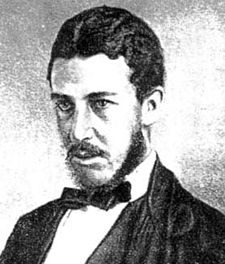
William Stanley Jevons, who coined the term "double coincidence of wants"


A while back I had an interesting conversation with David Andolfatto on his post Evil is the Root of All Money. This is surely one of the more catchy phrases developed by monetary economists, who tend to the less-flowery end of the literary scale. David fleshes out a model that shows how untrustworthiness, or evil (what is called a lack of commitment in the NME literature), can lead to the emergence of money.

David finds this interesting because his model doesn't need the absence of a double-coincidence of wants to exist in order to motivate a demand for money. The double-coincidence problem - the unlikelihood that two producing individuals meeting at random would each have goods that the other wants - has historically been the explanation of choice for the emergence of monetary exchange. After all, if one person doesn't want another's goods, she can still transact by accepting some third commodity that is itself highly liquid and therefore likely to be easily passed on come the next transaction.

I think David is pushing a catchy phrase too far. While I agree that a lack of double coincidence of wants is not necessary to explain monetary exchange, neither is a lack of commitment necessary to explain monetary exchange.

Imagine a world with no evil, and no, this isn't a John Lennon song. Individuals in that economy are 100% trusted to pay their promises, i.e. full commitment exists. But people are widely dispersed and suffer from the double-coincidence of wants problem. It will make sense to trade amongst each other using transferable personal promises. Each promise guarantees to pay out some quantity of goods produced by that individual upon that promise being presented for redemption. Because promises are far cheaper to hold and transport than actual goods, these promises, and not goods, will circulate along long transactional chains. When a promise is accepted by someone who actually desires the given good, that  promise will be "putted back" to the promisor, the good will be delivered, and the promise canceled. Thus you get monetary exchange... without the evil.

One real-life example of such as system would be the bills of exchange market that existed during the medieval ages up to the early 1900s. See this paper, for instance. Start on page 23 when the discussion on transferability, assignability, negotiability, and endorsement begins if you want a flavour for the bills of exchange system.

Monday, September 10, 2012

ECB, IMF, ICU and other exciting monetary acronyms


Gavyn Davies drew some interesting parallels between the ECB and the IMF last week. This follows on his post the "ultimate taboo", in which he analyzed the idea of "convertibility risk", a term first used by ECB head Mario Draghi in a speech in late July.

Gavyn points out that in explicitly drawing attention to its job of controlling convertibility risk - ie. ensuring that all euros are the same - the modern ECB is becoming more like the IMF. Specifically, during Bretton Woods the IMF sometimes financed the balance of payments deficits of member nations in order to ensure the system of fixed exchange rates stayed, well, fixed. When it did so, the IMF was engaging in a mind game of sorts with the market, for the market knew that the IMF knew that the market knew that rates could be modified if attacked with enough force. In admitting to the world the existence of convertibility risk, the ECB is now displaying an IMF-degree of hyper self-awareness... for the first time.

In order to ensure that this financing was not permanent, the IMF would impose limits on the borrowing nation's finances. This is what the ECB is now doing, too, as Gavyn points out. For instance, in order to be able to participate in the ECB's new outright monetary transactions (OMT) program, nations will be expected to conform to basic ECB requirements or risk being dropped. This is the idea of "conditionality".

In the comments I brought up a comparison to the institution that the IMF could have been if Keynes had won his debate against Harry Dexter White: the International Clearing Union (ICU). I only point this out because having as many comparisons as possible might help shed clarity on the Target2 imbalance problem. It also just so happens that I am reading Barry Eichengreen's book Exorbitant Privilege which touches on this bit of monetary history.

The ICU was first put forward by Keynes in 1941. Much like the ECB clears all intra-European payments on its own books via Target2, the ICU was to have cleared all international payments on its own books. Where the ECB uses the euro, the ICU would have used the bancor. Keynes's purpose for establishing the clearing union was to ensure that each country would be "allowed a certain margin of resources and a certain interval of time within which to effect a balance in its economic relations with the rest of the world" (Proposals for an International Currency (or clearing) Union, February 11, 1942). This would allow the war-ravaged world to return to an era of unfettered free trade rather than isolationism, especially the sort that prevailed in the inter-war years in which narrow bilateral clearing agreements were the norm.

What is interesting is that unlike Target2's open ended granting of credit, Keynes envisioned that the ICU would set explicit limits on any country's deficits. Here is (presumably) Keynes:
Measures would be necessary to prevent the piling up of credit and debit balances without limit, and the system would have failed in the long run if it did not possess sufficient capacity for self-equilibrium to prevent this. (Proposals   for an International Currency (or clearing) Union, February 11, 1942)
It really is too bad that the architects of the Euro never bothered to read that gem. Here, for instance, are the specific fine-print defining the maximum ICU debit:
The amount of the maximum debit balance allowed to any member-State shall be determined by reference to the amount of its foreign trade, and shall be designated its quota... The initial quotas might be fixed by reference to the sum of each country's exports and imports on the average of (say) the three pre-war years, being either equal or in a determined lesser proportion to this amount, a special assessment being substituted in cases where this formula would be, for any reason, inappropriate. Subsequently, after the elapse of the transitional period, the quotas might be revised annually in accordance with the actual volume of trade in the three preceding years.
 A charge of 1 per cent. per annum will be payable to the Reserve Fund of the Clearing Union on the average balance of a member-State, whether credit or debit, in excess of a quarter of its quota; and a further charge of 1 per cent. on the average balance, whether credit or debit, in excess of half its quota. (ibid)
The keen reader will notice that in the above quote Keynes advocated levying penalties and limits not only on debtors to the system but also on creditors. These penalties were sure to be "valuable inducements towards keeping a level balance", as Keynes put it. Eichengreen draws attention to a more self-serving motive for Keynes's plan. Envisioning large US surpluses after the war (and large UK deficits), Keynes wanted to devise a way that would soften the effects of these imbalances on the UK by giving the nation time to rebalance, while at the same time penalizing the US for its large credit position. It was not to be, of course, as the ICU never came into being, displaced by the IMF and (to a degree) the Marshall Plan.

In addition to imposing a 1% charge per annum on surpluses above one-half of their quota, listed below are Keynes's specific proposals on credit limits:
A member-State whose credit balance has exceeded a half of its quota on the average of at least a year shall discuss with the Governing Board (but shall retain the ultimate decision in its own hands) what measures would be appropriate to restore the equilibrium of its international balances, including—
(a) measures for the expansion of domestic credit and domestic demand;
(b) the appreciation of its local currency in terms of bancor, or, alternatively, an increase in money-wages;
(c) the reduction of excessive tariffs and other discouragements against imports;
(d) international loans for the development of backward countries. 
I doubt modern Germany would accept a 1% penalty on its massive Target2 balance, or that it would let itself be shoehorned into increasing wages or expanding domestic credit so as to help its neighbors solve their Target2 imbalance problem.

As for debtor countries, Keynes envisioned that countries would not be able to increase their debit balances by more than one quarter of their quota without the permission of the ICU Governing Board. In the case of debit balances in excess of one-half of its quota, the Governing Board could force the country to reduce the value of its currency or impose controls on capital outflows. When debit balances exceeded three-quarters of the quota, the Board could put the debtor nation under a form of financial shunning in which
it may be asked by the Governing Board to take measures to improve its position and, in the event of its failing to reduce its debit balance below the figure in question within two years, the Governing Board may declare that it is in default and no longer entitled to draw against its account except with the permission of the Governing Board. Each member-State, on joining the system, shall agree to pay to the Clearing Union any payments due from it to a country in default towards the discharge of the latter's debit balance and to accept this arrangement in the event of falling into default itself. 
Anyhow, the point of all this is to show how the ECB is bereft of any form of control over its clearing members in comparison to what the ICU Governing Board would have exercised over its own members had it been established as per Keynes's plan. This may be one of the problems in forming a currency union. In order to motivate the political will necessary for the creation of any sort of international clearing union, prospective members can only be enticed to join by proposing systems with weak central control over member nation finances. But in order for a currency union to work, strong and systematic rules must be set in place prior to the system's debut. Thus the more robust ICUs of the world are destined to never get off the ground, whereas shaky propositions that should never get off the ground (like the ECB) do get off the ground.

Thursday, September 6, 2012

Hot or not?


The Rowe/Glasner/Sproul debate continues over hot potato-ish-ness of money. Here is Nick Rowe:
The hot potatoes simply pass from one hand to another. Unless they sell it back to the banks, to buy IOUs. But why would they want to do that? If I have opals I want to get rid of I will probably sell them at the specialised opal dealer, who will probably give me the best deal. If I have money I want to get rid of....well, everyone I deal with is a dealer in money. The bank is just one in a thousand. Why would we assume that the bank will always give me a better deal than the other 999?
Mike Sproul jumps in, but David doesn't, so instead I left a comment trying to anticipate what David would say:

Sunday, September 2, 2012

Wallace Neutrality... don't fight the Fed


Miles Kimball gave me some help on understanding Wallace Neutrality, which in turn might help me understand more where Stephen Williamson is coming from when he says QE is irrelevant. I asked Miles:
I'm not sure if I entirely understand the Wallace neutrality argument.
If I may paraphrase, does it mean something like... the Fed could buy a bunch of stocks on the NYSE, and they might be able to push their prices up (their dividend rates down). But if they did so, the price of these stocks would rise above their intrinsic value and profit-seeking agents would immediately take the opposite side of the trade, thereby pushing the purchased stocks' value back to their intrinsic value. So in order for the Fed to permanently increase stock prices above their intrinsic value, there must be some sort of "friction" that prevents profit-seeking agents from taking the other side of the trade. Is that what it means?
Miles:
Yes... You said it very well.
That's a relief. Sometimes I have troubles translating the somewhat Spockian language of formal economics into words that are more comfortable to me, that being the daily lingua of the marketplace, trading, and investing.

To further re-translate, I'd say the idea of Wallace Neutrality falls in the same boat as the old trader's adage... don't fight the Fed. If traders believe the Fed is all-powerful and too strong to trade against, then the Fed can effectively change assets prices above or below what they should otherwise be. If traders think they can fight the Fed, then the Fed can't change asset prices - traders will collectively take the other side of any Fed action, canceling out any Fed-induced price changes. What "friction" motivates traders to believe they can or can't fight the Fed?

Here is my older post on Stephen Williamson's QE irrelevance. The frictions I point to in that post are the Fed's size relative to other actors in asset markets and the Fed's ambivalence to profits/losses in a environment in which all other actors are hypersensitive to profits/losses. In other words... don't fight the Fed. It's massively big and doesn't care if it loses on the trade.

Brad DeLong had a comment on the idea of Wallace Neutrality here. Miles goes into the idea of Wallace Neutrality again here.

Microfoundations


I had an interesting conversation about microfoundations at David Andolfatto's blog.

David's post comes on the heels of a number of other posts by various bloggers. See here, here, here, here, here, here, and here. Here is David:
A narrow view of "microfoundations" is reflected in the idea that the methodology of microeconomic theory (specifying individual preferences, information sets, endowments, constraints, together with an equilibrium concept) can and should be brought to bear on macroeconomic questions. This is in contrast to an earlier methodology that specified and estimated behavioral relations at the aggregate level. (One can legitimately weigh the pros and cons of these (and other) methodologies.)
 Not many macro models are "microfounded" in a pure sense. Almost all models make at least some assumptions that may be viewed as ad hoc and provisional (subject to further investigation). I think of an ad hoc assumption as a restriction on behavior that is inconsistent with other aspects of the model, like maximizing behavior.
...just take a look at one of the dominant paradigms in macroeconomic theory--the New Keynesian framework. As anyone who is familiar with the paradigm knows, it is built around models that embed ad hoc assumptions reflecting the alleged costs associated with nominal wage and price adjustments in auction-like settings
...By the way, I like to take a broader view of "microfoundations;" or, rather, the search for microfoundations. Microfoundations does not, in my mind, mean stopping at preferences and technology, or anywhere else, for that matter. It simply means seeking a deeper understanding. 
I like this broader view. At some point, perhaps, microeconomics will find its own microfoundations in behavioral economics and psychology, which in turn will be microfounded in neuroscience, which in turn...

This post from Leigh Caldwell describes this idea.

Friday, August 17, 2012

Interest rates and gold


Nick Rowe recently asked what the point of repoing an object was when you could just sell it, repurchasing it later. He could see three reasons. Firstly, you might repo a particluar thing because you hold it dear and want it back. It might not be available were you to simply try buying it back. Secondly, you might repo an asset because future liquidity might be an issue. Thirdly, you might repo an asset rather than sell it because future prices are uncertain. My comment used gold markets as an analogy:
Nick, I think for financial assets you are right about points 2 and 3. In gold markets, for instance, you'd rather lend or swap (ie. repo) your gold than sell it (upon the anticipation of buying it back at some future point) because you might fear that, come time to buy the gold back, the future price could be much higher, or that the gold market could be illiquid and you might not be able to buy.
Incidentally, you can also sell your gold and buy a futures contract. Selling spot and buying a futures contract is financially equivalent to swapping (repoing) gold - in both transactions you'll lock in a guaranteed price and will avoid the risk of illiquidity. So your question: why repo? is similar to the question: should I sell some asset and simultaneously buy a futures contract or sell it and take the risk of buying back at spot at some future point in time.
Some people might recognize these various gold transactions. A gold swap — a temporary exchange of gold for cash — is transacted at the GOFO (gold forward) rate. A gold loan, which is an unsecured and temporary exchange of gold for nothing but a promise to repay, is transacted at the gold lease rate.

You can actually conceptualize both transactions as swaps. In the first, gold is temporarily swapped for a liquid and safe financial promise (cash). In the second, gold is temporarily swapped for an illiquid and safe financial promise (a promise to repay the gold ie. "paper gold"). Lingo-wise a swap is no more than a repo.

The different rates at which these two swaps are conducted — GOFO and the lease rate — will be determined by the relative subjective value gold owners place on the swapped-for assets. Because liquid financial promises provide more services to their holders than illiquid promises, anyone swapping away gold will prefer the former to the latter. That's why the gold lease rate — the rate paid by the person taking the gold to the person foregoing that gold - has always been higher than GOFO. After all, the party swapping away gold needs some increased financial incentive to take the illiquid "paper gold" asset rather than the liquid cash.

Indeed, liquid and safe financial assets are so valued, and so easily storable, that in general, anyone swapping away their gold will not receive a fee for foregoing the metal. Rather, they will pay a fee for the advantages of getting cash. This fee is what GOFO represents.

These ideas can be tough to conceptualize. A while ago I caught the folks at FT Alphaville mixing them up. For instance, the author maintained that a dearth of cash in markets now meant that
since their cash had become more valuable to the market than their gold, they could now make a return from lending cash against gold, as opposed to gold against cash.
The above comment implies that the gold swap rate — cash for gold, or GOFO rate — has somehow switched. But in actuality, those swapping away cash for someone else's gold always earn a return (GOFO). This is because they are foregoing liquidity. The gold lease rate has switched, but that is a different rate, and a different story altogether.

On the topic of gold, David Glasner asks why gold markets are rising due to hyperinflation fears but bond markets aren't:
Now my question — and it’s primarily directed to all those believers in the efficient market hypothesis out there — is how does one explain the apparently inconsistent expectations underlying the bond markets and the gold markets. Should there not be a profitable trading strategy out there that would enable one to arbitrage the inconsistent expectations of the gold markets and the bond markets?
I don't think there is any discordance to explain:
I think gold prices and bond prices have been rising over the last three years for similar reasons. In general, the economy-wide expected rate of return has been falling (towards zero, perhaps below it) as investors grow fearful of the future. This pushes people into safe bonds. It also pushes them into assets like gold that have very low storage costs, since buying some easily-storable durable asset and holding it over time provides a 0% return, better than most risky alternatives which are expected to fall.
So I don’t think there are segmented expectations in these two markets, nor do I think it is worthwhile trying to arbitrage them.
Returning to the discussion of GOFO, if today's gold markets were actually dominated by those who believed in the inevitability of hyperinflation rather than (fairly) rational actors, then GOFO would be inverted... in essence, anyone who swapped away their gold for cash would expect to receive the GOFO rate rather than pay it. The current practice, as I pointed out above, is to pay that rate, not receive it. The reason for the inversion would be because the destiny of cash in a hyperinflation is demonetization and, as a result, it will lose all of its liquidity premium, whereas gold's destiny is to be remonetized and gain a relative liquidity premium. As a result, any gold-for-cash swap based on a universal expectation of hyperinflation would require whoever foregoes the benefits of gold's inevitable superior liquidity to be compensated by a return. Needless to say, GOFO has not inverted. Those foregoing  their gold still pay up to those foregoing cash.


Wednesday, August 15, 2012

Is the Swiss National Bank really Chuck Norris?

I once got accused by Scott Sumner of having the silliest comment he had ever read back on this post. Recent events show that I wasn't being so silly.

Around that time, the Swiss National Bank (SNB) had announced a peg of 1.20 EUR/CHF. The argument going around the market monetarist blogs back then was that central banks were akin to Chuck Norris - they only needed to explicitly announce a target and that target would be effortlessly hit, just like how Chuck Norris can make a row of kung-fu masters fall like dominoes just by threatening to hit them.

I made a few other comments to the effect that a central bank has to build up credibility before anyone will accept it as Chuck Norris-like. Here is one comment:
On August 3, the SNB announced it would be purchasing CHF50b in assets to drive EUR/CHF up. Over the next five days it purchased this amount, but the CHF continued to strengthen. On the 10th the SNB announced it would be purchasing an additional CHF40b in assets, which it proceeded to purchase over the next five days. The CHF finally started to weaken. On the 17th, the SNB announced it would purchase another CHF80b in assets. The data shows that it executed this full amount by the end of the month.
EUR/CHF went from 1.02 on August 10 to 1.19 by August 28, so a lot of speculators were hurt. It fell back to 1.10 in the next four trading days, and then on September 6 the peg was announced. Presumably the announcement of the peg drove EUR/CHF back up to 1.20 but seems not have required as much effort, although I'd wait to see the SNB's next monthly bulletin to be sure.
The point of I was trying to make back then is that what made the 1.20 peg credible was the initial beating up by the SNB in August, so when it finally announced the peg, it didn't have much work to do. Had it not beat up long CHF specs in August, the target would have required an incredible amount of purchases to implement. A central bank that lacks credibility can't just announce and expect things to magically fall into place.

Fast forward to the present and something odd is happening. As the chart below shows, the SNB is buying up huge amounts of euros in order to defend the CHF peg.


According to the Chuck Norris theory of central banking, this shouldn't be happening. A central bank that announces an explicit target, as the SNB has done, shouldn't have to expend any effort to protect that peg. But SNB foreign currency holdings have increased from under CHF250b to over CHF350 in just two months.

The SNB shouldn't have to defend the peg because in promising to purchase infinite amounts of euro deposits at 1.2000 EUR/CHF, private European banks will in turn step in and purchase euro deposits with CHF 1.2000. That's because with the SNB backstopping 1.2000,  they know that they can't lose by purchasing all the euros offered at that rate. Indeed, other banks will be willing to purchase euros for CHF 1.2001, knowing that the first group of private banks will in turn step in at 1.2000 because the SNB in turn has committed to stepping in at 1.2000. In sum, by simply expressing a commitment to buy euro deposits at 1.2000, the SNB creates a self-fulfilling loop whereby others defend the peg on the SNB's behalf by buying all euros at some amount greater than 1.2000. That's Chuck Norris in action.

The fact that the SNB has been forced to purchase large amounts of euro deposits indicates that for some reason, private banks haven't been stepping in to do their part. As a result, the SNB has had to fill the gap they have vacated. This could be because the banks don't believe that the peg is credible. Or maybe the SNB was never Chuck Norris to begin with. If the SNB isn't, then why would the ECB or Fed be Chuck Norris-like?

Saturday, August 11, 2012

Decoding Glasner on reflux, inside and outside money, and reflux

I had a few comments on a recent David Glasner post. Basically, I was trying to understand the way he reconciles various aspects of the monetary system, namely, inside and outside money, the arbitrage mechanism that links these two assets, and the price level.

David responded to me-
Inside money cannot trade at a discount relative to outside money because inside money is issued on the condition of its being convertible into outside money, so they always are exchangeable at par. If too much inside money is created (i.e., more than the public desires to hold given the relative attractiveness of holding inside money relative to alternatives including outside money) it refluxes back to the issuing banks. 
David says that excess inside money (say convertible bank notes) will reflux back to an issuing bank. But the only way this can happen, as far as I can see, is if somehow that bank's inside money trades at a slight discount to outside money (gold). David in his first sentence above says that inside money cannot trade at a discount. But how else can a reflux process emerge if one can't fall to a discount with the other?

So a temporary price discrepancy is necessary to enforce reflux and keep the quantity of outside money equal to demand. But what happens if inside money - say convertible bank notes - and outside money - fiat notes - are considered perfect substitutes by their users? After all, they can both be used to pay taxes, buy stuff, and "store value" over time.

David, for instance, points out that-
Because inside money and outside money are fairly close substitutes, the value of outside money is determined simultaneously in the markets for inside and outside money, just as the value of butter is determined simultaneously in the markets for butter and margarine. 
The problem here is... if inside and outside money are perfect substitutes, then given an excess issuance of convertible bank notes by a bank, why would the price discrepancy between inside and outside money that is necessary to drive reflux ever arise to begin with?

Rather, in an effort on the part of individuals and firms to rid themselves of their extra balances (either inside or outside money, they are indifferent) they will spend away both willy nilly. In spending away outside money, they will cause the price level to increase (the value of outside money to fall). David points this out:
If, however, the quantity of inside money increases because the public wants to hold the additional balances and are induced to hold inside money instead of outside money, then the value of outside money will tend to fall (causing the value of inside money to fall as well) unless the value of outside money is maintained by some form of convertibility or a price rule.
But doesn't this mean that issuing banks might cause infinite inflation by issuing inside money no one wants, thereby confirming Milton Friedman's wariness of free banking?

It would if currency users did in fact treat inside and outside money as equal.

But we live in a competitive banking system in which multiple banks issue inside money and receive other bank's inside money via cheque deposits and money transfers. Furthermore, currency users do not have uniform views about the quality of various money-like assets. Unlike individuals, competitive banks are picky and prefer to hold outside money rather than another bank's inside money. Put differently, banks are very sensitive to the store-of-value nature of inside money... they tend to view it as a financial asset characterized by risk and return, and not as a medium of exchange, and therefore view inside money as inferior to outside money due to its riskiness. Furthermore, holding another bank's inside money because they value its liquidity would be silly, since the bank already has its own liquidity factory. Thus the moment they receive another bank's inside money, a bank returns it to that issuer as fast as they can, settling with outside money. A reflux mechanism is thereby enforced by interbank settlement.

In sum, excess issuance of inside money by banks will not cause the price level to rise - it will cause the inside money to return to issuer.

Monday, August 6, 2012

The Interdistrict Settlement Account finally settles

Last year and earlier this year, debate concerning the Target2 mechanism in Europe and its growing imbalances shed some light on the equivalent institution in the US, the Interdistrict Settlement Account (ISA). The argument has been made to import the ISA structure into Europe, in particular, the yearly settling of accounts between district Reserve banks. If the ECB were to operate this way, the idea goes, then there would be some sort of quid pro quo on Target2 imbalances - European national central banks (NCBs) would not be able to accumulate debts to each other ad infinitum.

The observation was made that contrary to what one might expect, the ISA at the time did not seem to be balancing. Thus the idea that adoption of the Fed model would impose "firm limits" on intra-Eurosystem credit is invalid, since the Fed doesn't seem to always impose settlement on district Reserve banks. This April, though, the ISA seems to have been settled, as the charts below will illustrate. Nevertheless, the point still stands that the Federal Reserve System may choose to constrain itself by requiring interdistrict settlement or it may choose to forego that restraint.