Tuesday, October 9, 2012

Great Depression in charts

Gauti Eggertson's paper (pdf) claims that the US recovery from the Great Depression was driven by a shift in expectations caused by FDR's new policies:
"On the monetary policy side, Roosevelt abolished the gold standard and—even more importantly—announced the explicit objective of inflating the price level to pre-Depression levels. On the fiscal policy side, Roosevelt expanded real and deficit spending, which made his policy objective credible."
I thought the chart below was effective:


Economists often describe the regime uncertainty created by FDR's policies. Does anyone know of any charts illustrating regime uncertainty between 1930 and 1934?

Saturday, October 6, 2012

The world of monetary affairs in the 1920s and 30s: a complex affair

Bob Murphy asked whether Lionel Robbins was right in saying that central bank policy in the late 1920s and early 1930s was a complete reversal of traditional central bank doctrine.

A blogger named Lord Keynes, (perhaps the ghost of Keynes? ), takes exception to this idea, noting somewhat dramatically that Murphy is "dead wrong" and "utterly absurd".


These sorts of us vs. them dramatics would be best left to the likes of professional sports casters (economic history is not a competition), but I'm going to look past the silly theatrics so as to delve into what is a very interesting issue.

The nub of the debate, in my view at least, boils down to the definition of traditional central banking doctrine. My conclusion, which I'll get around to explaining, is that compared to the 1800s, central bank policy between 1929-1932 was probably a complete reversal. But compared to Fed policy through most of the 1920s, the Fed's policy during the Depression was similar. One major categorical difference between 1923 and 1932 was the broad powers provided by the Glass Steagall Act. More on that later.

First, what is it that Lionel Robbins said? Here is a snippet:
Now in the pre-war business depression a very clear policy had been developed to deal with this situation. The maxim adopted by central banks for dealing with financial crises was to discount freely on good security, but to keep the rate of discount high. (Robbins, The Great Depression (pdf), Pg 72)
What Robbins is enunciating here is basically the classical advice of Walter Bagehot. In a crisis, central bankers should accept all collateral in return for loans, but should only do so at a penalty rate. (The latter is what Robbins is referring to when he says that a central bank must "keep the rate of discount high"). By penalty rate, Bagehot meant that central bank should only lend at some interest rate above the current market rate. In modern parlance, this is like saying that the central bank must force borrowers to take a haircut on their collateral.

A Bagehotian central bank is an extremely passive one. As a pure lender, it must wait for banks to come to it, as opposed to a buying central bank which can initiate transactions on its own behalf. Furthermore, a Bagehotian central bank can't influence banks to borrow at its discount window by lowering its own rate below the market's, since it must lend at a penalty rate. It can drop its rates to some low level, but only after the market has done so.

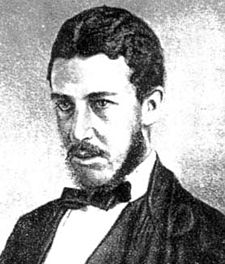
Walter Bagehot
The sort of central banking that Robbins would contrast to the traditional Bagehot view is the post-WWI central banking practice that first arose in the US in the early 1920s. How was it different? Here, for instance, Allan Meltzer describes a New York Fed governor Benjamin Strong's position in 1921 on lending at a penalty rate:
He [Strong] believed the correct policy was to lend freely at a penalty rate, and he again cited Bagehot's rule. In July he continued to favor a penalty rate in principle, but recognized that the principle had to give way. He told [Montagu] Norman that money conditions "hardly justified.... making a further reduction." There were other considerations, however that made classical methods "not always the wisest," and he added, there were "political considerations brought about by the change of administration". History of the Federal Reserve, Vol 1, pg 125-126
By the early 1920s, due to a combination of factors, some of them political, others technical, the Fed had effectively stopped discounting at a penalty rate.

At the same time the Fed had begun to use open market operations in monetary policy, not just discounts. Daniel Kuehn touches on this here. Open market operations were not entirely unknown to Bagehotian central banks. But they were a sideshow to discount window lending. The thinking behind the Fed's unveiling of open market operations can be found in the Fed's 1923 Annual Report, in which the Riefler-Burgess doctrine (a term coined by Meltzer) was first described.

The idea behind Riefler-Burgess was that if the Fed embarked on a campaign of open market operations, member banks would have more reserves and could borrow less at the discount window. This would lower their borrowing costs and allow them to expand their lending, thereby buoying the economy. Rather than constantly varying discount rates, often a politically unpopular option, the Fed could simply engage in an activist open market sales/purchases program so as drive banks to, or pull banks away from the discount window, and thereby slow or spur on the economy. As Meltzer points out, discount rates now played second fiddle to open market operations:
The Riefler-Burgess doctrine is ambivalent about the role of the discount rate. At most, it has a supporting role; at worst, it has little supplementary effect. Strong, who used the doctrine as a guide to policy, was ambivalent about the independent effect of discount reate changes. ibid. Pg 264
The result of all this was that by 1923, the Federal Reserve was no longer Bagehotian. Rather than a passive wallflower that stepped in only rarely, it actively participated at all points in an economy's trajectory.


The upshot is that when Lionel Robbins describes the Federal Reserve open market purchases of $410m from October 1929 to December 1930 as breaking with tradition (pg. 73), he is right... since the tradition he is referring to is Bagehot's and not the more recent 1920s Riefler-Burgess tradition. At the same time, Lord Keynes isn't wrong to point out that Fed policy in the Great Depression was similar to Fed policy during the 1920s, insofar as they both relied heavily on open market operations.

 As Lord Keynes points out in his post, there is certainly a quantitative difference between Fed policy in 1923 and 1932. See the chart below of Fed government bond holdings and bankers' acceptances, the former of which shows a terrific spike in 1932. In this post, I called the 1932 event QE0. The Fed was permitted to buy bankers' acceptances in the open market, but usually just set a fixed rate and let sellers come to it.


There is an important qualitative difference between 1923 and 1932. The difference is this. Before 1932, all Federal Reserve notes had to be backed 40% by gold and 60% by “eligible paper”. The latter was made up primarily of commercial paper. The passage of the Glass Steagall Act in February 1932 allowed government securities to be eligible, and therefore dramatically increased the ability of the Fed to engage in QE with government debt. Prior to then, the government could only engage in QE with government debt to the extent that it already had excess gold and eligible paper. It was constrained. The effects of this constraint, and its removal, is best seen in the chart by the orange line, which shows the Fed's government bond-to-gold ratio. Having never risen above 20%, the passage of Glass Steagall allowed the ratio to rise to  60% in 1934.

In a nutshell, the Fed could never have done what it did in 1932 in 1923.

Friday, October 5, 2012

Canada in 3 graphs

Bank of Canada researchers recently published an interesting paper tilted the Evolution of Canada's Global Export Market Share.

One's gut reaction is to assume that with the commodities boom of the last decade, Canada's export share would have dramatically risen. We are, after all, hewers of wood and drawers of water, and the stuff we sell is generally more expensive.


Not so. I've cribbed a few charts and tables from the paper:


As the table shows, Canada's share of global exports has steadily declined since 1990 from 4.1% to 2.8%, despite oil prices being some 8x higher than before..

Why is this? The next table illustrates growth in various Canadian and world export markets:


While Canada's energy commodity exports have ballooned, look what has happened to machinery, automotive, and consumer exports since 2001. Splat. The commodity boom's influence on Canada's export share has been entirely counterbalanced by general weakness in Canadian manufacturing exports. 

There are many reasons for this. Canada's rising cost structure sure hasn't helped. The following chart shows  real effective exchange rates for manufacturing sectors across several countries: 


Since 2001, Canada has experienced some of the fastest growing costs when it comes to manufacturing. As a result, it's tough to justify building, let alone maintaining, export capacity in Canada's manufacturing regions.

If labour and other costs weren't sticky, we wouldn't be seeing this effect. Rather, the nominal rise in the Canadian dollar of the past ten years would be perfectly offset by local wage cuts, ensuring that real costs stayed constant. But we don't live in that world. That's why monetary policy has bite, and why devaluations are effective.

Wednesday, October 3, 2012

QE-zero

Bob Murphy asks if central bank actions taken during the early 1930s might be considered "unprecedented". In the comments I pointed out that during that era an early form of QE was tried. I'm not referring here to the famous 1933 Roosevelt purchases of gold that market monetarists often point to. For instance, see David Glasner here, David Beckworth here, and Scott Sumner here. Scott also has a very interesting paper on the 1933 gold purchasing program (pdf). No, I was referring to the 1932 treasury purchasing program.

I'm going to replicate the simple graphical analysis that market monetarists use in order to look at the 1932 episode. See this post by Lars Christensen, for example, who overlays important monetary events (QE1, QE2, LTRO) over the S&P500.

Here is the context. Prior to 1932, the Federal Reserve system was significantly limited in its ability to embark on large purchases of government securities. This was because of strict backing laws in the Federal Reserve Act that limited eligible backing assets to gold and assets accepted as collateral for Fed discount loans, primarily commercial paper. In effect, the Reserve banks could only purchase government debt to the extent that there was already excess gold and discounted assets on the Reserve bank balance sheets.

This limitation was removed with the passage of the Glass Steagall Act of February 1932, which allowed the Fed to include government debt as backing for notes and deposits. Almost immediately the Federal Reserve began a large scale asset purchasing program that increased the system's government debt portfolio from $743 million at the end of February 1932 to $1413m by May. The program, which I'll call QE0, continued at a slower rate after May, eventually hitting a peak just above $1800m by the end of July 1932. I overlay this on the Dow Jones Industrial Average.


The second chart extends the time frame to include 1933, putting QE0 on a scale with the Roosevelt devaluation.


Gavyn Davies, who has treaded this path before, notes that Milton Friedman and Anna Schwartz declared QE0 to be a success. In their Monetary History of the United States, the two drew attention to the conjunction of QE0 with a lull in bank failures and a "tapering off of the in the decline in the stock of money". They point to the bottoming of industrial production in August, five months after QE0 started, as a sign of its success. In his History of the Federal Reserve, Allan Meltzer also strikes a note of optimism when he discusses QE0, noting many of the same improvements in data that Friedman and Schwartz point to. Meltzer writes that "it seems likely that had purchases continued, the collapse of the monetary system during the winter of 1933 might have been avoided" and notes the rise in stock prices beginning in July as evidence.


But no market monetarist would agree with Friedman and Schwartz's analysis, since the new breed of monetarists take asset prices as the best indication of monetary stance. Scott Sumner points out here, for instance, that US equity markets had one of their fastest two day rallies in history as President Hoover met with Congressional leaders to begin work on Glass Steagall. All good, then, for the market monetarist stance, who like to see rising market prices coincide with easy monetary policy at the zero lower bound. Unfortunately for them that was the end of the rally. Markets continued falling to new lows even as QE0 accelerated. Scott Sumner indeed notes that "In many respects, the period from April to July 1932 was the worst three months of the entire Depression. Commodity prices continued to fall, and both stock prices and industrial production reached their Depression lows in July." Oddly enough, only with the end of the QE0 did stock prices begin to rise again, as the first chart shows, which runs contra to market monetarist thinking.

No wonder then that market monetarists prefer to look at the second chart. In 1933, the conjunction of increases in stock prices with various monetary events, including the departure of the dollar from gold convertibility and Roosevelt's gold purchase plan, is quite striking. This cozy relationship is no doubt the main reason that market monetarists prefer to point to 1933 rather than QE0 for evidence of monetary policy effectiveness at the zero lower bound.

QE0's seeming failure might seem to confirm Murray Rothbard's view that the huge increase in the money supply engendered by QE0 "endangered public confidence in the government's ability to maintain the dollar on the gold standard," leading to a loss of confidence on the part of foreigners who drew out gold, and on the part of Americans who converted deposits into notes. This turned an intended inflation into an unintended deflation. The aboves is also Peter Temin's view, who points out that the purchases reduced confidence, the resulting gold outflow nullifying QE0's potential for expansion.

My reading of Scott Sumner is that the 1932 purchasing program was rendered ineffective because of growing expectations that the dollar would float, leading to gold ouflows and an ensuing general panic in equity markets. In meting out blame for this panic, Sumner emphasizes the role of Congress in engendering uncertainty rather than the Fed's QE0 program. Once the dollar panic was alleviated and the hoarding instinct of foreign central banks and the private sector satiated, markets began their rise in the latter half of 1932.

Hsieh and Romer (pdf), on the other hand, use data on dollar forward rates to show that traders were not particularly worried about a dollar devaluation. If H&R are right, then one can only conclude that there was no dollar crisis, leaving market monetarists with no corresponding event to blame for counterbalancing the inflationary effects of QE0. So QE0, it would seem, was irrelevant -- a non-event. Scott talks about Hsieh and Romer's paper here. It all seems rather tortured to me, and leads me to (somewhat dismally) conclude that one can probably get a set of historical events to say almost anything one wants it to say. This is not a criticism of Scott, but one of economics in general.


All of this leads to current discussion of QE3. The New Keynesians point to the ineffectiveness of QE itself at the zero lower bound. For instance, see Simon Wren Lewis. This view is inherited from John Maynard Keynes who, it would seem, got it from his observations of the failure of QE0 in 1932. Here is Keynes in Chapter 15 of the General Theory:
There is the possibility, for the reasons discussed above, that, after the rate of interest has fallen to a certain level, liquidity-preference may become virtually absolute in the sense that almost everyone prefers cash to holding a debt which yields so low a rate of interest. In this event the monetary authority would have lost effective control over the rate of interest. But whilst this limiting case might become practically important in future, I know of no example of it hitherto. Indeed, owing to the unwillingness of most monetary authorities to deal boldly in debts of long term, there has not been much opportunity for a test. Moreover, if such a situation were to arise, it would mean that the public authority itself could borrow through the banking system on an unlimited scale at a nominal rate of interest.
The most striking examples of a complete breakdown of stability in the rate of interest, due to the liquidity function flattening out in one direction or the other, have occurred in very abnormal circumstances. In Russia and Central Europe after the war a currency crisis or flight from the currency was experienced, when no one could be induced to retain holdings either of money or of debts on any terms whatever, and even a high and rising rate of interest was unable to keep pace with the marginal efficiency of capital (especially of stocks of liquid goods) under the influence of the expectation of an ever greater fall in the value of money; whilst in the United States at certain dates in 1932 there was a crisis of the opposite kind — a financial crisis or crisis of liquidation, when scarcely anyone could be induced to part with holdings of money on any reasonable terms.
The market monetarists, of course, believe in the effectiveness of QE, although announcing a nominal target would greatly improve a purchase program's effectiveness.

This is what Nick Rowe means when he says that there are two types of economists (HT Bob Murphy). There are those who think monetary policy is useless at the zero lower bound, and those who don't. I wonder how much of the divergence between these two traditions has its origins in the data generated by the separate 1932 and 1933 monetary events. If you focused on the latter, you became a monetary policy believer, if you focused on the former you stopped believing.

Other posts on the efficacy of QE or lack thereof:

Stephen Williamson (here and here), Bruegel blog, Richard Serlin, Miles Kimball (here and here), Paul Krugman (here and here), James Hamilton, John Taylor, John Cochrane, Michael Woodford (pdf), and Simon Wren Lewis.

Thursday, September 20, 2012

Gold conspiracies


James Hamilton and Stephen Williamson recently commented on the Republican Party platform (pdf) which calls for a commission to investigate possible ways to set a fixed value for the dollar. Here is a fragment from the platform:
Determined to crush the double-digit inflation that was part of the Carter Administration’s economic legacy, President Reagan, shortly after his inauguration, established a commission to consider the feasibility of a metallic basis for U.S. currency. The commission advised against such a move. Now, three decades later, as we face the task of cleaning up the wreckage of the current Administration’s policies, we propose a similar commission to investigate possible ways to set a fixed value for the dollar.
JDH was puzzled about the odd timing of an appeal to the gold standard, given a decade of low (sometimes negative) inflation. I left my thoughts on JDH's blog. Gold bugs tend to be conspiracy theorists... but here I think I've one-upped them by placing them within their own conspiracy theory box:
One theory here is that politics are driven by that class that has enjoyed the most recent financial success. Hard core gold bugs have surely enjoyed plenty of success over the last ten years, and are therefore capable of using their financial clout to get their favored policies onto the radar screen.
Note that the last Gold Commission was brought into law by Jessie Helms in October 1980. Gold had run up from $35 to $850. According to Anna Schwartz, that was the third bit of pro-gold legislation enacted by Helms:
"On his initiative, the right to include gold clauses in private contracts entered into on or after October 28, 1977, was enacted (P.L. 95-147). The program of Treasury medallion sales, in accordance with the American Arts Gold Medallion Act of November 10, 1978, was a second legislative initiative of the senator (P.L. 95-630). He was unsuccessful in subsequent efforts in 1980 to suspend Treasury gold sales and to provide for restitution of IMF gold."
Rumour has it that that Helms was friendly with the gold lobby.
So like the late 70s, the gold lobby's commodity of choice has risen in value, therefore their political agenda benefits from a large financial tailwind.
Just a theory, of course.
On a side note, Hamilton linked to an old paper he wrote called The Role of the International Gold Standard in Propagating the Great Depression (or here). The thrust of his paper is that in a gold standard, speculators are continuously evaluating the probability of changes in a currency's peg to gold. New conditions might cause a speculative run, with both that run and the government's response being potentially destabilizing. Hamilton points out that the run on the dollar in fall of 1931, and the Fed's response to this run - a dramatic increase in discount rates - helped propagate the Great Depression. Here is a paragraph, my emphasis in bold:
It sometimes is asserted that a gold standard introduces “discipline” into the conduct of monetary and fiscal policy where none existed before. Indeed, this was the primary reason that the world returned to an international gold standard during the 1920s. I cannot think of a more naive and more dangerous notion. A government lacking discipline in monetary and fiscal policy in the absence of a gold standard likely also lacks the discipline and credibility necessary for successfully adhering to a gold standard. Substantial uncertainty about the future inevitably will result as speculators anticipate changes in the terms of gold convertibility. This institutionalizes a system susceptible to large and sudden inflows or outflows of capital and to destabilizing monetary policy if authorities must resort to great extremes to reestablish credibility.
To bring Hamilton's point into its modern context, just substitute the word "gold" with the ECB's Target2 settlement system. If gold convertibility can be doubted, so can Greek Euro convertibility into German Euro and vice versa, the parities of which are enforced by Target2. The uncertainty about the alleged fixity of rates has spawned a 1931-type panic out of those euro-currencies most likely to suffer from an adjustment in their conversion ratio. That's why the huge Target2 imbalances are there... more or less for the same reasons the US experienced huge gold outflows in 1931.

Monday, September 17, 2012

The root of all money


William Stanley Jevons, who coined the term "double coincidence of wants"


A while back I had an interesting conversation with David Andolfatto on his post Evil is the Root of All Money. This is surely one of the more catchy phrases developed by monetary economists, who tend to the less-flowery end of the literary scale. David fleshes out a model that shows how untrustworthiness, or evil (what is called a lack of commitment in the NME literature), can lead to the emergence of money.

David finds this interesting because his model doesn't need the absence of a double-coincidence of wants to exist in order to motivate a demand for money. The double-coincidence problem - the unlikelihood that two producing individuals meeting at random would each have goods that the other wants - has historically been the explanation of choice for the emergence of monetary exchange. After all, if one person doesn't want another's goods, she can still transact by accepting some third commodity that is itself highly liquid and therefore likely to be easily passed on come the next transaction.

I think David is pushing a catchy phrase too far. While I agree that a lack of double coincidence of wants is not necessary to explain monetary exchange, neither is a lack of commitment necessary to explain monetary exchange.

Imagine a world with no evil, and no, this isn't a John Lennon song. Individuals in that economy are 100% trusted to pay their promises, i.e. full commitment exists. But people are widely dispersed and suffer from the double-coincidence of wants problem. It will make sense to trade amongst each other using transferable personal promises. Each promise guarantees to pay out some quantity of goods produced by that individual upon that promise being presented for redemption. Because promises are far cheaper to hold and transport than actual goods, these promises, and not goods, will circulate along long transactional chains. When a promise is accepted by someone who actually desires the given good, that  promise will be "putted back" to the promisor, the good will be delivered, and the promise canceled. Thus you get monetary exchange... without the evil.

One real-life example of such as system would be the bills of exchange market that existed during the medieval ages up to the early 1900s. See this paper, for instance. Start on page 23 when the discussion on transferability, assignability, negotiability, and endorsement begins if you want a flavour for the bills of exchange system.

Monday, September 10, 2012

ECB, IMF, ICU and other exciting monetary acronyms


Gavyn Davies drew some interesting parallels between the ECB and the IMF last week. This follows on his post the "ultimate taboo", in which he analyzed the idea of "convertibility risk", a term first used by ECB head Mario Draghi in a speech in late July.

Gavyn points out that in explicitly drawing attention to its job of controlling convertibility risk - ie. ensuring that all euros are the same - the modern ECB is becoming more like the IMF. Specifically, during Bretton Woods the IMF sometimes financed the balance of payments deficits of member nations in order to ensure the system of fixed exchange rates stayed, well, fixed. When it did so, the IMF was engaging in a mind game of sorts with the market, for the market knew that the IMF knew that the market knew that rates could be modified if attacked with enough force. In admitting to the world the existence of convertibility risk, the ECB is now displaying an IMF-degree of hyper self-awareness... for the first time.

In order to ensure that this financing was not permanent, the IMF would impose limits on the borrowing nation's finances. This is what the ECB is now doing, too, as Gavyn points out. For instance, in order to be able to participate in the ECB's new outright monetary transactions (OMT) program, nations will be expected to conform to basic ECB requirements or risk being dropped. This is the idea of "conditionality".

In the comments I brought up a comparison to the institution that the IMF could have been if Keynes had won his debate against Harry Dexter White: the International Clearing Union (ICU). I only point this out because having as many comparisons as possible might help shed clarity on the Target2 imbalance problem. It also just so happens that I am reading Barry Eichengreen's book Exorbitant Privilege which touches on this bit of monetary history.

The ICU was first put forward by Keynes in 1941. Much like the ECB clears all intra-European payments on its own books via Target2, the ICU was to have cleared all international payments on its own books. Where the ECB uses the euro, the ICU would have used the bancor. Keynes's purpose for establishing the clearing union was to ensure that each country would be "allowed a certain margin of resources and a certain interval of time within which to effect a balance in its economic relations with the rest of the world" (Proposals for an International Currency (or clearing) Union, February 11, 1942). This would allow the war-ravaged world to return to an era of unfettered free trade rather than isolationism, especially the sort that prevailed in the inter-war years in which narrow bilateral clearing agreements were the norm.

What is interesting is that unlike Target2's open ended granting of credit, Keynes envisioned that the ICU would set explicit limits on any country's deficits. Here is (presumably) Keynes:
Measures would be necessary to prevent the piling up of credit and debit balances without limit, and the system would have failed in the long run if it did not possess sufficient capacity for self-equilibrium to prevent this. (Proposals   for an International Currency (or clearing) Union, February 11, 1942)
It really is too bad that the architects of the Euro never bothered to read that gem. Here, for instance, are the specific fine-print defining the maximum ICU debit:
The amount of the maximum debit balance allowed to any member-State shall be determined by reference to the amount of its foreign trade, and shall be designated its quota... The initial quotas might be fixed by reference to the sum of each country's exports and imports on the average of (say) the three pre-war years, being either equal or in a determined lesser proportion to this amount, a special assessment being substituted in cases where this formula would be, for any reason, inappropriate. Subsequently, after the elapse of the transitional period, the quotas might be revised annually in accordance with the actual volume of trade in the three preceding years.
 A charge of 1 per cent. per annum will be payable to the Reserve Fund of the Clearing Union on the average balance of a member-State, whether credit or debit, in excess of a quarter of its quota; and a further charge of 1 per cent. on the average balance, whether credit or debit, in excess of half its quota. (ibid)
The keen reader will notice that in the above quote Keynes advocated levying penalties and limits not only on debtors to the system but also on creditors. These penalties were sure to be "valuable inducements towards keeping a level balance", as Keynes put it. Eichengreen draws attention to a more self-serving motive for Keynes's plan. Envisioning large US surpluses after the war (and large UK deficits), Keynes wanted to devise a way that would soften the effects of these imbalances on the UK by giving the nation time to rebalance, while at the same time penalizing the US for its large credit position. It was not to be, of course, as the ICU never came into being, displaced by the IMF and (to a degree) the Marshall Plan.

In addition to imposing a 1% charge per annum on surpluses above one-half of their quota, listed below are Keynes's specific proposals on credit limits:
A member-State whose credit balance has exceeded a half of its quota on the average of at least a year shall discuss with the Governing Board (but shall retain the ultimate decision in its own hands) what measures would be appropriate to restore the equilibrium of its international balances, including—
(a) measures for the expansion of domestic credit and domestic demand;
(b) the appreciation of its local currency in terms of bancor, or, alternatively, an increase in money-wages;
(c) the reduction of excessive tariffs and other discouragements against imports;
(d) international loans for the development of backward countries. 
I doubt modern Germany would accept a 1% penalty on its massive Target2 balance, or that it would let itself be shoehorned into increasing wages or expanding domestic credit so as to help its neighbors solve their Target2 imbalance problem.

As for debtor countries, Keynes envisioned that countries would not be able to increase their debit balances by more than one quarter of their quota without the permission of the ICU Governing Board. In the case of debit balances in excess of one-half of its quota, the Governing Board could force the country to reduce the value of its currency or impose controls on capital outflows. When debit balances exceeded three-quarters of the quota, the Board could put the debtor nation under a form of financial shunning in which
it may be asked by the Governing Board to take measures to improve its position and, in the event of its failing to reduce its debit balance below the figure in question within two years, the Governing Board may declare that it is in default and no longer entitled to draw against its account except with the permission of the Governing Board. Each member-State, on joining the system, shall agree to pay to the Clearing Union any payments due from it to a country in default towards the discharge of the latter's debit balance and to accept this arrangement in the event of falling into default itself. 
Anyhow, the point of all this is to show how the ECB is bereft of any form of control over its clearing members in comparison to what the ICU Governing Board would have exercised over its own members had it been established as per Keynes's plan. This may be one of the problems in forming a currency union. In order to motivate the political will necessary for the creation of any sort of international clearing union, prospective members can only be enticed to join by proposing systems with weak central control over member nation finances. But in order for a currency union to work, strong and systematic rules must be set in place prior to the system's debut. Thus the more robust ICUs of the world are destined to never get off the ground, whereas shaky propositions that should never get off the ground (like the ECB) do get off the ground.

Thursday, September 6, 2012

Hot or not?


The Rowe/Glasner/Sproul debate continues over hot potato-ish-ness of money. Here is Nick Rowe:
The hot potatoes simply pass from one hand to another. Unless they sell it back to the banks, to buy IOUs. But why would they want to do that? If I have opals I want to get rid of I will probably sell them at the specialised opal dealer, who will probably give me the best deal. If I have money I want to get rid of....well, everyone I deal with is a dealer in money. The bank is just one in a thousand. Why would we assume that the bank will always give me a better deal than the other 999?
Mike Sproul jumps in, but David doesn't, so instead I left a comment trying to anticipate what David would say:

Sunday, September 2, 2012

Wallace Neutrality... don't fight the Fed


Miles Kimball gave me some help on understanding Wallace Neutrality, which in turn might help me understand more where Stephen Williamson is coming from when he says QE is irrelevant. I asked Miles:
I'm not sure if I entirely understand the Wallace neutrality argument.
If I may paraphrase, does it mean something like... the Fed could buy a bunch of stocks on the NYSE, and they might be able to push their prices up (their dividend rates down). But if they did so, the price of these stocks would rise above their intrinsic value and profit-seeking agents would immediately take the opposite side of the trade, thereby pushing the purchased stocks' value back to their intrinsic value. So in order for the Fed to permanently increase stock prices above their intrinsic value, there must be some sort of "friction" that prevents profit-seeking agents from taking the other side of the trade. Is that what it means?
Miles:
Yes... You said it very well.
That's a relief. Sometimes I have troubles translating the somewhat Spockian language of formal economics into words that are more comfortable to me, that being the daily lingua of the marketplace, trading, and investing.

To further re-translate, I'd say the idea of Wallace Neutrality falls in the same boat as the old trader's adage... don't fight the Fed. If traders believe the Fed is all-powerful and too strong to trade against, then the Fed can effectively change assets prices above or below what they should otherwise be. If traders think they can fight the Fed, then the Fed can't change asset prices - traders will collectively take the other side of any Fed action, canceling out any Fed-induced price changes. What "friction" motivates traders to believe they can or can't fight the Fed?

Here is my older post on Stephen Williamson's QE irrelevance. The frictions I point to in that post are the Fed's size relative to other actors in asset markets and the Fed's ambivalence to profits/losses in a environment in which all other actors are hypersensitive to profits/losses. In other words... don't fight the Fed. It's massively big and doesn't care if it loses on the trade.

Brad DeLong had a comment on the idea of Wallace Neutrality here. Miles goes into the idea of Wallace Neutrality again here.