Showing posts with label Paul Krugman. Show all posts

Wednesday, March 21, 2018

Fiatsplainin'


I am a big fan of coinsplainers like Andreas Antonopoulos. Listening to Andreas explain how bitcoin works is a great learning opportunity for folks like myself who know far less about the topic. I am less impressed when bitcoiners engage in fiatsplainin', since they generally have an iffy understanding of the actual financial system and central banking in particular.

So for the benefit of not only bitcoiners, but anyone interested in the topic of money, I'm going to fiatsplain' a bit. (I really like this term, I got it from an Elaine Ou blog post)

Paul Krugman recently had this to say about the difference between bitcoin and fiat money:
"So are Bitcoins a superior alternative to $100 bills, allowing you to make secret transactions without lugging around suitcases full of cash? Not really, because they lack one crucial feature: a tether to reality.
Although the modern dollar is a “fiat” currency, not backed by any other asset, like gold, its value is ultimately backed by the fact that the U.S. government will accept it, in fact demands it, in payment for taxes. Its purchasing power is also stabilized by the Federal Reserve, which will reduce the outstanding supply of dollars if inflation runs too high, increase that supply to prevent deflation.
Bitcoin, by contrast, has no intrinsic value at all. Combine that lack of a tether to reality with the very limited extent to which Bitcoin is used for anything, and you have an asset whose price is almost purely speculative, and hence incredibly volatile."
Now if you've been reading my blog for a while, you'll know that I agree with Krugman's point that bitcoin lacks a tether to reality while a banknote doesn't. He mentions two forces that anchor a $100 banknote, or provide it with intrinsic value: tax acceptability and a central bank's guarantee to regulate its quantity. Let's explore each of these anchors separately, starting with tax acceptability.

---------------------

The idea that taxes can determine the value of a fiat currency is easier to grasp by looking at currencies issued during the American colonial era. Coins tended to be scarce in the 1700s and there were few private banks, so the legislatures of the colonies issued paper money to meet the public's demand for a circulating medium. They had a neat trick for ensuring that this paper money wasn't deemed worthless by citizens. A fixed quantity of paper money was issued concurrently with tax legislation that scheduled a series of future levies large enough to withdraw each of the notes that the legislature had issued. This combination of a fixed quantity of notes and future taxes of the same size was sufficient to give paper money value, since the public would need every bit of paper to satisfy their tax obligations.

Examples of colonial currency (it's worth enlarging this image to see the detail) From: Early Paper Money of America

Crucially, once a colonial government had received a note in payment of taxes, it removed said note from circulation and destroyed it. If the government re-spent notes that had already been used to discharge taxes, this would be problematic. The tax obligation would be more-than-used-up, leaving no reason for the public to demand outstanding banknotes. Krugman's "tether to reality" would have been removed.

---------------------

The modern day version of Krugman's tax acceptability argument is a bit more complicated. For starters, no one actually pays their taxes with banknotes. Rather, the tax acceptability argument applies to a second instrument issued by central banks otherwise known as reserves (in the U.S.) or settlement balances (in Canada). All commercial banks keep accounts at the central bank, these accounts allowing them to make instant electronic payments to other banks during the course of the business day, or to the government, which typically will also have an account at the central bank.

When Joe or Jane Public are ready to settle their taxes, they initiate a set of financial transactions that ultimately results in their bank depositing funds on their behalf into the government's account at the central bank. To satisfy the public's demand to make tax payment, commercial banks will want to have some central bank settlement balances on hand. So the existence of taxes "drives" banks to hold a certain quantity of central bank settlement balances, thus generating a positive price for these instruments. And since a banknote is in turn tethered to a central bank deposit via the central bank's promise to convert between the two at par, by transitivity the banknote is also tethered.

Unlike the colonial era, however, the tax authority—the government—can't destroy money. The government can either accumulate central bank deposits, or spend them, but it can't cancel them. What generally happens with the government's account at the central bank is that as soon as it is topped up with some tax receipts, they get quickly spent on government programs, salaries, and other expenses. So these funds simply boomerang right back into the accounts that commercial banks keep at the central bank, undoing the tethering that is achieved by tax acceptability.

Put differently, for every bank that demands settlement balances to pay taxes, and thus help gives those balances value, there is a government official who spends them away, and negates this value. So government taxes by themselves don't anchor modern central bank money.

To really anchor the value of central bank money, the government needs to withhold from spending the money it has received from taxes. The more it resists spending incoming tax flows, the more balances accumulate in its account at the central bank. If the government keeps doing this, at some point almost every single deposit that the central bank has ever issued will have been sucked up into the government's account. With almost no deposits remaining for paying taxes—and thus no way for the public to avoid arrest for failure to meet their tax obligations—the value that banks collectively place on deposits will reach incredible heights.

And that explains how tax acceptability (combined with a strategy of not spending taxes received) can provide modern fiat money with backing sufficient to generate a positive price.

---------------

Let's turn now to Krugman's second reason for central bank money having intrinsic value, the central bank itself. As I said earlier, a government can freeze deposits by accumulating them, but it can't destroy them. The only entity that can destroy money is the central bank. It achieves this is by conducting open market sales of bonds and other assets. When it sells a bond to a bank, the central bank gets one of its own deposits in return, which it proceeds to destroy.

Imagine that banks collectively decide they have too many central bank deposits and start to sell them (a scenario I discussed here). This sudden urge to rid themselves of money will cause inflation. In a worst case scenario, they will get so desperate that the purchasing power of money falls to zero. The central bank can counter this by selling assets and destroying deposits. In the extreme, it can sell each and every one of the assets it owns, shrinking the deposit base to zero. Its actions will drive the value of deposits into the stratosphere, since banks need a token amount to make interbank payments.

And that, in short, explains how central banks can provide dollars with backing sufficient to generate a positive price.

----------------

Which of Krugman's two forces—tax acceptability or a central bank's guarantee to regulate the quantity of money—is more important for imbuing little electronic bits with value?

We know that a government can anchor a fiat money purely through tax acceptability. Colonial money proves it. (Here is another example from the Greenback era) But can a fiat currency be anchored solely through the actions of the central bank, without the help of tax acceptability? Let's set the scene. Imagine that the government has unplugged itself from the central bank by closing its account and instead opening accounts at each of the nation's commercial banks. Since all incoming tax receipts and outgoing government payments are now made using private bank deposits, the government no longer generates a demand for central bank settlement balances.

This "unplugging" needn't drive the value of central bank money to zero. The central bank has assets in its vault, after all, so any decline in the value of central bank money can be easily offset by an appropriate set of central bank open market sales and concomitant reductions in the quantity of deposits. So the answer to my question in the previous paragraph is that money doesn't require tax acceptability to have intrinsic value. Tax acceptability is sufficient, but not necessary.

That being said, on a day-to-day basis the value of modern central bank money is regulated by a messy combination of both factors. Money is constantly flowing in and out of the government's account at the central bank, and this can have an effect on the purchasing power of money. Likewise, central bank open market operations are frequently conducted on a daily basis in order to ensure the system has neither a deficiency nor an excess of balances. It's complicated.

And that ends this episode of fiatsplainin.' Fiat money is indeed backed and has intrinsic value, as Krugman says, and it does so for several reasons.


PS. If you are interested in colonial currency, you should read some of Farley Grubb's papers.

Addendum:

On Twitter, someone had this to say about my post:
฿ryce gives me the perfect opportunity to keep fiatsplainin'. Contrary to ฿ryce's claim, the fact that Arizona plans to accept tax payments in the form of bitcoin does not provide bitcoin with a tether to reality. For every bitcoin that Arizona accepts, it will just as quickly spend it away. The first is undone by the other. You'll notice that this is the same reason I gave for modern central bank money not necessarily being anchored by tax acceptability; whereas taxes vacuum up central bank money, government officials typically reverse this vacuum by quickly spending it, so the net effect is a wash.

To tether central bank money to reality, governments need to not only make it tax acceptable but also  be ready to let those balances pool up in its account, thus setting a limit on the overall supply of balances. Likewise with bitcoin. If the Arizona government were to accumulate incoming bitcoins as part of an overall policy of never spending them, then it would be removing bitcoins from circulation, in essence "destroying" them. And this would provide bitcoin with a true anchor. Of course the Arizona government isn't going to do this. It will want to rid themselves of bitcoins the moment it gets them.

Friday, September 11, 2015

Hike rates when you hear the creak of inflation at the door, not when you see the whites of its eyes


A common argument against the Fed raising interest rates next week is the asymmetry in risks that it faces. If it keeps rates low too long and sets off inflation, no problem: it can quickly hike rates a few times to bring prices back in line. However, if it boosts rates too early and an unintended slowdown sets in, the Fed won't have room to cut a few times in order to fix its mistake. That's because the Fed is at the zero lower bound, the edge of the world in monetary policy terms. To avoid this conundrum, the Fed should hold off as long as possible before raising, at least until it "sees the whites of inflation's eyes."

As Paul Krugman points out, the asymmetry argument is only a recent one. Historically U.S. interest rates have hovered far above zero. If the Fed made a mistake, it didn't have to worry about falling off the edge of the world in order to fix the situation, it could simply ratchet rates down a few times. Rather than waiting till the last minute to see the whites of inflation's eyes before hiking, the FOMC only had to hear the creak of inflation at the door.  

I don't buy the current asymmetry argument. I might have bought it back in 2013, but the data has changed.

Over the last year, Sweden, Switzerland, Denmark, and the ECB have all demonstrated to the world that central banks can safely lower rates into negative territory without setting off the sorts of ill effects that economists have always feared, the main one being a race into 0% yielding cash. The theory here is that if a central bank reduces rates to, say, -0.1%, then paper cash—which pays a superior 0% return—starts to look pretty attractive. An arbitrage process begins whereby central bank deposits are converted into cash until all deposits have disappeared. Thus rates can't be reduced below 0%.

Evidence over the last 12 months shows otherwise. Denmark's Nationalbank has kept its deposit rate at -0.75% since early February. Danes, however, are not scrambling for banknotes, as the chart below shows. After seven months of negative rates, cash and coin outstanding are growing at a rate that lies pretty much at its two decade average.


The Swiss National Bank has maintained a -0.75% overnight rate since January, yet there's been no spike in Swiss paper franc demand, as the next chart shows. In fact, cash outstanding seems to be growing at one of its slowest rates in years.


We'd expect the demand for Swiss cash to be especially sensitive when interest rates fall below zero because the SNB issues the world's largest value banknote; the hefty 1000 sFr. The more valuable the banknote the lower the cost of storing wealth in cash form. These carrying costs are particularly important in determining the profitability of flight into cash at negative interest rates. A central bank can push rates a sliver below 0% without setting off a flight out of deposits into banknotes as long as there are inconveniences in storing cash. The greater these inconveniences, the larger that sliver.

The fact that the SNB has been able to keep rates at -0.75% for seven months now without setting off a stampede into 1000 notes indicates that the burdens of holding Swiss currency are higher than everyone had previously thought. It would seem that investors would rather lose 0.75% each year than bear the costs of storing 1000s. At some negative interest rate, maybe -1.5%, the flight into Swiss notes will start. But it hasn't yet. As for the U.S., its highest value banknote is the lowly $100, so it's fair to assume that the costs of storing U.S. paper money are significantly higher than Swiss money. Which means that if the Swiss can safely cut to -0.75% without setting off cash arbitrage, the Fed should be able to descend to at least -1.0% before panic ensues.

The second greatest fear surrounding sub zero U.S. rates has always concerned money market mutual funds. The worry here is that should the Fed reduce rates too deep, a financial intermediary known as a money market mutual fund (MMMF) will 'break the buck,' causing panic and terror among ordinary investors.

MMMFs are like regular mutual funds except their share price stays fixed at US$1.00. Investors can cash out at that price whenever they want, enjoying low but steady dividend payments until then. MMMFs maintain par conversion by investing in safe, highly liquid short term debt. However, if the Fed were to drive short term rates into negative territory, MMMFs would be forced to invest in assets that promise a negative return. $1000 invested in t-bills, for instance, would be worth only $999 upon maturity. That means that an MMMF simply wouldn't have a sufficient quantity of assets to allow everyone to redeem their shares at US$1.00. The fund will "break the buck," or mark its share value down to something like 99 cents to allow for full redemption. Since MMMFs are supposed to be cash-like—in fact, many of them offer cheque-writing capability—such a development would be disastrous, or so goes the story.

I don't consider breaking the buck to be a terrible outcome, but even if it is, European money market mutual funds—faced with negative interest rates—have already found an ingenious way to avoid it; a Reverse Distribution Mechanism. Rather than reducing redemption below par, MMMFs simply dock the number of shares that each shareholder has in his or her account. For example, as rates slide below zero, instead of 100 units being worth only $0.99 each, a shareholder forfeits one unit and ends up with 99 units worth $1.00 each. The deeper rates fall, the less units each investor owns. The genius of this patch is that the purchasing power of each share stays constant, but the negative interest rate is efficiently passed on to the owner of the MMMF.

So fears of a dash into cash at 0% and a collapse of MMMFs are just bogeymen. If the Fed hikes to 0.5% this month—and this proves to be a mistake—it still has plenty of room to make things right. Given how well Europe has coped over the last twelve months, the Fed can easily cut rates another 1.5% to -1.0%; that's six quarter-point reductions or thirty ten-point cuts. Only when rates falls beyond Swiss or Danish levels, say to -1.0%, will the Fed find itself in truly asymmetrical territory. (If necessary, here are some simple ways to allow for even more negative rates).

To be clear, that doesn't mean I think the Fed should hike rates next week. The fact that the FOMC continues to undershoot its 2% core inflation target would seem to indicate that holding off might be the right thing to do. Rather, I don't think that Fed policy makers need to wait to see the white's of inflation's eyes before they hike, they need only wait to hear the creak of inflation at the door.

Monday, August 3, 2015

Freshwater macro, China's silver standard, and the yuan peg

1934 Chinese silver dollar with Sun Yat-sen on the obverse side. The ship may be in freshwater.

I have been hitting my head against the wall these last few weeks trying to understand Chinese monetary policy, a project that I've probably made harder than necessary by starting in the distant past, specifically with the nation's experience during the Great Depression. Taking a reading break, I was surprised to see that Paul Krugman's recent post on the topic of freshwater macro had surprising parallels to my own admittedly esoteric readings on Chinese monetary history.

Unlike most nations, China was on a silver standard during the Great Depression. The consensus view, at least up until it was challenged by the freshwater economists that people Krugman's post, had always been that the silver standard protected China from the first stage of the Great Depression, only to betray the nation by imposing on it a terrible internal devaluation as silver prices rose. This would eventually lead China to forsake the silver standard. This consensus view has been championed by the likes of Milton Friedman and Anna Schwartz in their monumental Monetary History of the United States.

This consensus view is a decidedly non-freshwater take on things as it it depends on features like sticky prices and money illusion to generate its conclusions. After all, given the huge rise in the value of silver, as long as Chinese prices and wages—the reciprocal of the silver price—could adjust smoothly downwards, then the internal devaluation forced on China would be relatively painless. If, however, the necessary adjustment was impeded by rigidities then prices would have been locked at artificially high levels, the result being unsold inventories, unemployment, and a recession.

Just to add some more colour, China's internal devaluation was imposed on it by American President Franklin D. Roosevelt in two fell swoops, first by de-linking the U.S. from gold in 1933 and then by buying up mass quantities of silver starting in 1934. The first step ignited an economic rebound in the U.S. and around the world that helped push up all prices including that of silver. As for the second, Roosevelt was fulfilling a campaign promise to those who supported him in the western states where a strong silver lobby resided thanks to the abundance of silver mines. The price of silver, which had fallen from 60 cents in 1928 to below 30 cents in 1932, quickly rose back above its 1928 levels, as illustrated in the chart below. According to one contemporary account, that of Arthur N. Young, an American financial adviser to the Nationalist government, "China passed from moderate prosperity to deep depression."


As I mentioned at the outset, this consensus view was challenged by the freshwater economists, no less than the freshest of them all, Thomas Sargent (who was once referred to as "distilled water"), in a 1988 paper coauthored with Loren Brandt (RePEc link). New data showed that Chinese GDP rose in 1933 and only declined modestly in 1934, this due to a harvest failure, not a monetary disturbance. So much for a brutal internal devaluation.

According to Sargent and Brandt, it appeared that "that there was little or no Phillips curve tradeoff between inflation and output growth in China." In non econo-speak, deflation.not.bad. They put forth several reasons for this, including a short duration of nominal contracts and village level mechanisms for "haggling and adjusting loan payments in the event of a crop failure." In essence, Chinese prices were very quick to adjust to silver's incredible rise.

Four years later, Friedman responded (without Schwartz) to what he referred to as the freshwater economists' "highly imaginative and theoretically attractive interpretation." (Here's the RePEc link). His point was that foreign trade data, which apparently has a firmer statistical basis than the output data on which Sargent and Brandt depended, revealed that imports had fallen on a real basis from 1931 to 1935, and particularly sharply from 1933 to 1935. So we are back to a story in which, it would seem, the rise in silver did place a significant drag on the Chinese economy, although Friedman grudgingly allowed for the fact that perhaps he may have "overestimated" the real effects of the silver deflation.

So this battle of economic titans leads to a watered-down story in which Roosevelt's silver purchases probably had *some* deleterious effects on China. China would go on to leave the silver standard, although what probably provided the final nudge was a bank run that kicked off in the financial centre of Shanghai in 1934. Depositors steadily withdrew the white metal from their accounts in anticipation of some combination of a devaluation of the currency, exchange controls, and an all-out exit from the silver standard, a process outlined in a 1988 paper by Kevin Chang (and referenced by Friedman). This self-fulfilling mechanism, very similar in nature to the recent run on Greece, may have encouraged the authorities to sever the currency's linkage to silver and put it on a managed fiat standard. The Chinese economy went on to perform very well in 1935 and 1936, although that all ended with the Japanese invasion in 1937.

---

As I mentioned at the outset, these events and the way they were perceived by freshwater and non-freshwater economists seem to me to have some relevance to modern Chinese monetary policy. As in 1934, China is to some extent importing made-in-US monetary policy. The yuan is effectively pegged to the U.S. dollar, so any change in the purchasing power of the dollar leads to a concurrent change in the purchasing power of the yuan.

There's an asterisk to this. In 1934, China was a relatively open economy whereas today China makes use of capital controls. By immobilizing wealth, these controls make cross-border arbitrage more difficult, thus providing Chinese monetary authorities with a certain degree of latitude in establishing a made-in-China monetary policy.  But capital controls have become increasingly porous over the years, especially as the effort to internationalize the yuan—which requires more open capital markets—gains momentum. By maintaining the peg and becoming more open, China's monetary policy is getting ever more like it was in 1934.

As best I can tell, the monetary policy that Fed Chair Janet Yellen is exporting to China is getting tighter. One measure of this, albeit an imperfect one, is the incredible rise of the U.S. dollar over the last year. Given its peg, the yuan has gone along for the ride. Another indication of tightness in the U.S. is Scott Sumner's nominal GDP betting market which shows nominal growth expectations for 2015 falling from around 5% to 3.2%. That's quite a decline. On a longer time scale, consider that the Fed has been consistently missing its core PCE price target of 2% since 2009, or that the employment cost index just printed its lowest monthly increase on record.

If Chinese prices are as flexible as Brandt and Sargent claimed they were in 1934, then the tightening of U.S. dollar, like the rise in silver, is no cause for concern for China. But if Chinese prices are to some extent rigid, then we've got a Friedman & Schwartz explanation whereby the importation of Yellen's tight monetary policy could have very real repercussions for the Chinese economy, and for the rest of the world given China's size.

Interestingly, since 2014 Chinese monetary authorities have been widening the band in which the yuan is allowed to trade against the U.S. dollar. And the peg, which authorities had been gently pushing higher since 2005, has been brought to a standstill. The last time the Chinese allowed the peg to stop crawling higher was in 2008 during the credit crisis, a halt that Scott Sumner once went so far as to say saved the world from a depression.

Chinese GDP [edit: GDP growth] continues to fall to multi-decade lows while the monetary authorities consistently undershoot their stated inflation objectives. In pausing the yuan's appreciation, the Chinese authorities could very well be executing something like a Friedman & Schwartz-style exit from the silver standard in order to save their economy from tight U.S. monetary policy. This time it isn't an insane silver buying program that is at fault, but the Fed's odd reticence to reduce rates to anything below 0.25%. Further tightening from Yellen may only provoke more offsetting from the Chinese... unless, of course, the sort of thinking underlying Wallace and Brandt takes hold and Chinese authorities decide to allow domestic prices to take the full brunt of adjustment.

Monday, May 4, 2015

Is the U.S. dollar in the midst of the longest Wile E. Coyote moment ever?


It would be wrong to blame the economics blogosphere's failure to foresee the 2008 credit crisis on complacency. Better to say that bloggers were distracted. Instead of sifting through sub-prime and CDO data, they were grappling with an entirely different threat, the impending Wile E. Coyote moment in the U.S. dollar. The perpetual racking-up of ever larger debts by the U.S. to the rest of the world for the sake of funding current consumption, and the eventual dollar collapse that this implied, was believed to be tripping point numero uno at the time. Look no further than Paul Krugman, who in September 2007 (in just his fourth blog post) had this to say:
The argument I and others have made is that the U.S. trade deficit is, fundamentally, not sustainable in the long run, which means that sooner or later the dollar has to decline a lot. But international investors have been buying U.S. bonds at real interest rates barely higher than those offered in euros or yen — in effect, they've been betting that the dollar won’t ever decline.
So, according to the story, one of these days there will be a Wile E. Coyote moment for the dollar: the moment when the cartoon character, who has run off a cliff, looks down and realizes that he’s standing on thin air – and plunges. In this case, investors suddenly realize that Stein’s Law applies — “If something cannot go on forever, it will stop” – and they realize they need to get out of dollars, causing the currency to plunge. Maybe the dollar’s Wile E. Coyote moment has arrived – although, again, I've been wrong about this so far. 
He wasn't alone in this belief.* As we all know, the U.S. did eventually run off a cliffbut it wasn't the cliff that everyone expected. Instead of a dollar crisis, we had a financial and banking crisis. As for the dollar, it has since raced to its highest point in more than a decade.

Since 2008 the ensuing slow recovery has dominated the blogosphere. And now we are hearing about an impending secular stagnation, a new macroeconomic dystopia that has been manufactured by many of the same folks who contributed to the debate surrounding the econ blogosphere's first great macroeconomic bogeyman, U.S. dollar imbalances.

Before allowing the sec stag story to scare our pants off, shouldn't we be asking what happened to the first bogeyman? Given the econ blogosphere's silence on the topic of U.S. dollar imbalances, one could be forgiven for assuming that these imbalances had been resolved. But they haven't. Sure, the U.S.'s current account deficits aren't as high as before. But the stock measure of U.S. indebtedness, its net international investment position (NIIP), continues to fall to increasingly negative levels. Ten years ago, when bloggers were focused on the issue, the U.S. owed $2 trillion more than foreigners owed it, about 15-20% of GDP. The NIIP now clocks in at 39% of GDP, or $7 trillion. See chart below. So if anything, the stock measures that worried so many economists in 2005 have only gotten worse.


What I have troubles understanding is why folks like Larry Summers are having so much success selling the world on their newest bogeymansecular stagnationwhen they have never properly atoned for the bland ending to their first story. Why has growing U.S. international indebtedness never led to a U.S. dollar collapse as predicted? What mistakes did these prognosticators make? Or should we think of the the dollar's Wile E.Coyote moment as just an extended onefor the last ten years the greenback has been hanging in air, not realizing that it's been slated for a collapse.  Reading through old blog posts and articles written circa 2006, the dollar's blithe disregard of its eventual demise was often met by invocations of Stein's law: "If something cannot go on forever, it will stop" or Rudi Dornbusch’s first corollary of Stein’s Law: “Something that can’t go on forever, can go on much longer than you think it will.” It could be that the doomsayers still invoke these quotations, but surely there's a statute of limitations on invocations of Wile E. Coyote.

If the creators of the first bogeyman are just the victims of awful timing, then the net stock data on which they initially based their initial pessimism has only worsened. This means that they should be doubling down on their warnings of impending dollar doom. Instead, we get a steady stream of warnings over a totally different macroeconomic disaster; secular stagnation.

The other side to the story is that maybe we aren't in the midst of the longest Wile E. Coyote moment ever. Maybe the U.S. dollar bears were wrong about imbalances all along.

The fact that foreigners are willing to perpetually buy U.S. financial assets and fund a reckless U.S. consumption binge seems, on the surface, to be a violation of the eternal rule of quid pro quoan even exchange of one thing for another. In return for a mere promise of distant consumption, Americans are getting valuable foreign labour and goods. 

But what if something is missing to this story? Consider that a financial asset isn't a mere IOU. Rather, it is an IOU twinned with a durable consumption good. This very special good is called liquidity. Workers in the financial industry incur a significant amount of time and energy in fabricating this component. They expend this effort because people will pay good money to consume liquidity. Just like having a fire extinguisher or a revolver on hand provides a measure of relief, the possession of liquidity provides its owner with a stream of comfort.

Unfortunately, liquidity is never sold as a stand-alone product. Like a room with a viewyou can't buy the view without also getting the roompeople who want to own liquidity must simultaneously buy the attached financial asset.

It just so happens that the Yankees are the world's leading manufacturer of liquidity premia. This means that foreigners may be gobbling up such incredible amounts of American financial assets not because they have an urge for U.S. IOUs per se, but because they desire to consume the liquidity premia that go along with those IOUs. The U.S.'s NIIP, which is supposed to include only financial assets, is effectively being contaminated by consumption goods. Specifically, some portion of U.S.'s liabilities to the rest of the world is actually comprised of accumulated exports of liquidity premia. Rather than classifying these liquidity services as a stock of financial assets/liabilities, they should be reclassified as a flow of liquidity services and moved to the current account side of the U.S.'s balance of payments, along with the rest of the U.S.'s goods & services exports. This would have the effect of making the U.S.'s NIIP much less abysmal then it appears. Rather than Americans living beyond their means, this allows us to tell a story in which foreign goods and services are being bartered for liquidity premia which, like machines or wheat or apple pie, require the toil and sweat of American laborers to produce. This isn't an extravagant privilege, it's honest quid pro quo.**

We can argue about the size of the liquidity premia that the U.S. exports. On the one hand, these premia may outweigh the value of goods & services that the U.S. imports, indicating that rather than being profligate, Americans are tightwads. Or this number may be relatively small, indicating that while Americans are less spendthrift than is commonly assume, they still aren't models of prudence.

I'm not sure if the creators of the blogosphere's first great bogeyman would agree with any of this, since not only have they gone silent on the topicthey've switched to talking about a new bad guy.*** Interestingly, if exports of liquidity premia explain why the U.S.'s negative NIIP is not a catastrophe in the making but a stable equilibrium, those same liquidity premia can explain some of the stylized symptoms of so-called secular stagnationnamely persistently falling interest rates

Liquidity is static, it interferes with many of the supposedly clear signals we get from data. If liquidity led economists astray in the last decade by creating what seemed to be ominously extreme dollar stock imbalances, it may be leading them astray this decade by creating what seem to be ominously low real interest rates. The last thing we want is a repeat of the previous decade in which economists missed out on the big one because they were so focused on what, in hind sight, seems to have been a bogus threat.


*Here is DeLong. It was one of Brad Setser's favorite topics. Non-bloggers including Rogoff and Summers also questioned the ability of the U.S. to generate perpetual current account deficits.
** The idea that the U.S. is exporting something unseen in the official data isn't a new idea. In this 2006 paper, Ricardo Hausmann and Federico Sturzenegger were one of the first to discuss the idea of "dark matter." This stuff is comprised of U.S. exports of expertise and knowledge, liquidity services, and insurance services. Ricardo and Hausmann believed that dark matter increased the value of U.S. assets held overseas, but it seems to me that dark matter, namely liquidity premia, does the opposite: it decreases the value of U.S. liabilities to foreigners.
*** At the time, Krugman, Setser, DeLong, and Hamilton criticized the dark matter idea. Buiter, publishing through Goldman Sachs, also criticized the idea here

Saturday, March 7, 2015

Paul Krugman contemplates the lower bound


Paul Krugman has two posts discussing the effective lower bound to interest rates. The first I agree with, albeit with a caveat, and the other I don't.

In his first post Krugman takes Evan Soltas to task for including not only storage costs in his calculation of the effective lower bound, but also the extra convenience yield provided by deposits. Krugman's point is that once people are "saturated" with liquidity, as they seem to be now, then forgoing the liquidity of a short term marketable debt instrument (like a deposit) costs them nothing. If so, then the lower bound to nominal interest rates is solely a function of storage costs.

I agree with Krugman on this count. Take the 2 1/8% Nestle bond maturing May 29, which may be one of the first corporate bonds in history to trade at negative rates:


If it costs 0.50%/year to store and handle Swiss paper currency, then the rate on a Nestle bond can't fall below -0.50%. If it trades at -0.55%, an arbitrageur will contract to borrow the bond until it matures on May 29, sell it now, and convert the proceeds into 0% yielding SFr 1000 banknotes (these notes eventually being used to repay the bond lender). Our arbitrageur will incur 0.50%/year in storage costs while getting 0.55%/year from the bond lender, earning a risk-free return of 0.05%. Competition among arbitrageurs to harvest these gains will prevent Nestle's bond yield from falling much below storage costs.

However, here's the caveat. Krugman is assuming that liquidity is a homogeneous good. It could very well be that "different goods are differently liquid," as Steve Roth once eloquently said. The idea here is that the sort of conveniences provided by central bank reserves are different from the those provided by other liquid fixed income products like deposits, notes, and Nestle bonds. If so, then investors can be saturated with the sort of liquidity services provided by reserves (as they are now), but not saturated by the particular liquidity services provided by Nestle bonds and other fixed income products.

Assuming that  Nestle bonds are differently liquid than central bank francs, say because they play a special roll as collateral , then Soltas isn't out of line. Once investors have reached the saturation point in terms of central bank deposits, the effective lower bound to the Nestle bond isn't just a function of the cost of storing Swiss paper money, but also its unique conveniences.

This changes the arbitrage calculus. Our arbitrageur will now have to pay a fee to the lender of the Nestle bonds in order to compensate them for services forgone. Let's say the cost of borrowing the bond is 0.25%/year. Shorting the bond once it hits -0.55%, paying the borrowing cost of 0.25%, and storing the proceeds at a cost of 0.50% a year results in a loss of 0.20%. With the arbitrage being unprofitable, the Nestle bond can theoretically fall further than in our previous example before it hits the effective lower bound (specifically, its lower bound is now -0.75%).

How realistic is it that different goods are differently liquid? Since everybody seems to turn to Michael Woodford as the ultimate moderator of all questions monetary, here he is in his famous Jackson Hole paper [pdf] talking about the potential for different assets to have different types of convenience yields:
...one might suppose that Treasuries supply a convenience yield of a different sort than is provided by bank reserves, so that the fact that the liquidity premium for bank reserves has fallen to zero would not necessarily imply that there could not still be a positive safety premium for Treasuries.
Unfortunately, it's almost impossible to know for sure whether the liquidity services of a Nestle bond, or any other bond for that matter, are valued on the margin when people are already saturated in reserves. This is because there is no market for liquidity. If there was, then we could back out the specific price that investors are currently placing on a given bond's liquidity services, say by asking them to put a value on how much they need to be compensated if they are to forgo those services for a period of time. I've mentioned liquidity markets in many different posts. But I digress.

Krugman ends his first post saying that "I am pinching myself at the realization that this seemingly whimsical and arcane discussion is turning out to have real policy significance." But in his second post he backtracks, saying that a "minus x lower bound" isn't all that special in term of policy, implying that x (i.e. storage cost) is low and likely to diminish thanks to financial innovation. Here I disagree. Once a central bank has reduced rates to the point at which it is facing a run into paper storage, it can turn to a new tool to buy itself even more room to the downside for rate cuts: the manipulation of x, or the storage costs of cash.

To conclude, we've all found out by now that there isn't a zero lower bound. Instead it's a minus x lower bound. The next step is to realize that x isn't set in stone, it can itself be made into a tool of monetary policy.

Wednesday, March 4, 2015

Why so down?


If you've been reading Bill Gross's last few letters, you'll know that he's been a bit grumpy of late. It's that dang new trend that has hit bond markets, negative interest rates. Gross has been using words like incredible, surreal, and inconceivable to describe their arrival.Negative nominal bond rates certainly seem odd. Just look at the chart below, which illustrates what could very well be the two lowest-yielding bonds in the world, maybe all of history: the 3.75% Swiss government maturing in July 10, 2015 and the 4% Danish government bond maturing November 15, 2015. But is the idea of a negative rates really so strange?

Gross blames negative rates on central bankers who "continue to go too far in their misguided efforts to support future economic growth," in doing so "distorting" capitalism's rules. He's not alone; plenty of people claim that without autocratic price fixers like the SNB's Tommy Jordan and the Danmarks Nationalbank's Lars Rohde, rates would rapidly to rise to a more natural level like 1% or 2%.


Not necessarily. Even an economy without meddling central banks could be characterized by negative nominal rates from time to time, or, stealing from Tony Yates; "a negative rate doesn't distort capitalism, it IS capitalism."

Let's exorcise central bankers entirely from the economy. Imagine that we live in a world where things are priced in grams of gold. People walk around with pockets full of gold dust and a set of scales to measure the appropriate pinch necessary to pay for stuff. In this world, we all have a choice between two states: 1) we can hold gold dust in our pockets or 2) we can lend the dust to someone else for a period of time in return for an IOU. (Let's assume that the borrower is risk free.)

Each state has its own advantages and disadvantages. If we hold the gold dust in our pockets, we'll have instant access to a highly-liquid medium of exchange. Unlike illiquid media of exchange, liquid media provide us with the means to rapidly re-orient ourselves come unexpected events. With gold dust on hand we can purchase the necessities that allow us to cope with sudden problems or to take advantage of lucky breaks. At the end of the day, we may never actually use our gold to purchase things, preferring to keep it horded under our mattress. Even so, it hasn't sat their idly, but has provided us with a stream of consumption over time. The discounted stream of comfort that liquidity provides represents the total expected return on gold dust-held.

If we choose the second state and lend out our gold dust, we lose access to this liquidity and thus forfeit the expected stream of comfort that gold dust provides. Because we need to be compensated for this loss, a borrower will typically pay the lender a fee, or interest. But gold dust is burdensome. It is heavy and must be arduously weighed out and stored overnight in expensive vaults. IOUs, on the other hand, are a breeze to store. By offering to take our gold dust off our hands for a year or two, a borrower agrees to unburden us of storage expenses while providing us with a feather-light IOU in return.

So on the margin, when choosing between gold dust and an IOU, we are comparing the low storage costs of the illiquid IOU against the extra liquidity of cumbersome gold dust.

What might make rates turn negative in our central bankless gold dust world? Here are two ways:

1. Rising storage costs

Say that the costs of storing and handling gold dust grow substantially. At some much higher carrying cost, rather than requiring a fee from a borrower (i.e. positive interest) a lender will willingly pay the borrower a fee (i.e. will accept a negative interest rate) for the benefit of being temporarily unburdened of their gold dust. The loss of liquidity that the loan of gold dust imposes on the lender is entirely overwhelmed by the benefits of being freed from onerous storage costs. We get a sub-zero interest rate.

2. A narrowing liquidity gap

The second way to arrive at sub-zero interest rates is to narrow the vast gap between the respective liquidity returns on gold dust and IOUs. There are a few ways to go about this. Imagine that retailers who had previously only accepted gold dust as payment begin accepting IOUs too. Simultaneously, borrowers innovate by printing their paper IOUs in round numbers, making them far easier to count than grams of dust. All of this narrows the liquidity gap by improving the liquidity of IOUs. If the liquidity of IOUs improves so much that it exceeds the liquidity of the gold dust, an IOU effectively provides a greater stream of relief-providing services than gold. When this happens, lenders will clamour to pay a fee in order to lend their gold dust, since the superior optionality that an IOU provides is valuable to them. This fee represents a sub-zero interest rate.

Another way to narrow the vast liquidity gap between gold dust and IOUs is to create so much liquidity that, on the margin, liquidity becomes like air; it has no value. Neither gold dust nor IOUs can offer a superior liquidity return if society no longer puts any price on liquidity. In this situation, the interest rate on IOUs is purely a function of storage costs. Since an IOU will typically be less costly to store than the dust, the borrower of gold will typically receive a fee from the lender, a negative interest rate, in order to cover storage costs. Paul Krugman takes this tack here to explain negative rates.

So in the end, we can get negative nominal interest rates without central bankers. How far below zero can interest rates fall in a gold dust world? At least as low as the cost of storing gold dust and the degree to which the marginal value of an IOUs liquidity exceeds that of gold dust. Obviously we don't actually use gold dust in the real world, but the same principles apply to a cash-using economy. The theory behind negative rates isn't so surreal after all, Mr. Gross.


Some links to read:

Beyond bond bubbles: Liquidity-adjusted bond valuation by JP Koning [link]
What's the Actual Lower Bound? by Evan Soltas [link]
How Negative Can Rates Go? by Paul Krugman [link]
It turns out that the US was never at the zero bound by Scott Sumner [link]
What gold's negative lease rate teaches us about the zero-lower bound by JP Koning [link]

Sunday, February 9, 2014

A growing liquidity-premium on land

The Cider Mill, by Robin Moline

In general, the real price of land has been increasing all over the world, especially since the early 1990s. (Japan and Germany are the exception). The recent credit crisis hurt this trend in a few countries like Ireland, Spain, Netherlands, and the US, but in other countries like Belgium, Canada, Sweden, and Australia the secular rise in housing prices remains intact.

A popular explanation for the rise in land prices are the various versions of the secular stagnation thesis advocated by folks like Paul Krugman and Larry Summers. According to Krugman, if the natural rate of interest has become persistently negative—i.e. new capital projects are expected to yield a negative return—then investors will look to existing durable assets like gold or land that yield no less than a 0% return. The prices of these goods will be bid upwards, bubble-like. Or, as Summers puts it, if the return on capital is below the economy's growth rate, then intrinsically valueless ponzi assets may be recruited as stores of value to bridge the distance between an individual's present and the future. (Krugman and Summers's ideas are a bit hard to follow, but Nick Rowe has a bunch of helpful posts on these ideas).

In short, these theories explain the paradoxical conjunction of bubbles with a sluggish economy and low inflation.

I think that a better explanation for the rise in real land prices is the emergence of large liquidity premium on land. This premium isn't an irrational "bubble" phenomenon. Rather, over the last decade or two finance and real estate professionals have put in large amounts of time, sweat, and tears to improve the underlying infrastructure that facilitates the transfer of residential land. A few of these improvements include the optimization of the mortgage lending process by the adoption of automated underwriting systems, the development of mortgage scoring, higher loan-to-value ratios on mortgage loans, and the creation of the mortgage-backed securities market.

All these improvements mean that your parcel of land is not like your grandfather's parcel—it can be sold off, parceled up, rented out, collateralized, and re-hypothecated faster than ever. In short, land has become more like cash. Whereas in the past the purchase of a house made you dramatically less liquid, these days that same house impairs your liquidity position much less.

Like any other asset owner, land owners expect to enjoy three services: a pecuniary return such as capital appreciation, a non-pecuniary consumption yield, and liquidity services. In a world in which arbitrage ensures that all assets provide roughly the same return, any improvement in the liquidity services provided by land reduces the amount of capital appreciation people expect to earn on their land parcel (we'll assume the consumption return is constant). This reduction in expected capital appreciation comes about via a rise in land prices now relative to their expected future price. So the steady improvements in the liquidity services thrown off by land have created a stepwise rise in land prices. This rise might appear to be a bubble, but it's only the market's warm response to the finance industry's consistent upgrades to the mechanisms that facilitate transfers of land.

If you believe John Maynard Keynes, what we're seeing now is just a reversion to ancient times. In Chapter 17 of his General Theory, Keynes wrote: "It may be that in certain historic environments the possession of land has been characterized by a high liquidity-premium in the minds of owners of wealth..." He goes on to note that the high liquidity premiums formerly attaching to the ownership of land are now attached to money. It may be the case that in modern times these liquidity premia are detaching from traditional forms of money like deposits and returning to land, the evidence being the rise of land prices and decline in traditional deposit banking.

When a market bursts, the stagnation thesis has it that people have spontaneously switched from one bubble to a new one, or that the underlying features of the economy (i.e the negative natural interest rate) have changed. If land price increases are being driven by improvements in liquidity services rather than low-to-negative rates of return and resulting bubble-seeking behavior, than snap-backs may occur when the underlying architecture supporting that liquidity fails. Alternatively, different networks of finance professionals may be working hard to build up their own asset's liquidity, thus competing away the liquidity premium of the incumbent asset.

Here's an interesting data point: While almost every western nation experienced a housing price boom between the mid 1990s and 2008, Germany somehow missed the boat.

From the Economist's very useful housing price chart tool.

Was Germany somehow exempt from the stagnation that other Western nation's face? Perhaps Germans selected a different bubble asset than land? Or did the underlying mechanics governing the liquidity of the German market for residential land stay constant whereas those of most nation's improved?

We know that while MBS markets were deepening all over the world, German law did not permit MBS issuance until 1997, putting it far behind the mortgage slicing & dicing eight-ball. Rather, German residential real estate finance continued to be underpinned the centuries old pfandrief, or covered bond. While  the originator of an MBS can parcel away mortgages into a bankrupt-remote entity, the assets underlying a pfandriefe are required by law to stay on the issuer's balance sheet. The mortgages comprising MBS often have up to 100% loan-to-value ratios, but German law requires that pfandbriefe be backed by mortgage loans with a maximum of 60% of the home's "lending value" (lending value is more conservative than market value), which in practice means that Germans often have to put up 60-70% cash to buy a home. Such high requirements would surely stifle the liquidity of residential land, especially compared to places like Canada where permitted LTVs went from 80% to 100% in the space of ten years.

So while Keynes's liquidity premium may have migrated back to land in much of the western world, this doesn't seem to be the case in Germany. There are surely advantages to having avoided a rise in housing prices. On the other other hand, owning a liquid house rather than an illiquid one is a boon—it provides an individual with a fluid asset for dealing with an uncertain future. From this perspective, any attempt to stifle some asset's liquidity by limiting the finance industry's ability to innovate reduces the range of coping mechanisms that  a society is presented with.

P.S. I already wrote versions of this post. Here are these ideas applied to equity markets, here they are applied to bond markets. Same idea, different day, different market.

Friday, August 16, 2013

Give Bernanke a long enough lever and a fulcrum on which to place it, and he'll move NGDP


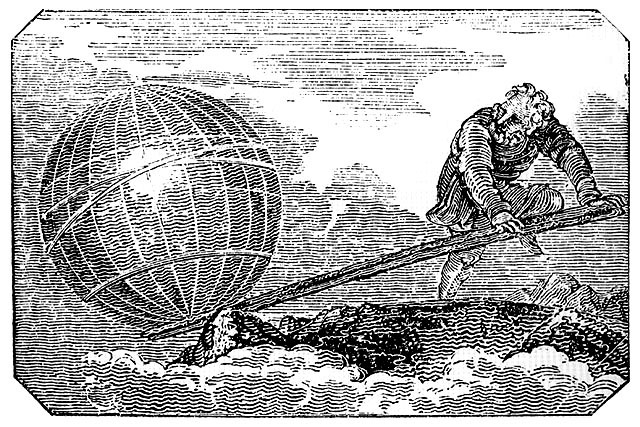
I'm running into a lot of central bank doubt lately. Mike Sax and Unlearning Economics, for instance, both question the ability of the Federal Reserve to create inflation and therefore set NGDP. The title of my post borrows from Archimedes. Give any central banker full reign and they'll be able to increase NGDP by whatever amount they desire. But if rules prevent a central banker from building a sufficiently long lever, or choosing the right spot to place the fulcrum, then their ability to go about the task of pushing up NGDP will be difficult. It is laws, not nature, that impinge on a central bankers ability to hit higher NGDP targets.

Sax and Unlearning give market monetarists like Scott Sumner, king of NGDP targeting, a hard time for not explaining the "hot potato" transmission mechanism by which an increase in the money supply causes higher NGDP. I'm sympathetic to their criticisms. I've never entirely understood the precise market monetarist process for getting from A to B to C. Nick Rowe would probably call me out as one of the people of the concrete steppes, and no doubt I'd be guilty as charged. But I've always enjoyed looking under the hood of central banking in an effort to figure out how all the gears interact.

Nevertheless, I agree completely with the market monetarists that, at the end of the day, a central bank can always advance NGDP to whatever level it desires, as long as the central banker is unrestrained and willing. As Scott Sumner says, "I don't care if currency is only 1% of all financial assets. Give me control of the stock of currency, and I can drive the nominal economy and also impact the business cycle."*

Given the opacity of the market monetarist mechanism, here's my own explanation for how central banks can jack up the price level to whatever height they desire.

The central bank's Archimedean lever is their ability to degrade, or lower the return, on the dollar liabilities it issues. Any degradation in central bank liabilities must ignite a "musical chairs" effect as the banks holding these now inferior liabilities madly seek to sell them. Their value will fall to a lower level (ie the price level will rise) until the market is once again satisfied with the expected return from holding them… at least until the central bank starts to degrade their return again. Because an uninhibited central bank can perpetually hurt the quality of its issued liabilities, it can perpetually create higher inflation and NGDP. It only hits a limit when it has degraded the quality of its liabilities to the point of worthlessness. When that happens the price level ceases to exist.

Let's get more specific on how a central bank degrades the return on its liabilities.

Any central bank that pays interest on deposits can degrade their return by pushing interest rates down. From an original position in which all asset returns are equal, a decline in rates suddenly makes central bank deposits worse off than all other competing assets. Profit-seeking banks will simultaneously try to offload their deposits in order to restore the expected return on their portfolios. But not every bank can sell at the same time, so the price of deposits must drop. Put differently, inflation occurs. Once deposits have fallen low enough, or alternatively, once the price level has inflated high enough, the expected return on deposits will once again be competitive with the return on other assets. Voilà, NGDP is at a new and higher plateau.

Many central banks don't pay interest on deposits. Rather, they keep the supply of deposits artificially tight and force banks to use these deposits as interbank settlement media. The difficulty of obtaining these scarce deposits, combined with their usefulness in settlement, means that deposits yield a large non-pecuniary return. A non-pecuniary return is any benefit that doesn't consist of flows of money (ie dividends or interest). A banker enjoys the steams of relief and comfort thrown off by a central bank deposit, just as a consumer enjoys the shelter of a house or the beauty of gold jewelery.**

Just as a central bank can degrade the pecuniary interest return on deposits, it can degrade their non-pecuniary return. It does so by injecting ever more deposits into the system. With each injection , the marginal deposit provides a steadily deteriorating non-pecuniary benefit to its holder. The bigger the glut of deposits, the worse their return relative to all other assets in the economy. Banks, anxious to earn a competitive return, will race to sell their deposit holdings. The price of deposits will drop to a sufficiently low enough level to coax the market to once again hold them. This is inflation.

But what if a central bank needs to degrade its assets even more than this in order to get NGDP to rise? Can it inject more deposits? This will achieve little because once deposits are plentiful, their non-pecuniary benefit hits zero. When there is no non-pecuniary return left for a central bank to reduce, successive injections will be irrelevant with regards to the price level. More on this later.

Can it reduce interest rates below zero? We know this will pose a problem because if the central bank embarks into negative territory, it risks having all of its negative yielding deposits being converted into 0% yielding cash. And when this happens the central banks loses its interest rate lever altogether. This is the so-called zero-lower bound.

But all is not lost. In order to forestall a mass conversion of negative-interest central bank deposits into 0% yielding cash, Miles Kimball has proposed that a central bank need only cease par conversion between deposits and dollar notes. The introduction of a floating rate would allow a central bank to set a penalty on cash conversion such that when rates fall below zero, cash yields the same negative return as deposits. This removes the incentive for people to “simply hold cash”. With this mechanism is in place, interest rates can easily be moved into negative territory, thereby pushing up prices and NGDP.***

But let's say Miles's option is off the table. A second approach is the New Keynesian one. Even if a central bank can't make their depositors worse off today -- they already pay the minimum 0%, after all, and can't go lower -- a central banker can promise to make depositors worse off tomorrow by maintaining rates at 0% for longer than they otherwise should. To avoid being hurt tomorrow, depositors will simultaneously try to offload the central bank's liabilities today until their price reaches a level low enough to compensate the market. Thus a promise to degrade in the future creates present inflation and higher NGDP.

QE is another oft-mentioned approach for increasing NGPD, but it won't be very effective. If deposits on the margin have already ceased providing non-pecuniary returns, introducing more of them makes little difference. As I noted in these two posts, large purchase will only have an effect if they were carried out at the wrong prices. Here, the Fed would be effectively "printing" new liabilities and purchasing an insufficient amount of earnings-generating assets to support those liabilities. As long as the market doesn't expect the government to bail out the irresponsible central bank by immediately topping it up with new assets, central bank liabilities will be forthwith flagged as being more risky. This means that relative to other assets, the return on deposits is now insufficiently low. Only a fall in their price, or inflation and higher NGDP, will coax investors to hold deposits again.

The above is a very Sproulian way of hitting higher NGDP targets.

Because modern-day QE has been carried out at market rates in big, liquid markets, and not at the wrong prices, central banks doing QE have amassed a sufficient amount of earnings-generating assets to support their liabilities, and therefore fail to compromise their underlying quality. QE is a poor lever for increasing inflation and hitting higher NGDP.

Here is the last Archimedean lever for degrading central bank liabilities and pushing up NGDP. As I've already pointed out, the New Keynesians want to reduce the present interest return on deposits by attacking future returns. We can appropriate this forward-looking strategy and use it to attack the future non-pecuniary returns provided by deposits.

Say that a central bank promises to put off making deposits scarce again in the future. Put differently, it says that it won't mop up excess deposits with open market sales till well-after the expected date. This means that the future reversion of deposits to their special status as 'rare settlement asset' will have been pushed down the road. As long as this commitment is credible, then the market's assessment of the future marginal non-pecuniary return thrown off by a deposit -- a function of their rarity -- will be reduced. Today's deposit holders, conscious of not just present but future returns, will now be holding a worse asset than they were before the announcement. They will simultaneously try to sell deposits until their price has fallen to a low enough level to bribe the market into once again owning deposits . Once again, we've created inflation and higher NGDP.

This last lever seems to me to be a decent market monetarist transmission mechanism. You'll notice that it is similar to the New Keynesian lever in that it endeavors to reduce the present return on deposits by promising to attack their future return. Maybe that's why I've had so many difficulties dehomogenizing Krugman and Sumner -- they both want to attack future returns. Where the argument between them gets heated concerns the specific return each group wants to attack: New Keynesians want to push down future interest rates, whereas Market Monetarists absolutely despise talking in terms of interest rates.

From a concrete steppes person to any market monetarists who may be reading this: what do you have to say about the above transmission mechanism? In emphasizing the importance of the quantity of money and expectations, aren't market monetarists really just proposing to attack the future non-pecuniary return on deposits? Aren't they guaranteeing to put off sucking out excess deposits till well after they responsibly should?

Recapping, here are the various sure-fire Archimedean levers for pushing NGDP up, even when interest rate are at 0% and deposits plentiful:

1. Miles Kimball's floating conversion rate and negative returns
2. Sproulian purchases at wrong prices****
3. Krugman's New Keynesian credible commitment to keep future interest rates too low
4. Market monetarist's credible commitment to keep future non pecuniary returns too low

Now some of these techniques are legal and some aren't. The most direct ones are not, namely Miles's negative interest rates and open market operations at silly prices. I call these the most direct strategies because their success doesn't depend on long range commitments to attack future returns. The problem with commitments to reduce future returns, i.e. numbers 3 and 4, or the "Krugmnerian" position, is that they require future central bankers (and their political masters) to uphold their end of the bargain. If the market has little confidence in the wherewithal of future central bankers to carry through on their predecessor's promises, then a central bank will not be able to reduce present returns by attacking future returns. Positions 1 and 2, on the other hand, directly reduce today's returns on deposits and therefore are less dependent on the future actions of others.

So to sum up, to doubt that a central bank can drive up NGDP is to doubt that the central bank can manipulate their omnipotent Archimidean lever, namely their ability to degrade its own liabilities. Certain laws might prevent degradation. So do frictions put up by the politically-linked nature of central bank policy. But as long as these impediments are removed, then nothing can prevent a central bank from pushing up NGDP.


Notes:
You can accept all of these points and still believe in so-called "endogenous money". It doesn't change anything.  

* For now I'm agnostic about the last bit of Scott's phrase, namely "impact the business cycle". In this post I've worked purely with the price side of things. The careful reader may notice that Scott's quote is a working-over of an old Rothschild quote: "Give me control of a nations money supply, and I care not who makes it’s laws." 
** Another word for non-pecuniary return is convenience yield. When writing in a purely monetary context, I've referred to the specific non-pecuniary return provided by exchange media is their monetary optionality, or their moneyness.
*** One other lever for degrading is a policy of randomly freezing deposits. I've written about this here. Say that deposits are plentiful such that the marginal deposit no longer yields a non-pecuniary return. It's still possible to decrease this return even further. Say banks face the possibility that the central bank might randomly block their access to deposits for a period of time. Central bank liabilities, once excellent settlement media, are no longer as effective due to potential embargoes preventing them from serving that purpose. Their non-pecuniary return now less than before, banks will hastily try to sell deposit holdings in order to maintain the expected return of their portfolios. Prices rise, as does NGDP. Like negative interest rates, at some onerous rate of embargoing deposits, depositors will flee into non-embargoed 0% cash. So some scheme like Miles Kimball's floating exchange rate between cash and deposits is necessary to prevent mass conversion into paper.
****I'm not saying Mike Sproul necessarily advocates this policy, but if he did need to jack up inflation, I think it might be one of his go-to options since it is entirely consistent with his "backing" theory.


Changes
21.08.2103 -  I'd be guilty [as charged]

Wednesday, July 24, 2013

Transporting the macroblogosphere back to 1809: Usury Laws and the 5% upper bound


The zero-lower bound is the well-known 0% floor that a note-issuing bank hits whenever it attempts to reduce the interest rate it offers on deposits into negative territory. Should the bank drop rates below zero, every single negative yielding deposit issued by the bank will be converted into 0% yielding notes. When this happens, the bank will have lost any ability it once had to vary its lending rate.

The ZLB is an artificial construct. It arises from the way the banking system structures the liabilities that it issues, namely cash and deposits. We can modify this structure to either remove the ZLB or find alternative ways to get around it. Much of the discussion over the econblogosphere over the last few years has been oriented around various ways to get below zero.

There is another artificial bound, this one to the upside—let's call it the 5% upper bound, or FUB. The FUB is an archaic bound. Up until 1854, the Usury Laws prevented the Bank of England from increasing rates above 5%. This constraint meant that for almost two centuries, the Bank of England's discount rate was bounded within a narrow channel that had as its upper limit the 5% mark as stipulated by the Usury Laws and a lower limit of 0% due to the existence of 0% yielding banknotes (see chart above).

Imagine that we had a time machine and transported the econblogosphere, still hot over the ZLB debate, back to 1809. What sorts of discussions would we be having if we had risen up against the FUB? Given that the conventional route of increasing rates was constrained by the usury prohibitions, what sort of unconventional monetary policies would bloggers be providing to the Directors of the Bank of England to deal with inflationary booms? Would this advice be symmetrical to the policies they have been advocating for escaping the ZLB?

1809 is a significant date because the convertibility of the pound into gold had been suspended for over a decade. Although convertibility would be resumed in 1821, England would be on a 'fiat' standard very similar to our own for another decade. In the years since suspension, the pound had gradually depreciated against gold and other European currencies. A healthy debate began to flourish over whether the Bank of England was responsible for the pound's depreciation (ie. inflation) or if external events such as crop failures were to blame. It was in that context that banker/economist Henry Thornton published his famous Enquiry into the Nature and Effects of the Paper Credit of Great Britain. Although Thornton was circumspect on the precise causes of the deprecation of the pound, he drew attention to the difficulties that the Usury Laws caused in controlling the volume of credit. Here is Thornton:
In order to ascertain how far the desire of obtaining loans at the bank may be expected at any time to be carried, we must enquire into the subject of the quantum of profit likely to be derived from borrowing there under the existing circumstances. This is to be judged of by considering two points: the amount, first, of interest to be paid on the sum borrowed and, secondly, of the mercantile or other gain to be obtained by the employment of the borrowed capital...
The borrowers, in consequence of that artificial state of things which is produced by the law against usury, obtain their loans too cheap. That which they obtain too cheap they demand in too great quantity.
Thornton pointed out that if there was a large deficit between the price at which a businessman could borrow from the Bank of England and the mercantile rate of profit—the rate at which the same businessman could invest the borrowed money—then the demand for and granting of credit would become excessive. While nudging the discount rate higher would normally be sufficient to reduce this excess, the laws against usury might prevent these increases from taking place.

If we were to drop Nick Rowe into the 1809 economic debate, he would complement Thornton quite well by making good use of the same pole-on-a-palm analogy he has so aptly used to explain the ZLB. Running an inflation targeting central bank is sort of like balancing a long pole upright in the palm of one's hand, says Nick. The bottom of the pole is the interest rate and the top is the inflation rate. As the pole starts to lean (ie. the price level begins to change), the holder needs to quickly move their palm far enough in the same direction (ie. interest rates must be changed) so as to stop the pole from falling over. A wall to the either the north or south impedes the holder's palm from moving sufficiently far and will cause the pole to tumble over.

Applying this analogy to monetary policy, the Directors of the Bank of England might be required to stop excess inflation by moving rates north of 5%. With the Usury Laws in place, the Director's efforts would be impeded. Nick's illustration is Thornton all over again.

Scott Sumner, Lars Christensen, David Beckworth, and other monetarist-types have been strong advocates of quantitative easing as a way to get below the ZLB. Whisk them back to 1809 and would they advocate getting above the FUB by quantity dis-easing, or QD — mass repurchases of Bank of England notes through the liquidation of the Bank of England portfolio of assets?

Assuming that the threat of QD is able to increase the expected purchasing power of the pound (just as the threat of QE is supposed to reduce the same), then the Directors could initiate a QD program to improve the real return on pound notes and deposits. As soon as the real return on notes and deposits exceeds real returns on capital, the inflationary boom will come to a halt. Conveniently for the Directors, the nominal 5% rate will have remained in place — only real rates will have increased — thereby allowing the Directors to abide by the Usury Laws.

What about New Keynesians like Paul Krugman? Promising to hold off on future interest rate increases after a recovery has begun is the sort of advice New Keynesians have given to the Fed as a way to bridge the ZLB. This is called providing forward guidance. As Krugman says, a central bank needs to "credibly promise to be irresponsible".

Parachute Krugman into 1809 and he would be counseling the Directors to do the opposite: hold off on reducing rates from 5% after a contraction had already set in. In other words, the Directors need to "credibly promise to be hard-asses." As long as this promise is taken seriously by the market, the promise of future monetary tightening translates into lower inflation in the present, and the real interest rate rises. This should reign in the inflationary boom. Much like Sumner and Christensen, Krugman's advice would allow the Director's to hold steady at the 5% nominal rate dictated by the Usury Laws, letting real rates do the job of reeling in prices and slowing down the economy.

What about Miles Kimball? Transport Miles back to 1809 and he'll probably be the most aggressive in the outright removal of the Usury Laws. Just as he is currently campaigning for the ability of central banks to set negative rates on deposits, I'm sure he'd by picketing outside of Parliament for the right of the Director's to bypass the Usury Laws and set 6-7% nominal rates.

Incidentally, what did the Directors of the Bank of England actually do? According to Jacob Viner, there is evidence that
bankers found means of evading the restrictions of the usury laws. In 1818, the Committee on the usury laws stated in its Report that there had been “of late years ... [a] constant excess of the market rate of interest above the rate limited by law.” Thornton notes that borrowers from private banks had to maintain running cash with them, and borrowers in the money market had to pay a commission in addition to formal interest, and that by these means the effective market rate was often raised above the 5 per cent level. Another writer relates that long credits were customary in London and a greater discount was granted for prompt payment than the legal interest for the time would amount to.
More convincing evidence that the 5 per cent rate was not of itself always an effective barrier to indefinite expansion of loans by the banks is to be found in the fact that the directors of the Bank of England, although they professed that they discounted freely at the rate of 5 per cent all bills falling within the admissible categories for discount, in reply to questioning admitted that they had customary maxima of accommodation for each individual customer and occasionally applied other limitations to the amount discounted.
In Paper Credit we find Henry Thornton verifying Viner's claim, noting the "determination, adopted some time since by the bank directors, to limit the total weekly amount of loans furnished by them to the merchants."

So the Director's preferred route for getting out from under the thumb of the Usury Laws was to maintain the 5% discount rate, but ration the quantity of loans issued at these rates, thereby limiting the quantity of credit in circulation. While this policy might not have been sufficient to prevent an inflationary boom, it may have prevented a hyperinflation from breaking out.

Before I sign off, I want to reverse something I said at the outset. I wrote that the 5% upper bound was archaic, but that's not entirely true. Sure, high interest rates are no longer illegal. But high nominal interest rates have never been politically palatable. Central bankers are not independent of politics, and therefore probably still operate with something akin to a 5% upper bound. Let's call it an "upper-ish" bound, or the point at which a central banker starts to get dirty looks from those who have the power to reappoint him. Central bankers may need to resort to unconventional techniques to free themselves of the upperish-bound. The Fed's motivations for adopting quantity targets in 1979, for instance, may have been such a technique. An overt jacking-up of interest rates to 15-20% would have been political suicide, goes the theory, so the FOMC chose to engage in a bunch of hand-waving about hitting money supply targets, thereby distracting would-be critics with a new set of monetary verbiage. This left Paul Volcker free to implement what would be at its peak a tremendously onerous 22%+ fed funds rate.

We're of course not anywhere near the upper bound these days, at least not in the developed world, but it's still an interesting puzzle to work through in order to help understand the current situation. Our investigation also offers a history lesson. In choosing to remove it over century ago, the FUB was revealed to be neither a law of nature nor a design of God. The FUB was a choice. Hopefully we'll eventually realize that the same applies to the ZLB.