Showing posts with label Antoin Murphy. Show all posts

Wednesday, July 12, 2017

Money in an economy without banks

by Alex Schaefer
 
Most of the world's money is currently in the form of deposits created by banks. After the 2008 credit crisis, which instilled a strong suspicion of banks among the public, it became fashionable to ask what money would look like in an economy without these organizations. Burn them to the ground or shutter them, what would take their place? One vision is to pursue pure centralization: have the state monopolize all money creation, say by providing universally-available accounts at the nation's central bank. Positive Money is an example of this. Another alternative, by way of Satoshi Nakamoto, is to pursue radical decentralization: replace bank IOUs with digital commodity money in the form of bitcoin and other private cryptocoins.

I'm going to provide a few historical examples that sketch out a third option for replacing banks; bills of exchange. A system underpinned by bills of exchange is capable of converting illiquid personal IOUs into money using a distributed method of credit verification, as opposed to a centralized method patched through a banking organization. Unlike bitcoin, however, these are IOUs, not mere bits of digital ledger-space. While few people these days are familiar with the bill of exchange, in its hey day this instrument was responsible for executing a large chunk of the Western world's transactions. 

---


The first story is of cheques, an instrument that while not precisely a bill of exchange gets pretty close. Last week in my homage to the cheque I brought up the Irish bank strike of 1970, described by Antoin Murphy (from whom I steal the title of this blog post). When the nation's banks shuttered their windows for half the year, Irish citizens re-purposed uncleared cheques as personal IOUs, these cheques circulating as a cash substitute. The system was decentralized in that banking institutions no longer served as creators of the medium for making payments; instead, everyone became their own unique money issuer. As Tim Harford recently wrote, pubs and corner shops were able to vouch for the creditworthiness (or not) of each cheque.

Irish cheque money only circulated for six months. After the banks reopened in November 1970, mounds of cheques were cleared & settled and the system returned to normal. Luckily, we have historical examples that lasted much longer than this.

---

Let's go back in time to Antwerp in the late 1400s. The institution of banking had been present in Europe for a few centuries, but according to Meir Kohn (who I get much of this material from) it began to go into decline at the end of the 15th century as waves of bank failures broke out across the continent, due in part to coin shortages. In Antwerp, the authorities went so far as to ban the practice of banking in 1489. In lieu of bank deposits, coins could of course be used to make payments, but this would have been a step backward since deposit banking had emerged, in part, to solve the problems related to coins, specifically the fact that they are expensive to store, awkward to transport, and heterogeneous, some coins containing more precious metals than others.

Similar to the Irish five hundred years later, Antwerp's financiers adapted to the death of bank money by innovating a decentralized alternative. Where the Irish chose cheques as their payments instrument, Antwerp settled on a related paper-based order called the bill of exchange. A bill of exchange was a popular way to remit money in medieval times. Say you were a citizen of Florence and you needed to get 20 gold coins to a relative in Venice. Rather than incur the cost and danger of transporting the coins yourself, you might try and strike a deal with a merchant who had offices—and gold—in both cities. By paying the merchant some gold in Florence, your home city, he would issue you a bill of exchange. This bill ordered his colleague in Venice to pay out 20 gold coins to whoever happened to be the bill bearer. You'd then send the bill to your relative in Venice, and he'd bring it into the office and collect the money. The merchant would earn a commission on the deal. No actual gold would travel between the two cities, just a secure and light paper instrument. It was a fantastic technology for saving on the costs of shipping and handling heavy coins.

While bills of exchange started out as remittance instruments, they were later used by merchants as a form of credit. A merchant might want to sell some wool to a manufacturer who in turn required three months to convert the wool into cloth and sell it. To finance the purchase of wool, the manufacturer could always turn to a banker. Absent a banker, the merchant himself might provide the manufacturer with a loan by drawing up a bill of exchange. On its face this bill contained written instructions ordering the manufacturer to pay x coins three months hence to the bearer of the bill. The merchant would keep it in his desk, and when the requisite amount of time had passed he would bring the bill to the manufacturer and collect on his debt, earning interest in the meantime.

The common denominator of a bill of exchange, whether used as a remittance or as credit, is that a private citizen has issued their own personal IOU, to be redeemed for cash after some time has passed. Then Antwerp happened.

In its original form, a bill of exchange could only be used by a small group of people, the initial drawer of the bill, the payor, and the payee. Antwerp's financiers took the bill of exchange and converted it into a fully transferable instrument, or money. They pried open the closed circuit so that if merchant A owned a bill of exchange that was to be paid out in coin by merchant B next month, merchant A could in the meantime transfer this IOU to merchant C as payment, and merchant C could transfer it to merchant D, and D to E etc. These transfers, or assignments, could occur without asking the original debtor, merchant B, for permission. This would have dramatically increased the liquidity of bills of exchange, allowing them to fill the vacuum left in Antwerp by the banning of bank deposits,

To further protect anyone who received a bill of exchange in payment, Kohn tells us that these instruments were granted currency status by Antwerp's merchants. As I wrote here, this meant that even if the bill of exchange had been stolen from merchant B and paid to merchant C (who had innocently accepted it), merchant B could not sue merchant C to get the bill back. This legal upgrade would have further promoted the liquidity of bills of exchange, since merchants needn't bother setting up burdensome verification processes to ensure that bills of exchange presented to them were not stolen. In the eyes of merchant law, all bills of exchange were considered "clean."

There was still one last barrier to creating a truly decentralized medium of exchange; how to overcome stranger danger. Say that you and I are acquaintances and I owe you $20. I tell you I'm going to settle my debt by giving you an IOU issued by another party. Banks are a great way to solve the stranger problem, since everyone will agree to settle debts using the IOUs of a well-known and trusted intermediary like a bank. But say instead I offer you a $20 bill of exchange that I've received from a friend. If you know that person you'll probably accept the deal, but in an economy like Antwerp's with thousands and thousands of actors, you might not know the name of the debtor written on the bill. And without enough knowledge to accept the credit, you'd have probably refused it.

According to Kohn, the final innovation developed in Antwerp solved the stranger problem—the ability to endorse a bill of exchange. I simply signed my name to the back of $20 bill of exchange, or endorsed it, and handed it to you. By signing it, I was agreeing to accept the debt as my own. So if the original debtor failed to pay you for the bill when it came due, you could flip the bill over and pursue the first name on the list of endorsees—me—for payment. And since you knew and trusted me, it was now possible for you to evaluate the credibility of a $20 bill of exchange that had originally been issued by a stranger. Bills could in turn be re-endorsed on by others, a long chain of transactions being made before the bill finally expired. Indeed, Henry Dunning Macleod once remarked that bills might sometimes have "150 indorsements on them before they became due."

From Antwerp, the practice of using negotiable bill of exchange would spread to the rest of Europe, in particular Britain. Below is an example of a bill of exchange from 1815 that ordered Pickford's, an English canal company, to pay £72  11s 1d to Richard Vann. You can see first hand how the stranger problem is solved. The bill has multiple endorsements on its reverse side (pictured below), including that of Richard Vann, William Alcock, T S Marriott, William Whittles, Jones & Mann, Thomas Whalley & Sons, James Mitchell and Richard Williams. To see the front side of the bill, click through to the original link:

Source

Not only did this chain of cosigning individuals solve the stranger problem. It also created an incredibly safe instrument. Bills of exchange were effectively secured not only by the original person whose name was inscribed on the front, Vann, but by all the others who had cosigned the back; Alcock, Marriott, Whittles, etc. The odds of everyone on the list failing would have been quite low. It was an ingenious system.

---

Another interesting anecdote on bills of exchange comes from the county of Lancashire in north west England in the 1800s. By then, banknotes had long since been invented and were a popular payments medium in England. Typically issued by small private "country banks," banknotes were a centralized payments technology insofar as their value depended on the good credit of one issuer, the bank. Inhabitants of Lancashire were particularly suspicious of these instruments which explains why there were almost no note-issuing banks in the county. T.S. Ashton speculates that this wariness was due to the 1788 failure of Blackburn-based Livesay, Hargreaves and Co, a banknote issuer: "generations after, when proposals were made for local notes, men's minds turned back to the events of 1788."

In the absence of a system of banks providing transferable deposits or notes, bill of exchange circulated in Lancashire, even dominated, so much so that they were often "covered with endorsements" and become famous for their dirty appearance. Indeed as late as the 1820s, Ashton tells us that some "nine-tenths of the business of Manchester was done in bills, and only one-tenth in gold or Bank of England paper." Bills were used even in small denominations, say to pay piece workers. This is surprising because bills of exchange had typically been used by merchants and wholesalers, and therefore tended to be issued in large denominations.

Alas, according to Ashton the Lancashire bill of exchange was done in by the increase in stamp duties, which effectively made it more cost-effective to use bank-issued forms of payment that didn't require a stamp.

---

Just a few random thoughts in closing.

While Ireland, Lancashire, and Antwerp all provide a sketch of an alternative, distributed form of converting personal IOUs into money, do we really need a replacement for banks? While the U.S. banking system certainly had its difficulties in 2008, Canadian banks skated smoothly through the crisis. Maybe banks only need a face lift.

Even if we need to burn the suckers down, a paper-based backup like bills of exchange or cheque just won't cut it—we need digital money. But is it possible to digitally replicate the features of a bill of exchange? And even if an online bills of exchange system could be built, we live in an age where money transmitting is a highly regulated industry—how legal would it be for individuals to take over the role of money creator, transmitter, and verifier? (I once thought that Ripple was the answer to digitally replicating bills of exchange. But they decided to serve banks instead. Maybe Trustlines fits the *ahem* bill?)   

Tuesday, June 27, 2017

An homage to the cheque (or check)

The check used to buy Alaska (source)

I recently read an FP article about the odd persistence of the cheque as a way to make payments. According to the author, even though cheques are slow and cumbersome, people are willing to live with these drawbacks because they like the ability to write messages in the memo field. Competing electronic payments options (in Canada at least) don't have the ability to write memos.  

As someone pointed out to me on Twitter, in the U.S. the cheque's memo field is more than just a place for writing personal reminders. According to the law in certain states, when you disagree with your creditor about how much is owed—say the contractor who is building your deck has spent too much on materials—by writing out a cheque for less than the agreed amount and including "paid in full" in the memo line, the debt is extinguished the moment the contractor cashes it.  

What follows are some other neat things about cheques that don't get much attention.

People tend to think of cheques as a mere set of instructions issued to a banker on how to move bank deposits. To transfer deposits, we could always just walk into a bank and do this in person, but we prefer to save time and energy by issuing the instructions on paper.

But a cheque is more than just a substitute for a set of in-person verbal instruction. By inscribing these instructions onto a long-lived medium, we've created an entirely distinct financial instrument, something akin to a debt or a derivative. As long as a cheque exists, it derives its value from the underlying deposits that are expected to be delivered by the issuer.

Normally we take for granted that a $1000 cheque is worth $1000. But this isn't always the case. For instance, if the cheque writer decides to spend a $1000 cheque that has been post-dated for three months—i.e. the underlying cash can not be collected till then—the receiver will typically only accept said cheque at a discount to face value, say $960. After all, the receiver needs to be compensated for the interest they will have to forego in holding that cheque for the three months to encashment, not to mention incurring the risk that the cheque writer fails in the interim.

We don't normally think of cheques as a form of debt or financing, but after India's demonetization an interesting example of this practice was brought to light. This fascinating story describes how small-scale enterprises in Varinasi accept post-dated cheques as payment and then bring them to a battawala—or "one who deducts"—for discounting. The battawala sets his commission, or discount, based on the creditworthiness of the cheque issuer. The ability to sell post-dated cheques allows these businesses to finance expense such as salaries and inventories. A second article describes a battawala market that "opens from 3-7 p.m. every day at Chowk, the heart of the business district," where several thousand battawallas sit and trade post-dated bearer cheques for cash.

North America also has a post-dated cheque market of sorts. Payday lenders, which offer short-term lending to those who can't get it from banks, only issue loans on the provision of a post-dated cheque. They accept these cheques at large discount to face, so that a $350 cheque can only buy, say, a $300 loan.


In addition to being a form of debt, cheques are also a type of money. I don't mean in the sense that cheques allow for the transfer of underlying bank deposits; rather, an uncashed cheque can itself be transferred between many different parties as a medium of exchange. This is something that younger people who only use credit cards and P2P options may not know, but if the issuer of the cheque writes "to bearer" in the pay to field, then literally anyone who is 'bearing' or holding that cheque can bring it into the bank to be cashed. Given that it grants universal access to underlying cash, a $100 bearer cheque might be transferred three or four time over the course of a few days, resulting in $300 worth of transactions being consummated rather than just $100. In the first of the two articles I linked to above, for instance, the owner of a small sari business says that it isn't uncommon for a bearer cheque to change hands as many as five times. 

Just a head's up. Even if you indicate the name of the recipient in the pay to field of a cheque you've written, say to John Doe, he can still use it as a medium for paying someone else rather than cashing it... without you even knowing. By endorsing the back of the cheque with his signature, John Doe converts it into a bearer cheque. This is called blank endorsement. Anyone he gives it to can now either bring it in to be cashed or continue passing it off in a long chain of transactions. In the U.S., these sort of cheques are called third-party checks, although banks tend to be a little leery about accepting them these days.

The use of cheques-as-money is promoted by laws that, like banknotes, grant them currency status. I touched on this distinction last week, but here it is again. Say that person A is carrying some sort of financial instrument in their pocket and it is stolen. The thief uses it to buy something from person B, who accepts it without knowing it to be stolen property. If the financial instrument has not been granted currency status by the law, then person B will be liable to give it back to person A. If, however, the instrument is currency, then even if the police are able to locate the stolen instrument in person B's possession, person B does not have to give up the stolen cheque to person A. We call these special instruments negotiable instruments.

Instruments like cash and cheques that have been granted currency status, or are negotiable, have a big advantage over those that haven't. Because they won't be on the hook for returning stolen negotiable instruments, shopkeepers and others can accept these instruments without having to set up costly verification procedures. This means these instruments will tend to be more liquid than those that are non-negotiable.   

A neat result of the transferability of cheques is that cheque payment systems are incredibly robust in the face of disasters and banking system shutdowns. Any direct transfer a bank deposit, say using a debit card or some other form of electronic fund transfer, requires that the parties to a payment to establish a  communications channel with their respective banks. If there is a problem with either of the banks, the merchant, or the connection itself, then the transfer can't go through. With a cheque however, there is no need to communicate with one's banker. A cheque is created entirely without the bank's say-so. Anyone is allowed to receive that cheque, it being their choice to either cash it or pass it along. Which means that if the banking system is on the fritz, cheque payments can proceed.

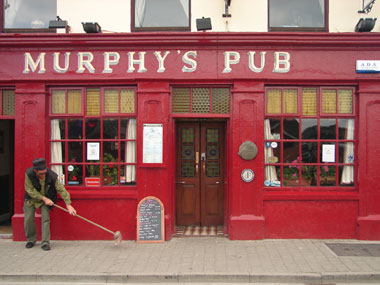
The most famous example of this robustness is the Irish banking strike of 1970. With the entire banking system shut, for six months post-dated cheques circulated as the main form of money. In a well-known paper, Antoin Murphy recounts how pub owners acted as evaluators of the credit quality of each cheque, an episode I once wrote about here.


Another nice property of cheques is that, like cash, they can be used by the unbanked. If someone receives a cheque, they can go to the issuer's bank and cash it, even if they don't have a bank account. Alternatively, they can simply endorse the back of the cheque and spend it on as a medium of exchange.

This combination of negotiability, robustness, openness, and decentralization means that long before bitcoin and the cryptocoin revolution, we already had a decentralized payments system that allowed pretty much everyone to participate and, indeed, fabricate their own personal money instruments!

Was there ever a more versatile payments instrument than the cheque? Because you can write on them, a whole language of cheques has emerged, allowing for significant customization. By putting crossings on cheques, like this...


...the cheque writer is indicating that the only way to redeem it is by depositing it, not cashing it. This means that the final user of the cheque will be easy to trace, since they will be associated with a bank account. Affix the words non-negotiable within the cross on the front of the cheque and it loses its special status as currency. Should it be stolen and passed off to an innocent third-party, the victim can now directly pursue the third-party for restitution. To even further limit the power of subsequent users to use the cheque as money, the writer can indicate the account to which the cheque must be deposited.

This language of checks can be used not only by those that have originated the cheque, but also by those that receive it in payment. On the back of any check, any number of endorsements can be written, effectively allowing for the conversion of someone else's payment instructions into your own unique medium of exchange.    

In summary, while the popularity of the cheque has certainly been declining over the last few decade, it is still hanging in there—and that's because it seem to be providing some unique services that haven't yet been replicated by cheaper, digital alternatives. While those in the fintech space often smirk at cheques at as an outdated payments option inevitably doomed to extinction, they might be better served trying to replicate some of these features instead.

Tuesday, June 11, 2013

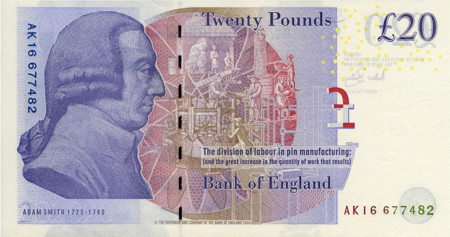
Adam Smith's very own Lehman Crisis


It's interesting to see how after a credit crisis, economists start to take money and banking a bit more seriously. Adam Smith, who experienced his very own credit crisis -- the collapse of the Douglas Heron and Co, or the Ayr Bank, on June 22, 1772 -- is no exception. His views on money and banking became much more nuanced after that event.

Ayr Bank had been founded in 1769 in the Scottish town of Ayr. It expanded to Edinburgh and Dumfries, and in only a few short years it had succeeded in wrestling a significant chunk of Scottish banking business from incumbents the Bank of Scotland and the Royal Bank of Scotland. By 1772, according to Checkland, the Ayr Bank supplied 25% of Scotland's bank notes and deposits. In early June 1772 one of Ayr's largest customers, Alexander Fordyce, skipped London for Paris to avoid debt payments. A run on the Ayr Bank began that precipitated the bank's failure by the end of the month.

Upon observing the bank run, David Hume writes from Edinburgh, Scotland to his friend Smith on June 27, 1772:
We are here in a very melancholy Situation: Continual Bankruptcies, universal Loss of Credit, and endless Suspicions. There are but two standing Houses in this Place, Mansfield’s and the Couttses: For I comprehend not Cummin, whose dealings were always very narrow. Mansfield has pay’d away 40.000 pounds in a few days; but it is apprehended, that neither he nor any of them can hold out till the End of next Week, if no Alteration happen. The Case is little better in London. It is thought, that Sir George Colebroke must soon stop; and even the Bank of England is not entirely free from Suspicion. Those of Newcastle, Norwich and Bristol are said to be stopp’d: The Thistle Bank has been reported to be in the same Condition: The Carron Company is reeling, which is one of the greatest Calamities of the whole; as they gave Employment to near 10.000 People. Do these Events any–wise affect your Theory? Or will it occasion the Revisal of any Chapters?

Of all the Sufferers I am the most concern’d for the Adams, particularly John. But their Undertakings were so vast that nothing coud support them: They must dismiss 3000 Workmen, who, comprehending the Materials, must have expended above 100.000 a Year. They have great Funds; but if these must be dispos’d of, in a hurry and to disadvantage, I am afraid the Remainder will amount to little or nothing.
Hume asks if these events affect Smith's theory, the Wealth of Nations having not yet been published. In a letter to William Pulteney dated September 1772, a few months after the bank crisis, Smith notes that the events had indeed delayed the finishing of his book, which otherwise would have been completed that winter. When it was eventually published in 1776, Book II, Chapter II of the Wealth of Nations would include a long description of the Ayr crisis (though Smith never mentions the bank by name, most probably to protect those involved, see below).

Personal issues arising from bank failure also delayed publication of the Wealth of Nations. In the letter to Pulteney, Smith disavows any financial involvement in the crisis but notes that:
Tho I have had no concern myself in the Public calamities, some of the friends for whom I interest myself the most have been deeply concerned in them; and my attention has been a good deal occupied about the most proper method of extricating them.
According to Antoin Murphy and John Rae [biographer of Smith], the friends to whom Smith refers to probably included Smith's patron, the Duke of Buccleuch. The Duke was one of Ayr Bank's largest shareholders, and the source of Smith's £300 a year pension. Murphy intimates that as adviser to the Duke, Smith would have been privy to much of the gritty details of the bank's demise, as well as advising Buccleuch in the ongoing legal proceedings against the shareholders and directors of the bank. No doubt Smith had plenty to reflect on, including the fact that he might lose his pension.

There is also an odd letter from Hume to Smith, dated October 1772, in which Hume refers to Ayr banknotes in Smith's possession:
I ask’d the Question you proposd; and was told by Sir William Forbes, that tho’ they did not commonly take the Air Notes, yet he woud upon your Account: You may therefore send them over by the first Opportunity.
Not only did the collapse of Ayr put Smith's benefactor in financial trouble, but it seems that Smith himself was in possession of a few Ayr banknotes. Could it be that Smith himself was burned by the Air collapse, only to be helped out by William Forbes, an Edinburgh banker who had survived the crisis and generously agreed to take the notes off of Smith's hands? Or was Smith simply using his connections to help out a London-based friend who was stuck with Ayr Bank notes?

In any case, Smith's views on banking were inevitably modified by a crisis. According to Murphy, Smith became more conservative monetary theorist relative to his pre-1772 stance. Here is a quote from Smith's earlier Lectures on Jurisprudence, about six years before the crisis, in which he pooh-poohs the danger of banking crisis.
The ruin of a bank would not be so dangerous as is commonly imagined. Suppose all the money in Scotland was issued by one bank and that it became bankrupt, a very few individuals would be ruined by it, but not many, because the quantity of cash or paper that people have in their hands bears no proportion to their wealth. Neither would the wealth of the whole country be much hurt by it, because the 100 part of the riches of a country does not consist in money. (1766)
In The Wealth of Nations, Smith's benign view of banks was modified. No doubt influenced by his first hand experience of the Ayr collapse, Smith realized that the ruin of banks could have far greater consequences than he had earlier assumed. He went on to describe a set of guidelines that banks might use to avoid bankruptcy. Bankers, Smith wrote, should always verify that the bills of exchange upon which they issued credit (bills were a common collateral security accepted by banks) had arisen as the result of solid transactions between "real creditors" and "real debtors". Fictitious bills of exchange -- bills whose provenance was obscure and were usually issued by those whom Smith called "projectors", or speculators, and accepted (or co-signed) by collaborating projectors -- were to be treated with skepticism. The blogosphere's very own David Glasner describes this set of rules in this paper.

Like Smith, modern day economists are busily reappraising pre-2008 modes of thought, much of which abstracted from money and banking altogether. They have much to reflect on too. If Smith were alive today, he'd no doubt wonder why banks had lent on such unverifiable collateral, most of which in his eyes would appear to be entirely fictitious.


1: Much of this blog post is indebted to Antoin Murphy's chapter on Adam Smith in The Genesis of Macroeconomics.
2. For a full account of the demise of the Ayr Bank, here is the 1778 inquiry into the affair , or The Precipitation and Fall of Mess. Douglas, Heron and Co, Late Bankers in Air With the Causes of their Distress and Ruin Investigated and Considered. They sure loved long names back then.

Thursday, January 24, 2013

How Irish pubs helped cure a shortage of safe assets


By way of David Andolfatto's comment on my earlier post on safe assets, I stumbled onto a talk by John Moore and Nobuhiro Kiyotaki called Evil is the Root of All Money, which in turn invokes a 1978 paper by Antoin Murphy called Money in an Economy Without Banks: The Case of Ireland (pdf link). For anyone interested in the conjunction of history of economic thought and economic history, Murphy is a great resource. I definitely suggest his The Genesis of Macroeconomics.

Murphy's paper describes an interesting episode in Irish financial history. From May 1 to November 17, 1970, all banks in Ireland went on strike. This meant that Irish bank deposits were indefinitely frozen. Despite being deprived of a large chunk of their safe and liquid assets, the Irish populace managed to soldier on with little economic difficulty—according to Murphy, retail sales were barely affected by the bank closures.

Ireland filled the void vacated by frozen deposits by using uncleared cheques as a circulating medium. Cheques are normally accepted with the intention of quickly cashing or depositing them. During the strike, an Irish family could now sign and spend a cheque at the grocer for food, and the grocer in turn could pass off that family's cheque to the local pub for a beer, who in turn was free to spend it onwards. Thus cheques boomeranged around the economy, even though they could not be cleared and no one knew when the banking system would reopen.

The genius of this system is that it resorted to an unused asset to create the new circulating medium: personal credit. Says Murphy:
In a normal banking system cheques are readily acceptable because it is believed that they are drawn against known accounts and will be cleared quickly. During the bank disputes they were drawn, not against known credit accounts or allowed overdraft limits, but against the value of other uncleared cheques and/or the transactor’s view as to his creditworthiness.
The tight-knit nature of Irish society allowed for an informal credit-rating network which, according to Murphy, was underpinned by Irish public houses. At the time, there was one pub for every 190 adults. The information that various retail outlets had about their customers allowed them to verify the ability of individuals to stand by their credit. This system had a degree of sophistication, since cheques were not universally accepted but rather were graded by risk.

This illustrates one of the ideas that I was (perhaps ineptly) trying to explain in my previous post. Just as the Irish quickly fabricated safe and liquid assets when their existing ones disappeared, wouldn't a modern shortage of safe assets be remedied in a few weeks, maybe months? What is blocking the same set of powerful market forces that quickly resupplied the Ireland with safe assets from operating today? Won't a rise in existing safe asset prices provide the economy with the desired level of safety? An excess demand for safe assets just doesn't sound like it can be a chronic problem to me.

In any case, give the Murphy paper a read. It has some gems in it.